
Alpinia malaccensis
Pas d\'illustration
pour le moment 😕

Une herbe de la famille du gingembre. La fausse tige mesure environ 3 m de haut. La tige de la feuille mesure 2 cm de long. Il est rainuré. Le limbe de la feuille est en form ... (traduction automatique)
→suite


Alpinia malaccensis

Une herbe de la famille du gingembre. La fausse tige mesure environ 3 m de haut. La tige de la feuille mesure 2 cm de long. Il est rainuré. Le limbe de la feuille est en forme d'épée. Il mesure 90 cm de long sur 15 cm de large. Il est poilu en dessous. Il se rétrécit jusqu'à la pointe. La grappe florale est dress... (traduction automatique) →suite
Pas d'illustration
pour le moment 😕
Pas d'illustration
pour le moment 😕
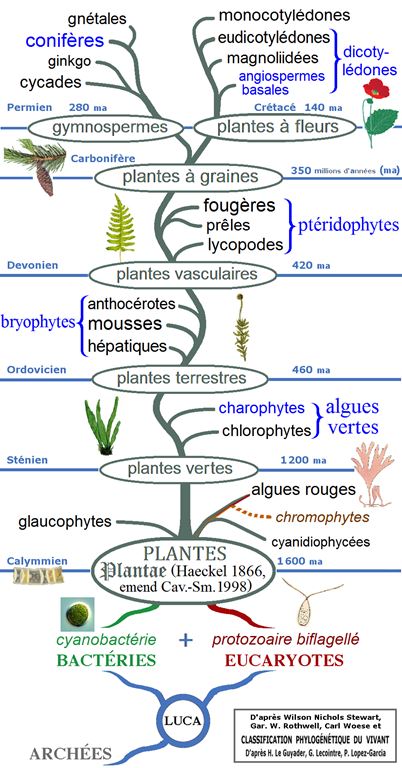
Classification
- Classique : en haut de l\'écran, sous le coeur.
- Phylogénétique :
- Clade 4 : Angiospermes ;
- Clade 3 : Monocotylédones ;
- Clade 2 : Commelinidées ;
- Ordre APN : Zingiberales ;
- Famille APN : Zingiberaceae ;
Illustration : cet arbre phylogénétique des plantes montre les principaux clades et groupes traditionnels (monophylétiques en noir et paraphylétiques en bleu).
Dénominations
✖- Nom botanique : Alpinia malaccensis (Burm. f.) Roscoe
- Synonymes : Alpinia nutans var. sericea Baker, Buekia malaccensis (Burm.f.) Raeusch, Catimbium malaccense (Burm.f.) Holttum, Costus malaccense (Burm.f.) Holttum, Languas malaccensis (Burm.f.) Merrill, Maranta malaccensis N. L. Burman, See novae-pomme
- Noms anglais et locaux : Malacca galangal, Giant white shell ginger
Description et culture
✖- dont infos de "FOOD PLANTS INTERNATIONAL" :
Description :
Une herbe de la famille du gingembre. La fausse tige mesure environ 3 m de haut. La tige de la feuille mesure 2 cm de long. Il est rainuré. Le limbe de la feuille est en forme d'épée. Il mesure 90 cm de long sur 15 cm de large. Il est poilu en dessous. Il se rétrécit jusqu'à la pointe. La grappe florale est dressée. Il mesure 35 cm de long. Le fruit est une capsule et est jaune et rond. Il mesure 2 cm de diamètre{{{0(+x) (traduction automatique).
Original : A ginger family herb. The false stem is about 3 m tall. The leaf stalk is 2 cm long. It is grooved. The leaf blade is sword shaped. It is 90 cm long by 15 cm wide. It is hairy underneath. It tapers to the tip. The flower raceme is erect. It is 35 cm long. The fruit is a capsule and is yellow and round. It is 2 cm across{{{0(+x).
Culture :
Les plantes peuvent être cultivées à partir de graines ou de division du rhizome{{{0(+x) (traduction automatique).
Original : Plants can be grown from seeds or division of the rhizome{{{0(+x).
 Consommation (rapports de comestibilité, parties utilisables et usages alimentaires correspondants)
✖
Parties comestibles :
fruits, rhizome, racine, fleur, pousse{{{0(+x) (traduction automatique).Original : Fruit, Rhizome, Root, Flower, Shoot{{{0(+x).
Détails :
Le rhizome est parfois utilisé comme épice. Ils sont séchés{{{0(+x) (traduction automatique).Original : The rhizome is occasionally used as a spice. They are dried{{{0(+x).
Partie testée :
fruit{{{0(+x) (traduction automatique). Original : Fruit{{{0(+x)| Taux d'humidité | Énergie (kj) | Énergie (kcal) | Protéines (g) |
|---|---|---|---|
| / | / | / | / |
| Pro- vitamines A (µg) |
Vitamines C (mg) | Fer (mg) | Zinc (mg) |
| / | / | / | / |
 Risques et précautions à prendre
✖
néant, inconnus ou indéterminés.
Autres infos
✖dont infos de "FOOD PLANTS INTERNATIONAL" :
Statut :
La jeune fleur est un aliment populaire en Thaïlande{{{0(+x) (traduction automatique).
Original : The young flower is a popular food in Thailand{{{0(+x).
Distribution :
Une plante tropicale. Il pousse dans le sud de la Chine. Dans les jardins botaniques de Cairns. En Indonésie, il atteint 1 500 m d'altitude. Au Yunnan{{{0(+x) (traduction automatique).
Original : A tropical plant. It grows in S China. In the Cairns Botanical Gardens. In Indonesia it grows up to 1,500 m above sea level. In Yunnan{{{0(+x).
Localisation :
Asie, Australie, Bangladesh, Bhoutan, Cambodge, Chine, Himalaya, Inde, Indochine, Indonésie, Laos, Malaisie, Myanmar, Nord-est de l'Inde, Papouasie-Nouvelle-Guinée, PNG, Philippines, Asie du Sud-Est, Sri Lanka, Thaïlande, Tibet, Vietnam{{{0(+x) (traduction automatique).
Original : Asia, Australia, Bangladesh, Bhutan, Cambodia, China, Himalayas, India, Indochina, Indonesia, Laos, Malaysia, Myanmar, Northeastern India, Papua New Guinea, PNG, Philippines, SE Asia, Sri Lanka, Thailand, Tibet, Vietnam{{{0(+x).
Notes :
Il est cultivé comme plante ornementale. Il existe environ 200 à 230 espèces d'Alpinia. Ils sont principalement tropicaux et subtropicaux{{{0(+x) (traduction automatique).
Original : It is grown as an ornamental. There are about 200-230 Alpinia species. They are mostly tropical and subtropical{{{0(+x).
Liens, sources et/ou références
✖Sources et/ou références :
dont livres et bases de données : 0"Food Plants International" (en anglais) ;
Recherche de/pour :
- "Alpinia malaccensis" sur Google (pages et
images) ;
INPI (en anglais) ;
TROPICOS (en anglais) ;
Tela Botanica ;
Pl@ntNet ;
Pl@ntUse ;
- "Alpinia malaccensis" sur Google (pages et
images) ;
INPI (en anglais) ;
TROPICOS (en anglais) ;
Tela Botanica ;
Pl@ntNet ;
Pl@ntUse ;
Espèces du même genre (Alpinia)
✖47 taxons
- Alpinia aquatica
- Alpinia arundelliana
- Alpinia athroantha
- Alpinia beamanii
- Alpinia blepharocalyx
- Alpinia caerulea (R.Br.) Benth. (Gingembre d'ornement)
- Alpinia calcarata
- Alpinia capitellata
- Alpinia chinensis
- Alpinia conchigera
- Alpinia coriandriodora
- Alpinia elegans
- Alpinia emaculata
- Alpinia galanga (L.) Willd. (Galanga)
- Alpinia glabra
- Alpinia globosa
- Alpinia hainanensis
- Alpinia japonica
- Alpinia javanica
- Alpinia kawakamii
- Alpinia kusshakuensis
- Alpinia kwangsiensis
- Alpinia latilabris
- Alpinia ligulata
- Alpinia malaccensis
- Alpinia mesanthera
- Alpinia modesta
- Alpinia mutica
- Alpinia nieuwenhuizii
- Alpinia nigra
- Alpinia novae-hiberniae
- Alpinia novae-pommeraniae
- Alpinia nutans (L.) Roscoe ex Sm.
- Alpinia officinarum Hance (Petit galanga)
- Alpinia oxymitra
- Alpinia oxyphylla
- Alpinia padacanca
- Alpinia pricei
- Alpinia purpurata
- Alpinia regia
- Alpinia roxburghii
- Alpinia shimadai
- Alpinia tonkinensis
- Alpinia uraiensis
- Alpinia vanoverberghii
- Alpinia vitellina
- Alpinia zerumbet (Pers.) B.L.Burtt & R.M.Sm. (Gingembre coquille)
Espèces de la même famille (Zingiberaceae)
✖50 taxons (sur 255)
- Achasma loroglossum
- Aframomum albiflorum
- Aframomum alboviolaceum (Ridl.) K.Schum. (Aframome blanc violacée (tp*))
- Aframomum angustifolium (Sonn.) K. Schum. (Longoza)
- Aframomum cereum
- Aframomum citratum (C.Pereira) K.Schum. (Mbongo)
- Aframomum corrorima (C. Pereira) P. C. M. Jansen (Korarima)
- Aframomum daniellii (Hook.f.) K.Schum. (Cardamome du cameroun)
- Aframomum elliotii
- Aframomum exscapum (Sims) Hepper (Maniguette)
- Aframomum giganteum
- Aframomum laurentii
- Aframomum letestuanum
- Aframomum longiscapum
- Aframomum luteoalbum
- Aframomum mala
- Aframomum melegueta (Rosc.) K. Schum. (Maniguette)
- Aframomum polyanthum
- Aframomum pruinosum
- Aframomum rostratum
- Aframomum strobilaceum (Sm.) Hepper (Maniguette)
- Aframomum subsericeum
- Aframomum sulcatum
- Aframomum thonneri
- Aframomum verrucosum
- Aframomum zambesiacum (Baker) K.Schum. (Korarima des singes)
- Alpinia aquatica
- Alpinia arundelliana
- Alpinia athroantha
- Alpinia beamanii
- Alpinia blepharocalyx
- Alpinia caerulea (R.Br.) Benth. (Gingembre d'ornement)
- Alpinia calcarata
- Alpinia capitellata
- Alpinia chinensis
- Alpinia conchigera
- Alpinia coriandriodora
- Alpinia elegans
- Alpinia emaculata
- Alpinia galanga (L.) Willd. (Galanga)
- Alpinia glabra
- Alpinia globosa
- Alpinia hainanensis
- Alpinia japonica
- Alpinia javanica
- Alpinia kawakamii
- Alpinia kusshakuensis
- Alpinia kwangsiensis
- Alpinia latilabris
- Alpinia ligulata
- ...







 pour les fleurs (et/ou pétales, calice...),
 pour les feuilles (et/ou la tige, les pousses...),
 pour les racines,
 pour le tronc (et/ou l'écorce, la sève...), et enfin
 pour les champignons,
puis les notes alimentaires et médicinales (de 1 à 5 étoiles), la rusticité (résistance au froid/gel)
et pour finir un résumé.
pour les champignons,
puis les notes alimentaires et médicinales (de 1 à 5 étoiles), la rusticité (résistance au froid/gel)
et pour finir un résumé. menant ici 🙂
 ,
,  et
et

 ,
,
 ,
,
 ,
,





 ,
,