
Maniguette
(Aframomum melegueta)


Une herbe de la famille du gingembre. Il continue de croître d'année en année. Il a des tiges ou des rhizomes souterrains. Ils ont une épaisseur de 2-3 mm et sont courts. ... (traduction automatique)
→suite


Maniguette

Une herbe de la famille du gingembre. Il continue de croître d'année en année. Il a des tiges ou des rhizomes souterrains. Ils ont une épaisseur de 2-3 mm et sont courts. Les feuilles sont largement en forme d'épée. Ils mesurent 35 cm de long et 15 cm de large. Les feuilles atteignent 0,8 à 2 m de haut. Les fleu... (traduction automatique) →suite
Classification
- Classique : en haut de l\'écran, sous le coeur.
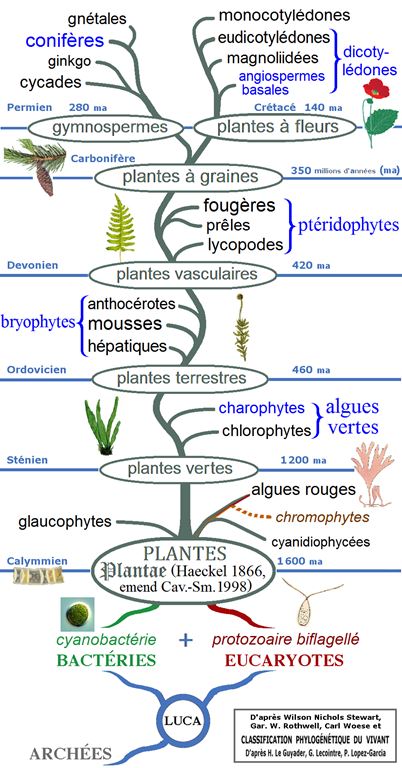
- Phylogénétique :
- Clade 4 : Angiospermes ;
- Clade 3 : Monocotylédones ;
- Clade 2 : Commelinidées ;
- Ordre APN : Zingiberales ;
- Famille APN : Zingiberaceae ;
Illustration : cet arbre phylogénétique des plantes montre les principaux clades et groupes traditionnels (monophylétiques en noir et paraphylétiques en bleu).
Dénominations
✖- Nom botanique : Aframomum melegueta (Rosc.) K. Schum. (1904)
- Synonymes français : malaguette, poivre de Guinée (plutôt attribué à Piper Guineense), poivre du paradis, plante du paradis, graine de paradis
- Synonymes : Aframomum grana-paradisi (L.) K.Schum.1753 (ancien nom scientifique qui regroupait les maniguettes), Aframomum granum-paradisi (nom invalide [erreur = écriture/orthographe incorrecte/fausse/erronée] ou variante orthographique valide ? (qp*)) ;
- Noms anglais et locaux : Grains of Paradise, Melegueta pepper, Paradieskörner (de)
Description et culture
✖- dont infos de "FOOD PLANTS INTERNATIONAL" :
Description :
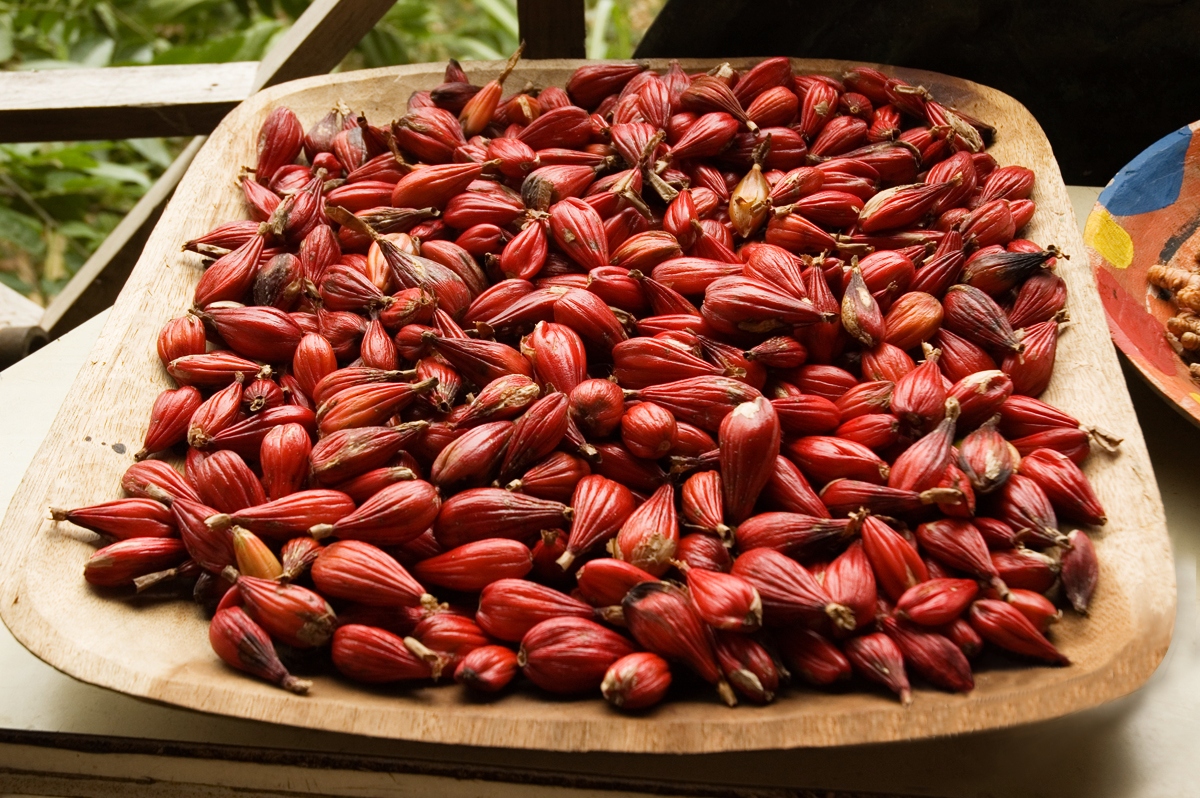
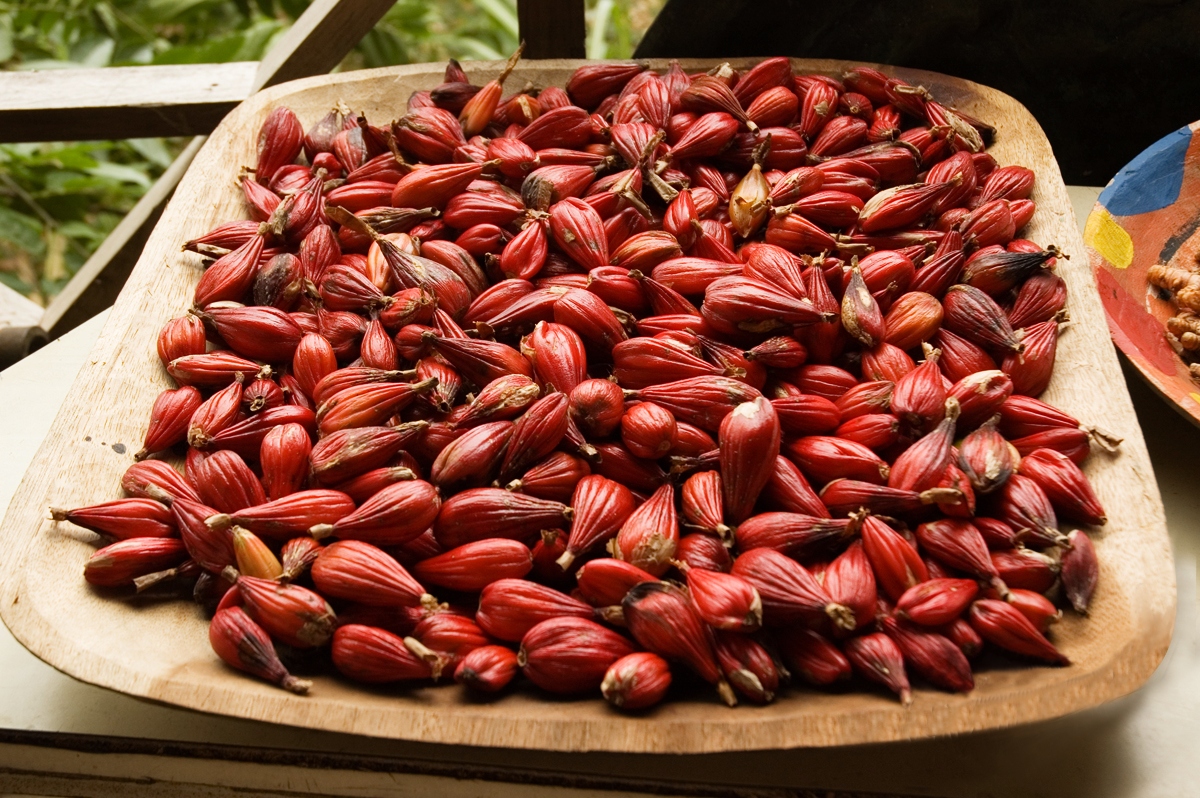
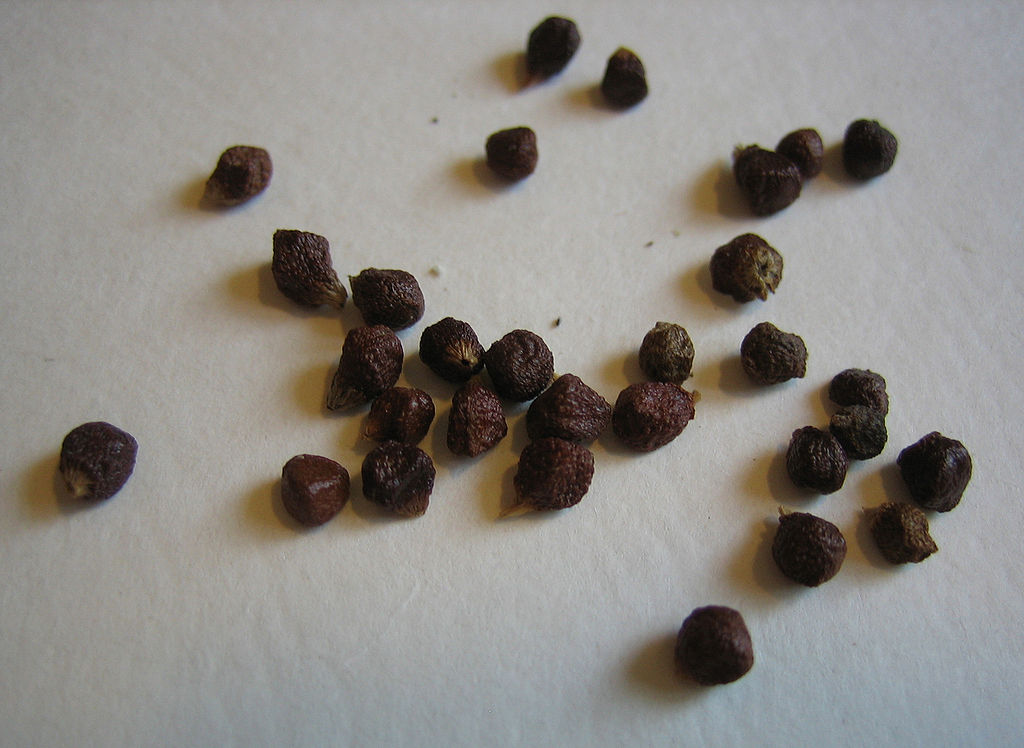
Une herbe de la famille du gingembre. Il continue de croître d'année en année. Il a des tiges ou des rhizomes souterrains. Ils ont une épaisseur de 2-3 mm et sont courts. Les feuilles sont largement en forme d'épée. Ils mesurent 35 cm de long et 15 cm de large. Les feuilles atteignent 0,8 à 2 m de haut. Les fleurs sont sur des tiges de 5 cm qui émergent juste au-dessus du niveau du sol. Ils sont violets et en forme de trompette. Les fruits sont en forme de poire et mesurent 10 cm de long. Ils sont rouges à orange et contiennent de nombreuses graines. Les graines sont gris clair et ternes. Ils sont presque ronds avec des points plats irréguliers{{{0(+x) (traduction automatique).
Original : A ginger family herb. It keeps growing from year to year. It has underground stems or rhizomes. These are 2-3 mm thick and short. The leaves are broadly sword shaped. They are 35 cm long and 15 cm wide. The leaves reach 0.8-2 m high. The flowers are on 5 cm stems that emerge just above ground level. They are purple and trumpet shaped. The fruit are pear shaped and 10 cm long. They are red to orange and contain many seeds. The seeds are light grey and dull. They are almost round with irregular flat spots{{{0(+x).
Production :
Les plantes commencent à fructifier au bout de 3 ans et produisent encore 4 ans. Les graines sont retirées de leur gousse pour le séchage{{{0(+x) (traduction automatique).
Original : Plants begin fruiting after 3 years and produce for another 4 years. The seeds are removed from their pod for drying{{{0(+x).
Culture :
Les plantes sont cultivées par division. Il peut être cultivé à partir de graines{{{0(+x) (traduction automatique).
Original : Plants are grown by division. It can be grown from seeds{{{0(+x).
 Consommation (rapports de comestibilité, parties utilisables et usages alimentaires correspondants)
✖
Fruit (graines : aromatisantes [épiceµ3(+),14,62,121, condiment3(+)]) comestible.
Partie testée :
graines - épices{{{0(+x) (traduction automatique). Original : Seeds - spice{{{0(+x)| Taux d'humidité | Énergie (kj) | Énergie (kcal) | Protéines (g) |
|---|---|---|---|
| / | / | / | / |
| Pro- vitamines A (µg) |
Vitamines C (mg) | Fer (mg) | Zinc (mg) |
| / | / | / | / |
 Risques et précautions à prendre
✖
néant, inconnus ou indéterminés.
Galerie(s)
✖


Autres infos
✖dont infos de "FOOD PLANTS INTERNATIONAL" :
Statut :
C'est une plante alimentaire cultivée{{{0(+x) (traduction automatique).
Original : It is a cultivated food plant{{{0(+x).
Distribution :
C'est une plante tropicale. Il peut pousser dans des endroits arides. Il pousse dans la forêt et la savane. C'est souvent dans des endroits marécageux. Il pousse à l'ombre{{{0(+x) (traduction automatique).
Original : It is a tropical plant. It can grow in arid places. It grows in forest and savannah. It is often in swampy locations. It grows in shade{{{0(+x).
Localisation :
Afrique, Angola, Bénin, Burkina Faso, Cameroun, Afrique centrale, Amérique centrale, Congo R, RD Congo, Côte d'Ivoire, Afrique de l'Est, Guinée équatoriale, Éthiopie, Gabon, Gambie, Ghana, Guinée, Guinée, Guyane, Haïti, Inde, Côte d'Ivoire, Libéria, Mali, Nigéria, Afrique du Nord, Sao Tomé-et-Principe, Sierra Leone, Togo, Ouganda, Afrique de l'Ouest{{{0(+x) (traduction automatique).
Original : Africa, Angola, Benin, Burkina Faso, Cameroon, Central Africa, Central America, Congo R, Congo DR, Côte d'Ivoire, East Africa, Equatorial Guinea, Ethiopia, Gabon, Gambia, Ghana, Guinea, Guinée, Guyana, Haiti, India, Ivory Coast, Liberia, Mali, Nigeria, North Africa, Sao Tome and Principe, Sierra Leone, Togo, Uganda, West Africa{{{0(+x).
Notes :
Il existe environ 50 espèces d'Aframomum{{{0(+x) (traduction automatique).
Original : There are about 50 Aframomum species{{{0(+x).
Liens, sources et/ou références
✖Sources et/ou références :
62toil d'épices ; 3PROTA4U (Protabase, en anglais) ; 14PASSEPORTSANTÉ.NET ; 121"Gernot Katzer´s Spice Pages" (en anglais) ; Wikipedia ; Wikipedia (en anglais) ;
dont classification : "The Plant List" (en anglais) ; "GRIN" (en anglais) ;
Recherche de/pour :
- "Aframomum melegueta" sur Google (pages et
images) ;
TROPICOS (en anglais) ;
Tela Botanica ;
Pl@ntNet ;
Pl@ntUse ;
- "Maniguette" sur Google (pages, images et recettes) ;
- "Aframomum melegueta" sur Google (pages et
images) ;
TROPICOS (en anglais) ;
Tela Botanica ;
Pl@ntNet ;
Pl@ntUse ;
Espèces du même genre (Aframomum)
✖25 taxons
- Aframomum albiflorum
- Aframomum alboviolaceum (Ridl.) K.Schum. (Aframome blanc violacée (tp*))
- Aframomum angustifolium (Sonn.) K. Schum. (Longoza)
- Aframomum cereum
- Aframomum citratum (C.Pereira) K.Schum. (Mbongo)
- Aframomum corrorima (C. Pereira) P. C. M. Jansen (Korarima)
- Aframomum daniellii (Hook.f.) K.Schum. (Cardamome du cameroun)
- Aframomum elliotii
- Aframomum exscapum (Sims) Hepper (Maniguette)
- Aframomum giganteum
- Aframomum laurentii
- Aframomum letestuanum
- Aframomum longiscapum
- Aframomum luteoalbum
- Aframomum mala
- Aframomum melegueta (Rosc.) K. Schum. (Maniguette)
- Aframomum polyanthum
- Aframomum pruinosum
- Aframomum rostratum
- Aframomum strobilaceum (Sm.) Hepper (Maniguette)
- Aframomum subsericeum
- Aframomum sulcatum
- Aframomum thonneri
- Aframomum verrucosum
- Aframomum zambesiacum (Baker) K.Schum. (Korarima des singes)
Espèces de la même famille (Zingiberaceae)
✖50 taxons (sur 255)
- Achasma loroglossum
- Aframomum albiflorum
- Aframomum alboviolaceum (Ridl.) K.Schum. (Aframome blanc violacée (tp*))
- Aframomum angustifolium (Sonn.) K. Schum. (Longoza)
- Aframomum cereum
- Aframomum citratum (C.Pereira) K.Schum. (Mbongo)
- Aframomum corrorima (C. Pereira) P. C. M. Jansen (Korarima)
- Aframomum daniellii (Hook.f.) K.Schum. (Cardamome du cameroun)
- Aframomum elliotii
- Aframomum exscapum (Sims) Hepper (Maniguette)
- Aframomum giganteum
- Aframomum laurentii
- Aframomum letestuanum
- Aframomum longiscapum
- Aframomum luteoalbum
- Aframomum mala
- Aframomum melegueta (Rosc.) K. Schum. (Maniguette)
- Aframomum polyanthum
- Aframomum pruinosum
- Aframomum rostratum
- Aframomum strobilaceum (Sm.) Hepper (Maniguette)
- Aframomum subsericeum
- Aframomum sulcatum
- Aframomum thonneri
- Aframomum verrucosum
- Aframomum zambesiacum (Baker) K.Schum. (Korarima des singes)
- Alpinia aquatica
- Alpinia arundelliana
- Alpinia athroantha
- Alpinia beamanii
- Alpinia blepharocalyx
- Alpinia caerulea (R.Br.) Benth. (Gingembre d'ornement)
- Alpinia calcarata
- Alpinia capitellata
- Alpinia chinensis
- Alpinia conchigera
- Alpinia coriandriodora
- Alpinia elegans
- Alpinia emaculata
- Alpinia galanga (L.) Willd. (Galanga)
- Alpinia glabra
- Alpinia globosa
- Alpinia hainanensis
- Alpinia japonica
- Alpinia javanica
- Alpinia kawakamii
- Alpinia kusshakuensis
- Alpinia kwangsiensis
- Alpinia latilabris
- Alpinia ligulata
- ...







 pour les fleurs (et/ou pétales, calice...),
 pour les feuilles (et/ou la tige, les pousses...),
 pour les racines,
 pour le tronc (et/ou l'écorce, la sève...), et enfin
 pour les champignons,
puis les notes alimentaires et médicinales (de 1 à 5 étoiles), la rusticité (résistance au froid/gel)
et pour finir un résumé.
pour les champignons,
puis les notes alimentaires et médicinales (de 1 à 5 étoiles), la rusticité (résistance au froid/gel)
et pour finir un résumé. menant ici 🙂
 ,
,  ,
,
 ,
,
 ,
,





 ,
,