Hibiscus surattensis
Pas d'illustration
pour le moment 😕


Une vigne ou un arbuste épineux. Il pousse chaque année à partir de graines. Il mesure 0,5 à 2 m de haut mais se trouve souvent au-dessus. La tige des feuilles mesure 2 à ... (traduction automatique)
→suite


Hibiscus surattensis

Une vigne ou un arbuste épineux. Il pousse chaque année à partir de graines. Il mesure 0,5 à 2 m de haut mais se trouve souvent au-dessus. La tige des feuilles mesure 2 à 7 cm de long. Il est denséme... (traduction automatique) →suite
Pas d'illustration
pour le moment 😕
Pas d'illustration
pour le moment 😕
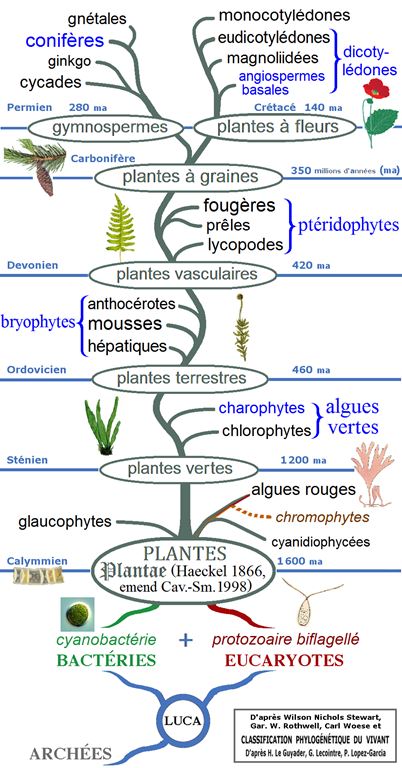
Classification
- Classique : en haut de l'écran, sous le coeur.
- Phylogénétique :
- Clade 4 : Angiospermes ;
- Clade 3 : Dicotylédones_vraies ;
- Clade 2 : Rosidées ;
- Clade 1 : Malvidées ;
- Ordre APN : Malvales ;
- Famille APN : Malvaceae ;
À droite, cet arbre phylogénétique des plantes montre les principaux clades et groupes traditionnels (monophylétiques en noir et paraphylétiques en bleu).
Dénominations
- Nom botanique : Hibiscus surattensis L.
- Synonymes : Furcaria surattensis Kostel, Hibiscus aculeatus G. Don, Hibiscus appendiculatus Stokes, Hibiscus furcatus Wall. [Invalid], Hibiscus surattensis var. genuinus Hochr, Hibiscus surattensis var. villosus Hochr, Hibiscus trinitarius Noronha
- Noms anglais et locaux : Wild sour, Bush sorrel
Description et culture
Tableau récapitulatif
Parties comes-tibles Note comest. (1-5) Note medic. (1-5) (Zones de) Rusticité Besoins en 
Besoins en  (1-3)
(1-3)Périodes de semis et récoltes Graines au gramme Durée de viabilité Profon-deur semis Espace-ment plants Espace-ment lignes Durée germi-native Durée avant récolte J F M A M J
J A S O N D
J F M A M J
J A S O N D
- dont infos de 0FPI ("FOOD PLANTS INTERNATIONAL", en anglais) :
Description :
Une vigne ou un arbuste épineux. Il pousse chaque année à partir de graines. Il mesure 0,5 à 2 m de haut mais se trouve souvent au-dessus. La tige des feuilles mesure 2 à 7 cm de long. Il est densément velu. Les feuilles sont alternes et profondément lobées. Il y a 3 à 5 lobes. Ils sont un peu velus et avec des bords dentés. Les feuilles mesurent 5 à 10 cm de long sur 5 à 11 cm de large. Les lobes sont en forme d'épée et mesurent 3 à 7 cm de long sur 1,5 à 3 cm de large. Les fleurs se produisent séparément à l'aisselle des feuilles. Les fleurs sont grandes et jaunâtres ou blanchâtres et teintées de rouge. Le fruit est une capsule ovale ou ronde de 1,2 cm de diamètre. Les graines sont en forme de rein avec des poils blancs très fins{{{0(+x) (traduction automatique).
Original : A spiny vine or shrub. It grows each year from seed. It is 0.5-2 m high but often lies over. The leaf stalk is 2-7 cm long. It is densely hairy. The leaves are alternate and deeply lobed. There are 3-5 lobes. They are somewhat hairy and with toothed edges. The leaves are 5-10 cm long by 5-11 cm wide. The lobes are sword shaped and 3-7 cm long by 1.5-3 cm wide. The flowers occur singly in the axils of leaves. The flowers are large and yellowish or whitish and tinged with red. The fruit is a capsule which is oval or round and 1.2 cm across. The seeds are kidney shaped with very fine white hairs{{{0(+x).
Production :
Les feuilles sont récoltées au début de la saison des pluies{{{0(+x) (traduction automatique).
Original : The leaves are collected in the early rainy season{{{0(+x).
 Consommation (rapports de comestibilité, parties utilisables et usages alimentaires correspondants)
Consommation (rapports de comestibilité, parties utilisables et usages alimentaires correspondants)Parties comestibles :
feuilles, fruits, fleurs - arôme{{{0(+x) (traduction automatique). Original : Leaves, Fruit, Flowers - flavouring{{{0(+x).Détails :
Les feuilles sont cuites comme arôme avec du poisson et de la viande. Les jeunes feuilles sont cuites comme légume. Ils sont également utilisés dans les currys. Il peut être utilisé pour épaissir les sauces{{{0(+x) (traduction automatique).
Original : The leaves are cooked as a flavouring with fish and meat.The young leaves are cooked as a vegetable. They are also used in curries. It can be used to thicken sauces{{{0(+x).
Partie testée :
/ Risques et précautions à prendre
Risques et précautions à prendrenéant, inconnus ou indéterminés.
Autres infos
dont infos de 0FPI ("FOOD PLANTS INTERNATIONAL", en anglais) :
Statut :
C'est une plante alimentaire cultivée. C'est un légume populaire dans certains endroits. Leaves sont vendus sur les marchés locaux{{{0(+x) (traduction automatique).
Original : It is a cultivated food plant. It is a popular vegetable in some places. Leaves are sold in local markets{{{0(+x).
Distribution :
Une plante tropicale. On les trouve partout aux Philippines dans les prairies ouvertes. En Chine, il pousse dans les vallées et les pentes ouvertes entre 1000 et 1180 m d'altitude dans le sud de la Chine. En Afrique, il pousse jusqu'à 1700 m d'altitude. Il pousse souvent dans les régions où les précipitations sont comprises entre 1 000 et 1 600 mm. Il peut pousser dans des endroits arides. Il peut pousser dans les endroits côtiers sur les dunes de sable. Au Yunnan{{{0(+x) (traduction automatique).
Original : A tropical plant. They are found throughout the Philippines in open grasslands. In China it grows in valleys and open slopes between 1000-1180 m altitude in S China. It Africa it grows up to 1,700 m above sea level. It often grows in areas with a rainfall between 1,000-1,600 mm. It can grow in arid places. It can grow in coastal places on sand dunes. In Yunnan{{{0(+x).
Localisation :
Africa, Angola, Asia, Australia, Bangladesh, Benin, Bhutan, Botswana, Burundi, Cambodia, Cameroon, Central Africa, Central African Republic, CAR, China, Congo, Côte d'Ivoire, East Africa, Eswatini, Ethiopia, Gabon, Gambia, Ghana, Guinea, Guinée, Guinea-Bissau, Himalayas, India, Indochina, Indonesia, Ivory Coast, Kenya, Laos, Liberia, Madagascar, Malawi, Malaysia, Mauritius, Mozambique, Myanmar, Nigeria, Northeastern India, Pacific, Philippines, Sao Tome and Principe, SE Asia, Senegal, Seychelles, Sierra Leone, South Africa, Southern Africa, Sri Lanka, Sudan, Swaziland, Taiwan, Tanzania, Thailand, Togo, Uganda, Vietnam, West Africa, Zambia, Zimbabwe{{{0(+x) (traduction automatique).
Original : Africa, Angola, Asia, Australia, Bangladesh, Benin, Bhutan, Botswana, Burundi, Cambodia, Cameroon, Central Africa, Central African Republic, CAR, China, Congo, Côte d'Ivoire, East Africa, Eswatini, Ethiopia, Gabon, Gambia, Ghana, Guinea, Guinée, Guinea-Bissau, Himalayas, India, Indochina, Indonesia, Ivory Coast, Kenya, Laos, Liberia, Madagascar, Malawi, Malaysia, Mauritius, Mozambique, Myanmar, Nigeria, Northeastern India, Pacific, Philippines, Sao Tome and Principe, SE Asia, Senegal, Seychelles, Sierra Leone, South Africa, Southern Africa, Sri Lanka, Sudan, Swaziland, Taiwan, Tanzania, Thailand, Togo, Uganda, Vietnam, West Africa, Zambia, Zimbabwe{{{0(+x).
Notes :
Il existe environ 220 espèces d'hibiscus{{{0(+x) (traduction automatique).
Original : There are about 220 Hibiscus species{{{0(+x).
Liens, sources et/ou références
Liens :
/ ;Sources et/ou références :
bibliographie (liste des sources et/ou références de l'encyclopédie)
dont classification : IPNI ("International Plant Names Index", en anglais) ; Kew (POWO - "Plant Of the World Online", "Royal Botanical Garden", en anglais) ;
dont livres et bases de données : 0FPI ("FOOD PLANTS INTERNATIONAL", en anglais) ;
dont bibliographie/références de 0FPI ("FOOD PLANTS INTERNATIONAL", en anglais) :
Altschul, S.V.R., 1973, Drugs and Foods from Little-known Plants. Notes in Harvard University Herbaria. Harvard Univ. Press. Massachusetts. no. 2760 ; Ambasta, S.P. (Ed.), 2000, The Useful Plants of India. CSIR India. p 267 ; Batawila, K., et al, 2007, Diversite et gestion des legumes de cueillete au Togo. African Journal of Food, Agriculture, Nutrition and Development 7( 3& 4): 66 ; Brown, W.H., 1920, Wild Food Plants of the Philippines. Bureau of Forestry Bulletin No. 21 Manila. p 114 ; Burkill, I.H., 1966, A Dictionary of the Economic Products of the Malay Peninsula. Ministry of Agriculture and Cooperatives, Kuala Lumpur, Malaysia. Vol 1 (A-H) p 1190 ; Dalziel, J. M., 1937, The Useful plants of west tropical Africa. Crown Agents for the Colonies London. ; Dobriyal, M. J. R. & Dobriyal, R., 2014, Non Wood Forest Produce an Option for Ethnic Food and Nutritional Security in India. Int. J. of Usuf. Mngt. 15(1):17-37 ; Facciola, S., 1998, Cornucopia 2: a Source Book of Edible Plants. Kampong Publications, p 148 ; Fowler, D. G., 2007, Zambian Plants: Their Vernacular Names and Uses. Kew. p 82 ; Goode, P., 1989, Edible Plants of Uganda. FAO p 39 ; Jadhav, R., et al, 2015, Forest Foods of Northern Western Ghats: Mode of Consumption, Nutrition and Availability. Asian Agri-History Vol. 19, No. 4: 293-317 ; Jardin, C., 1970, List of Foods Used In Africa, FAO Nutrition Information Document Series No 2.p 81 ; Kar, A., et al, 2013, Wild Edible Plant Resources used by the Mizos of Mizoram, India. Kathmandu University Journal of Science, Engineering and Technology. Vol. 9, No. 1, July, 2013, 106-126 ; Kumar, Y J. et al, 1987, Further Contribution to the Ethnobotany of Meghalaya: Plants used by "War jaintia" of Jaintia Hill District. Econ. Tax. Bot. Vol 11 No. 1 pp 65- ; Lugod, G.C. and de Padua L.S., 1979, Wild Food Plants in the Philippines. Vol. 1. Univ. of Philippines Los Banos. p 51 ; Martin, F.W. & Ruberte, R.M., 1979, Edible Leaves of the Tropics. Antillian College Press, Mayaguez, Puerto Rico. p 203 ; Monsalud, M.R., Tongacan, A.L., Lopez, F.R., & Lagrimas, M.Q., 1966, Edible Wild Plants in Philippine Forests. Philippine Journal of Science. p 491 ; Neogi, B., Prasad, M. N. V. and Rao, R. R., 1989, Ethnobotany of Some Weeds of Khasi and Garo Hills, Meghalaya, Northeastern India. Economic Botany 43(4): 471-479 ; Peters, C. R., O'Brien, E. M., and Drummond, R.B., 1992, Edible Wild plants of Sub-saharan Africa. Kew. p 145 ; Pham-Hoang Ho, 1999, An Illustrated Flora of Vietnam. Nha Xuat Ban Tre. p 525 ; Pickering, H., & Roe, E., 2009, Wild Flowers of the Victoria Falls Area. Helen Pickering, London. p 81 ; Ramachandran, V.S. and Nair, V.J., 1981, Ethnobotanical studies in Cannanore District, Kerala State (India). J Econ. Tax. Bot. Vol 2 pp 65-72 ; Recher, P, 2001, Fruit Spirit Botanical Gardens Plant Index. www.nrg.com.au/~recher/ seedlist.html p 6 ; Reitveld, S., 2013, The Animals and Plants of the Zazamalala Forest in Western Madagascar. p 110 ; Royal Botanic Gardens, Kew (1999). Survey of Economic Plants for Arid and Semi-Arid Lands (SEPASAL) database. Published on the Internet; http://www.rbgkew.org.uk/ceb/sepasal/internet [Accessed 3rd May 2011] ; Ruffo, C. K., Birnie, A. & Tengnas, B., 2002, Edible Wild Plants of Tanzania. RELMA p 378 ; Sang, D. T., & Mizoue, K. O. N., 2012, Use of Edible Forest Plants among Indigenous Ethnic Minorities in Cat Tien Biosphere Reserve, Vietnam. Asian Journal of Biodiversity Vol. 3 (1), p 23-49 ; Seidemann J., 2005, World Spice Plants. Economic Usage, Botany, Taxonomy. Springer. p 177 ; Singh, H.B., Arora R.K.,1978, Wild edible Plants of India. Indian Council of Agricultural Research, New Delhi. p 26 ; Sp. pl. 2:696. 1753 ; Swaziland's Flora Database http://www.sntc.org.sz/flora ; Tanaka, ; Tang ya, Malvaceae. Flora of China. p ; Terra, G.J.A., 1973, Tropical Vegetables. Communication 54e Royal Tropical Institute, Amsterdam, p 50 ; Thoa P. T. K., et al, 2013, Biodiversity indices and utilization of edible wild plants: a case study of the Cham Island in Quang Nam Province, Vietnam. Journal of Research in Environmental Science and Toxicology 2(9) :167-174 ; Uphof, ; Yesodharan, K. & Sujana, K. A., 2007, Wild edible plants traditionally used by the tribes in the Parambokulam Wildlife Sanctuary, Kerala, India. Natural Product Radiance 6(1) pp 74-80
Recherche de/pour :
- "Hibiscus surattensis" sur Google (pages et
images) ;
TPL ("The Plant List", en anglais) ;
GRIN ("Germplasm Resources Information Network", en anglais) ;
TROPICOS (en anglais) ;
Tela Botanica ;
Pl@ntNet ;
Pl@ntUse ;
"Plants For A Future" (en anglais) ;
"Useful Tropical Plants" (en anglais) ou
"Useful Temperate Plants" (en anglais) ;
- "Hibiscus surattensis" sur Google (pages et
images) ;
TPL ("The Plant List", en anglais) ;
GRIN ("Germplasm Resources Information Network", en anglais) ;
TROPICOS (en anglais) ;
Tela Botanica ;
Pl@ntNet ;
Pl@ntUse ;
"Plants For A Future" (en anglais) ;
"Useful Tropical Plants" (en anglais) ou
"Useful Temperate Plants" (en anglais) ;
Espèces du même genre (Hibiscus)
58 taxons
- Chanvre ambari
- Hibiscus d'Afrique
- Hibiscus des marais
- Hibiscus rose de chine
- Ketmie à feuilles ovales
- Ketmie écarlate
- Ketmie faux-tilleul
- Ketmie lobée
- Mauve en arbre
- Oseille de guinée
- Hibiscus acetosella Welw. ex Hiern
- Hibiscus aculeatus G.Don
- Hibiscus articulatus Hochst. ex A.Rich.
- Hibiscus asper Hook.f.
- Hibiscus bifurcatus Blanco
- Hibiscus boranensis Cufod.
- Hibiscus brachychlaenus F.Muell.
- Hibiscus brachysiphonius F.Muell.
- Hibiscus caesius Garcke
- Hibiscus calyphyllus Cav.
- Hibiscus cannabinus L. (Chanvre ambari)
- Hibiscus coccineus Walter (Ketmie écarlate)
- Hibiscus congestiflorus Gagnep.
- Hibiscus digitatus Cav.
- Hibiscus divaricatus Graham
- Hibiscus diversifolius Jacq.
- Hibiscus eetveldeanus De Wild. & T.Durand
- Hibiscus geranioides A.Cunn. ex Benth.
- Hibiscus gilletii De Wild.
- Hibiscus heterophyllus Vent.
- Hibiscus hirtus Buch.-Ham. ex Roxb.
- Hibiscus hispidissimus A.Chev.
- Hibiscus lancibracteatus De Wild. & T.Durand
- Hibiscus lobatus (Ketmie lobée)
- Hibiscus ludwigii Eckl. & Zeyh.
- Hibiscus lunariifolius Willd.
- Hibiscus maculatus Bartl.
- Hibiscus mechowii Garcke
- Hibiscus meeusei Exell
- Hibiscus meraukensis Hochr.
- Hibiscus micranthus L.f.
- Hibiscus moscheutos L. (Hibiscus des marais)
- Hibiscus mutabilis L.
- Hibiscus noldeae Baker f.
- Hibiscus ovalifolius (Ketmie à feuilles ovales)
- Hibiscus palmatus Cav.
- Hibiscus panduriformis Burm.f.
- Hibiscus pernambucensis Arruda
- Hibiscus physaloides Guill. & Perr.
- Hibiscus radiatus Willd. ex Roxb.
- Hibiscus rhodopetalus
- Hibiscus rosa-sinensis L. (Hibiscus rose de chine)
- Hibiscus rostellatus Guill. & Perr.
- Hibiscus sabdariffa L. (Oseille de guinée)
- Hibiscus schizopetalus
- Hibiscus selloi Grke
- Hibiscus sinosyriacus L.H. Bailey
- Hibiscus splendens C.Fraser ex Graham
- Hibiscus squamosus Gagnep.
- Hibiscus striatus Cav.
- ...
Espèces de la même famille (Malvaceae)
686 taxons
- Abutilon
- Abutilon à feuilles de vigne
- Abutilon à feuilles en losange
- Abutilon comestible (tp* de "Abutilon esculentum"
- Abutilon d'avicenne
- Abutilon de Sherard
- Abutilon du Chili
- Abutilon épineux
- Abutilon grimpant
- Abutilon hérissé
- Abutilon Miller
- Abutilon pourpre
- Abutilon strié
- Aibika
- Ambrette
- Anode
- Baobab
- Baobab de grandidier
- Bâton ivre
- Cacao de monte
- Cacao du Pérou
- Cacaoti
- Cacaoyer
- Chanvre ambari
- Chanvre de Calcutta
- Corchore à trois loges
- Corète potagère
- Cotonnier
- Cotonnier créole
- Cotonnier herbacé
- Cotonnier mexicain
- Cupuassu
- Cupui
- Dian bala{{{69
- Durian
- Durian manjit
- Faux colatier
- Flamme
- Flamme australienne
- Fromager
- Gombo
- Gombo ouest-africain
- Gouane à feuilles de tilleul
- Grewie occidentale
- Guazume à feuilles d'orme
- Guimauve officinale
- Héritière littorale
- Hibiscus à cinq fruits
- Hibiscus d'Afrique
- Hibiscus des marais
- Abelmoschus angulosus Wall. ex Wight & Arn.
- Abelmoschus caillei (A.Chev.) Stevels (Gombo ouest-africain)
- Abelmoschus crinitus Wall.
- Abelmoschus esculentus (L.) Moench (Gombo)
- Abelmoschus ficulneus (L.) Wight & Arn. (Ketmie faux ficus)
- Abelmoschus manihot (L.) Medik (Aibika)
- Abelmoschus mauritianum (Jacq.) Medic.
- Abelmoschus moschatus Medik (Ambrette)
- Abelmoschus pannosum (Forst. f.) Schlechtend.
- Abroma angusta (L) Willd.
- Abutilon angulatum (Guill. & Perr.) Mast.
- Abutilon cabrae De Wild. et Th.Dur.
- Abutilon fruticosum Guill. & Perr.
- Abutilon glaucum (Cav.) Sweet
- Abutilon grandifolium (Willd.) Sweet (Abutilon)
- Abutilon hirtum (Lam.) Sweet (Abutilon hérissé)
- Abutilon indicum (L.) Sweet (Mauve pays)
- Abutilon leucopetalum (F. Muell.) Benth.
- Abutilon longicuspe Hochst. ex A. Rich.
- Abutilon mauritianum (Jacq.) Medic.
- Abutilon megapotamicum (Spreng.) A. St.-Hil. & Naudin. (Abutilon grimpant)
- Abutilon ochsenii
- Abutilon otocarpum F.Muell.
- Abutilon pannosum (Forst. f.) Schlechtend.
- Abutilon pictum Gillies. ex Hook. & Arn.) Walp. (Abutilon strié)
- Abutilon purpurascens
- Abutilon ramosum (Cav.) Guill. & Perr.
- Abutilon species
- Abutilon theophrasti Medik. (Abutilon d'avicenne)
- Abutilon vitifolium (Abutilon à feuilles de vigne)
- Abutilon x hybridum hort. ex Siebert. & Voss. (Lanterne chinoise)
- Abutilon x milleri auct./hort. (Abutilon Miller)
- Abutilon x suntense
- Adansonia digitata L. (Baobab)
- Adansonia grandidieri Baill. (Baobab de grandidier)
- Adansonia gregorii F.Muell.
- Adansonia madagascariensis Baill.
- Adansonia perrieri Capuron
- Adansonia suarezensis H.Perrier
- Adansonia za Baill.
- Alcea apterocarpa
- Alcea flavovirens
- Alcea hohenacheri
- Alcea kurdica
- Alcea pallida
- Alcea rosea L. (Rose trémière)
- Alcea rugosa Alef.
- Alcea setosa (Rose-trémière)
- Althaea armeniaca Ten.
- Althaea officinalis L. (Guimauve officinale)
- ...







 donne accès au menu
  - encyclopédies des plantes alimentaires ;
 - page de recherche - reconnaissance (identification) de plantes ;
 - page du calendrier lunaire et son générateur (au format PDF et JPG) ;
 - tableau récapitulatif ;
 - générateur de potées (soupes), avec estimation des apports nutrionnels et du coût;
 - générateur de codes QR ;
 - page des archives avec de nombreux documents sur différents thèmes complémentaires comme la botanique, les légumes,
les champignons, la cuisine, le bien-être ainsi que différents MOOC mais également des liens vers les archives de l'association ;
- page des archives avec de nombreux documents sur différents thèmes complémentaires comme la botanique, les légumes,
les champignons, la cuisine, le bien-être ainsi que différents MOOC mais également des liens vers les archives de l'association ;

 pour le fruit (et/ou les graines, la pulpe, etc...),
 pour les fleurs (et/ou pétales, calice...),
 pour les feuilles (et/ou la tige, les pousses...),
 pour les racines,
 pour le tronc (et/ou l'écorce, la sève...), et enfin
 pour les champignons,
puis les notes alimentaires et médicinales (de 1 à 5 étoiles), la rusticité (résistance au froid/gel)
et pour finir un résumé.
pour les champignons,
puis les notes alimentaires et médicinales (de 1 à 5 étoiles), la rusticité (résistance au froid/gel)
et pour finir un résumé. menant ici 🙂
 ,
,  et
et





 ,
,


 Encyclopédie(s)
 Recherche-Reconnaissance
 Tableau récapitulatif
 Codes QR
 Archives
 Calendrier(s) lunaire(s)
  Potées
 Re-naturation/naturalisation
 Affichettes, herbiers &
co.
Affichettes, herbiers &
co. menu
menu galerie


 (en bas à droite).
 (en bas à gauche).
