Bromelia pinguin
 |
***
|
***
Une herbe. C'est comme une plante d'ananas. Il pousse attaché à d'autres plantes. Il atteint 1,2-2 m de haut. Il s'étend sur 2 m de large. Les feuilles sont en forme d'épà ... (traduction automatique)
→suite


Bromelia pinguin
Note alimentaire 

Une herbe. C'est comme une plante d'ananas. Il pousse attaché à d'autres plantes. Il atteint 1,2-2 m de haut. Il s'étend sur 2 m de large. Les feuilles sont en forme d'épée et se courbent vers l'exté... (traduction automatique) →suite
![Illustration Bromelia pinguin, Par Britton, N.L., Horne, F.W., Popular flora of Puerto Rico, Flora Borinqueña [unpublished watercolors] Popular Fl. Puerto Rico, via plantillustrations](inc/images/illustrations/bromelia_pinguin.jpg)
Classification
- Classique : en haut de l'écran, sous le coeur.
- Phylogénétique :
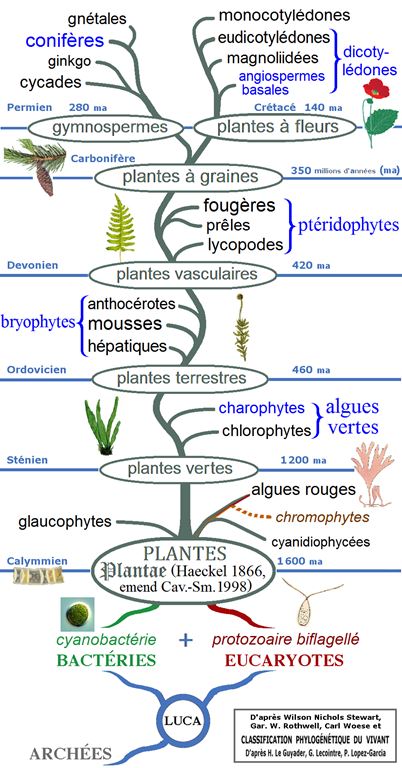
- Clade 4 : Angiospermes ;
- Clade 3 : Monocotylédones ;
- Clade 2 : Commelinidées ;
- Ordre APN : Poales ;
- Famille APN : Bromeliaceae ;
À droite, cet arbre phylogénétique des plantes montre les principaux clades et groupes traditionnels (monophylétiques en noir et paraphylétiques en bleu).
Dénominations
- Nom botanique : Bromelia pinguin L.
- Synonymes : Agallostachys fastuosa (Lindl.) Beer, Agallostachys pinguin (L.) Beer, Ananas pinguin (L.) Gaertn, Ananas pinguin Trew, Bromelia acarna Thunb. ex Schult.f, Bromelia fastuosa Lindl, Bromelia ignea Beer, Bromelia sepiaria Schult. & Schult.f. [Invalid], Karatas penguin Mill, Karatas pinguin (L.) Mill, Karatas pinguin Mill. ex Baker
- Noms anglais et locaux : Pinguin
Description et culture
Tableau récapitulatif
Parties comes-tibles Note comest. (1-5) Note medic. (1-5) (Zones de) Rusticité Besoins en 
Besoins en  (1-3)
(1-3)Périodes de semis et récoltes Graines au gramme Durée de viabilité Profon-deur semis Espace-ment plants Espace-ment lignes Durée germi-native Durée avant récolte J F M A M J
J A S O N D
J F M A M J
J A S O N D
- dont infos de 0FPI ("FOOD PLANTS INTERNATIONAL", en anglais) :
Description :
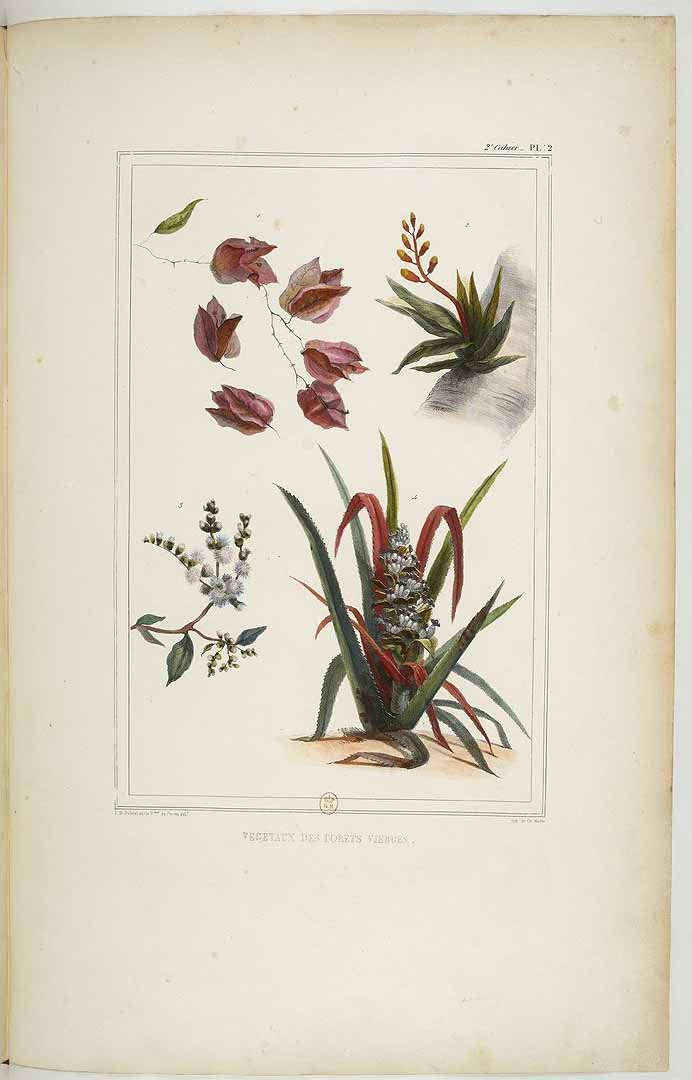
Une herbe. C'est comme une plante d'ananas. Il pousse attaché à d'autres plantes. Il atteint 1,2-2 m de haut. Il s'étend sur 2 m de large. Les feuilles sont en forme d'épée et se courbent vers l'extérieur. Ils sont verts mais virent au rouge à la base de la fleur. Il y a des dents sur les bords des feuilles. Ceux-ci sont accro. Les fleurs sont violettes et blanches. Il y a des bractées laineuses blanches le long du fruit. Le fruit est une tête remplie de baies qui ressemblent à des prunes et sont comestibles. Ils sont jaunes. La tête mesure de 60 à 100 cm de long{{{0(+x) (traduction automatique).
Original : A herb. It is like a pineapple plant. It grows attached to other plants. It grows 1.2-2 m high. It spreads 2 m wide. The leaves are sword shaped and curve outwards. They are green but turn red at the base of the flower. There are teeth on the edges of the leaves. These are hooked. The flowers are purple and white. There are white woolly bracts along the fruit. The fruit are a crowded head of berries that are plum like and edible. They are yellow. The head is 60-100 cm long{{{0(+x).
Culture :
Les plantes peuvent être cultivées à partir de graines ou de compensations{{{0(+x) (traduction automatique).
Original : Plants can be grown from seed or offsets{{{0(+x).
 Consommation (rapports de comestibilité, parties utilisables et usages alimentaires correspondants)
Consommation (rapports de comestibilité, parties utilisables et usages alimentaires correspondants)Parties comestibles :
feuilles, fruits, fleurs{{{0(+x) (traduction automatique). Original : Leaves, Fruit, Flowers{{{0(+x).Détails :
Le fruit est principalement utilisé pour le jus. Il est très acide et est utilisé pour le vinaigre. Le fruit peut être consommé cru ou cuit. La fleur est frite et mangée. Il est cuit en ragoût avec l'oignon et le poivron. La base des pousses est consommée crue ou cuite{{{0(+x) (traduction automatique).
Original : The fruit is mostly used for juice. It is very sour and is used for vinegar. The fruit can be eaten raw or cooked. The flower is fried and eaten. It is cooked in stews with onion and capsicum. The base of the shoots are eaten raw or cooked{{{0(+x).
Partie testée :
fruit{{{0(+x) (traduction automatique). Original : Fruit{{{0(+x) Risques et précautions à prendre
Risques et précautions à prendrenéant, inconnus ou indéterminés.
Galerie(s)
Par Britton, N.L., Horne, F.W., Popular flora of Puerto Rico, Flora Borinqueña [unpublished watercolors] Popular Fl. Puerto Rico, via plantillustrations
✖

Par Debret, J.B., Voyage pittoresque et historique au Brésil (1834-1839) Voy. Pittor., via plantillustrations
✖

Autres infos
dont infos de 0FPI ("FOOD PLANTS INTERNATIONAL", en anglais) :
Statut :
Il est vendu sur les marchés locaux{{{0(+x) (traduction automatique).
Original : It is sold in local markets{{{0(+x).
Distribution :
C'est une plante tropicale. Il est préférable dans un climat saisonnier humide et sec. Il a besoin d'un sol bien drainé. Il peut pousser en plein soleil ou à l'ombre légère. Au Costa Rica, il passe du niveau de la mer à 800 m d'altitude. Il convient aux zones de rusticité 9-12{{{0(+x) (traduction automatique).
Original : It is a tropical plant. It is best in a seasonally wet and dry climate. It needs well-drained soil. It can grow in full sun or light shade. In Costa Rica it grows from sea level to 800 m altitude. It suits hardiness zones 9-12{{{0(+x).
Localisation :
Australie, Brésil, Caraïbes, Amérique centrale *, Colombie, Costa Rica, Cuba, République dominicaine, Équateur, El Salvador, Grenade, Guatemala, Guyane, Guyane, Guyane, Haïti, Hawaï, Honduras, Inde, Jamaïque, Petites Antilles, Mexique * , Nicaragua, Amérique du Nord, Pacifique, Porto Rico, Amérique du Sud *, Suriname, USA, Venezuela, Antilles{{{0(+x) (traduction automatique).
Original : Australia, Brazil, Caribbean, Central America*, Colombia, Costa Rica, Cuba, Dominican Republic, Ecuador, El Salvador, Grenada, Guatemala, Guiana, Guianas, Guyana, Haiti, Hawaii, Honduras, India, Jamaica, Lesser Antilles, Mexico*, Nicaragua, North America, Pacific, Puerto Rico, South America*, Suriname, USA, Venezuela, West Indies{{{0(+x).
Notes :
Il existe 51 espèces de Bromelia. Ils poussent en Amérique tropicale{{{0(+x) (traduction automatique).
Original : There are 51 Bromelia species. They grow in tropical America{{{0(+x).
Liens, sources et/ou références
Liens :
/ ;Sources et/ou références :
bibliographie (liste des sources et/ou références de l'encyclopédie)
dont classification : IPNI ("International Plant Names Index", en anglais) ; Kew (POWO - "Plant Of the World Online", "Royal Botanical Garden", en anglais) ;
dont livres et bases de données : 5PFAF ("Plants For A Future", en anglais) ; 0FPI ("FOOD PLANTS INTERNATIONAL", en anglais) ;
dont bibliographie/références de 0FPI ("FOOD PLANTS INTERNATIONAL", en anglais) :
Ambasta S.P. (Ed.), 2000, The Useful Plants of India. CSIR India. p 87 ; Bircher, A. G. & Bircher, W. H., 2000, Encyclopedia of Fruit Trees and Edible Flowering Plants in Egypt and the Subtropics. AUC Press. p 66 ; Bodkin, F., 1991, Encyclopedia Botanica. Cornstalk publishing, p 171 ; Castaneda, H., & Stepp, J. R., 2007, Ecosystems as Sources of Useful Plants for the Guaymi People of Costa Rica. Ethnobotany Journal. 5:249-257 ; Chizmar Fernandez, C., et al, 2009, Plantas comestibles de Centroamerica. Instituto de Biodiversidad, Costa Rica. p 133 ; Cundall, P., (ed.), 2004, Gardening Australia: flora: the gardener's bible. ABC Books. p 260 ; Ekman Herbarium records Haiti ; Facciola, S., 1998, Cornucopia 2: a Source Book of Edible Plants. Kampong Publications, p 62 ; FAO, 1993, Valor Nutritivo Y Usis en Alimantacion humana de Algunis Cultivos Autoctonos Subexplotados de Mesoamerica. FAO, Santiago, Chile. p 69 ; Kermath, B. M., et al, 2014, Food Plants in the Americas: A survey of the domesticated, cultivated and wild plants used for Human food in North, Central and South America and the Caribbean. On line draft. p 145 ; Kiple, K.F. & Ornelas, K.C., (eds), 2000, The Cambridge World History of Food. CUP p 1835 ; Langlois, H. C., 2004, Ethnobotanical analysis of different successional stages as sources of wild edible plants for the Guaymi people in Costa Rica. M. Sc. thesis University of Florida. ; Llamas, K.A., 2003, Tropical Flowering Plants. Timber Press. p 157 ; Martin, F.W. & Ruberte, R.M., 1979, Edible Leaves of the Tropics. Antillian College Press, Mayaguez, Puerto Rico. p 79, 180 ; Martin, F. W., et al, 1987, Perennial Edible Fruits of the Tropics. USDA Handbook 642 p 84 ; Miguel, E., et al, 1989, A checklist of the cultivated plants of Cuba. Kulturpflanze 37. 1989, 211-357 ; Pio-Leon, J. F., et al, 2009, Physicochemical, Nutritional and Antibacterial Characteristics of the Fruit of Bromelia pinguin L. Plant Foods for Human Nutrition 64:181-187 ; Plants of Haiti Smithsonian Institute http://botany.si.edu ; Sp. pl. 1:285. 1753 (type species) ; Standley, P. & Steyermark, J., 1958, Flora of Guatemala. Fieldiana: Botany, Volume 24 part 1 p 347, 393 ; Staples, G.W. and Herbst, D.R., 2005, A tropical Garden Flora. Bishop Museum Press, Honolulu, Hawaii. p 637 ; Turreira-Garcia, N., et al, 2015, Wild edible plant knowledge, distribution and transmission: a case study of the Achi Mayans of Guatemala. Journal of Ethnobiology and Ethnomedicine. 11:52 ; Uphof, ; www.colecionandofrutas.org ; Zuchowski W., 2007, Tropical Plants of Costa Rica. A Zona Tropical Publication, Comstock Publishing. p 371
Recherche de/pour :
- "Bromelia pinguin" sur Google (pages et
images) ;
TPL ("The Plant List", en anglais) ;
GRIN ("Germplasm Resources Information Network", en anglais) ;
TROPICOS (en anglais) ;
Tela Botanica ;
Pl@ntNet ;
Pl@ntUse ;
"Useful Tropical Plants" (en anglais) ou
"Useful Temperate Plants" (en anglais) ;
- "Bromelia pinguin" sur Google (pages et
images) ;
TPL ("The Plant List", en anglais) ;
GRIN ("Germplasm Resources Information Network", en anglais) ;
TROPICOS (en anglais) ;
Tela Botanica ;
Pl@ntNet ;
Pl@ntUse ;
"Useful Tropical Plants" (en anglais) ou
"Useful Temperate Plants" (en anglais) ;
Espèces du même genre (Bromelia)
18 taxons
- Bromelia alsodes H.St.John
- Bromelia antiacantha Bertol.
- Bromelia balansae Mez
- Bromelia chrysantha Jacq.
- Bromelia grandiflora Mez
- Bromelia hemisphaerica Lam.
- Bromelia hieronymi Mez
- Bromelia interior L.B.Sm.
- Bromelia karatas L.
- Bromelia laciniosa Mart. ex Schult. & Schult.f.
- Bromelia michaelii Esteves, Hofacker & Scharf
- Bromelia nidus-puellae
- Bromelia plumieri
- Bromelia regnelii
- Bromelia serra Griseb.
- Bromelia sylvestris Burm.f.
- Bromelia trianae Mez
Espèces de la même famille (Bromeliaceae)
67 taxons
- Acanthostachys pitcairnioides
- Aechmea bracteata
- Aechmea bromeliifolia
- Aechmea distichantha Lem.
- Aechmea hoppii
- Aechmea kuntzeana Mez
- Aechmea longifolia
- Aechmea magdalenae
- Aechmea mariae-reginae H.Wendl.
- Aechmea racinae L.B.Sm.
- Aechmea warasii E.Pereira
- Ananas ananassoides
- Ananas bracteatus (Ananas requin)
- Ananas comosus (L.) Merr. (Ananas)
- Ananas lucidus
- Ananas parguazensis Camargo & L.B.Sm.
- Ananas sagenaria
- Billbergia afonsi-joannis
- Billbergia amoena
- Billbergia distachya
- Bromelia alsodes H.St.John
- Bromelia antiacantha Bertol.
- Bromelia balansae Mez
- Bromelia chrysantha Jacq.
- Bromelia grandiflora Mez
- Bromelia hemisphaerica Lam.
- Bromelia hieronymi Mez
- Bromelia interior L.B.Sm.
- Bromelia karatas L.
- Bromelia laciniosa Mart. ex Schult. & Schult.f.
- Bromelia michaelii Esteves, Hofacker & Scharf
- Bromelia nidus-puellae
- Bromelia plumieri
- Bromelia regnelii
- Bromelia serra Griseb.
- Bromelia sylvestris Burm.f.
- Bromelia trianae Mez
- Deuterocohnia meziana Kuntze ex Mez
- Disteganthus lateralis
- Dyckia ferox Mez
- Fascicularia bicolor (Fasciculaire bicolore)
- Greigia landbeckii
- Greigia sodiroana Mez
- Greigia sphacelata
- Greigia vulcanica Andr
- Hechtia montana Brandegee
- Karatas plumieri Morren
- Neoglaziovia variegata
- Ochagavia elegans Phil.
- Pseudananas sagenarius
- ...
Par Debret, J.B., Voyage pittoresque et historique au Brésil (1834-1839) Voy. Pittor., via plantillustrations







 donne accès au menu
  - encyclopédies des plantes alimentaires ;
 - page de recherche - reconnaissance (identification) de plantes ;
 - page du calendrier lunaire et son générateur (au format PDF et JPG) ;
 - tableau récapitulatif ;
 - générateur de potées (soupes), avec estimation des apports nutrionnels et du coût;
 - générateur de codes QR ;
 - page des archives avec de nombreux documents sur différents thèmes complémentaires comme la botanique, les légumes,
les champignons, la cuisine, le bien-être ainsi que différents MOOC mais également des liens vers les archives de l'association ;
- page des archives avec de nombreux documents sur différents thèmes complémentaires comme la botanique, les légumes,
les champignons, la cuisine, le bien-être ainsi que différents MOOC mais également des liens vers les archives de l'association ;

 pour le fruit (et/ou les graines, la pulpe, etc...),
 pour les fleurs (et/ou pétales, calice...),
 pour les feuilles (et/ou la tige, les pousses...),
 pour les racines,
 pour le tronc (et/ou l'écorce, la sève...), et enfin
 pour les champignons,
puis les notes alimentaires et médicinales (de 1 à 5 étoiles), la rusticité (résistance au froid/gel)
et pour finir un résumé.
pour les champignons,
puis les notes alimentaires et médicinales (de 1 à 5 étoiles), la rusticité (résistance au froid/gel)
et pour finir un résumé. menant ici 🙂
 ,
,  et
et





 ,
,


 Encyclopédie(s)
 Recherche-Reconnaissance
 Tableau récapitulatif
 Codes QR
 Archives
 Calendrier(s) lunaire(s)
  Potées
 Re-naturation/naturalisation
 Affichettes, herbiers &
co.
Affichettes, herbiers &
co. menu
menu galerie


 (en bas à droite).
 (en bas à gauche).
