Coeur (menu général)
Vita > Plantae > Magnoliophyta > Magnoliopsida > Apiales >
Apiaceae > Carum > Carum carvi - idu : 7184
! Nouveau site ici !Recherche simple
Flèche gauche Fiche précédente | AVI. O | Fiche suivante Flèche droite
! Nouveau site ici !
Vita > Plantae > Magnoliophyta > Magnoliopsida > Apiales > Apiaceae > Carum
AVI. O

  
Explications de "AVI.O" :

le A, qui pointe vers le haut, permet de remonter,
le V, qui pointe vers le bas, permet de descendre,
le I permet de dérouler toute la page
(les différentes catégories)
et le O amène ici,
où vous pouvez revenir à l'origine,
en cliquant n'importe où 🙂


À suivre !


Note alimentaire  

MiamMiamMiamMiam     |    

   Note médicinale  

SosSosSos

Flèche gauche aléatoire Flèche droite

Accueil Rafraichir AVI.O


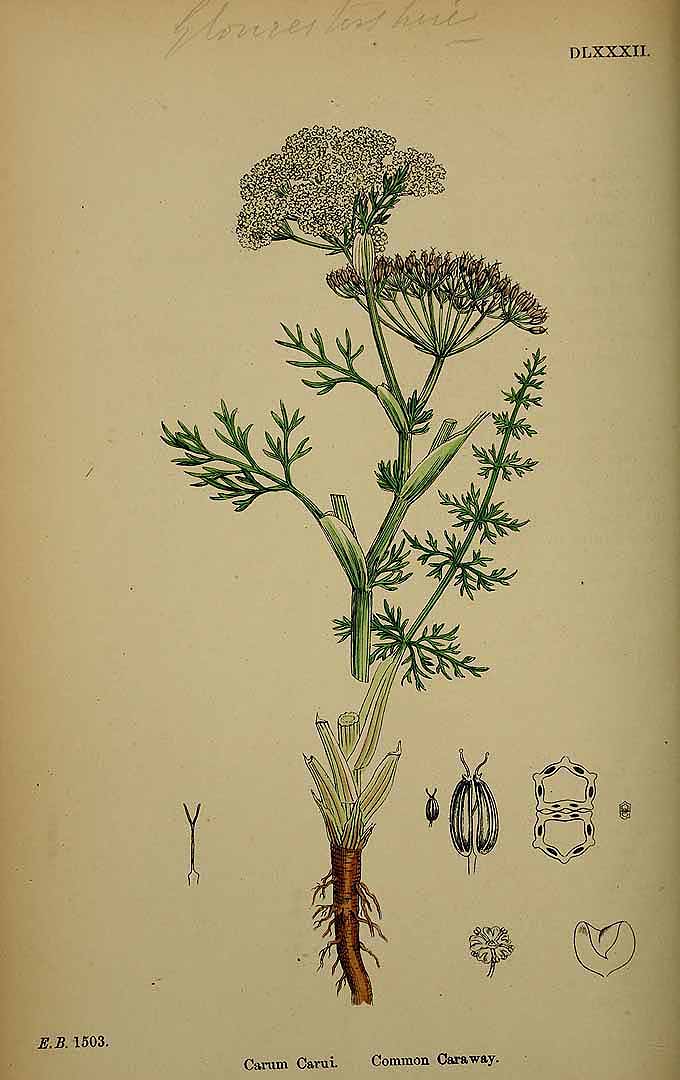
Illustration Carum carvi, Par Sowerby J.E. (English Botany, or Coloured Figures of British Plants, 3th ed., vol. 4: t. 582, 1865), via plantillustrations
      Illustration Carum carvi, Par Sowerby J.E. (English Botany, or Coloured Figures of British Plants, 3th ed., vol. 4: t. 582, 1865), via plantillustrations  - Fermersuivante Flèche droite

Par Sowerby J.E. (English Botany, or Coloured Figures of British Plants, 3th ed., vol. 4: t. 582, 1865), via plantillustrations


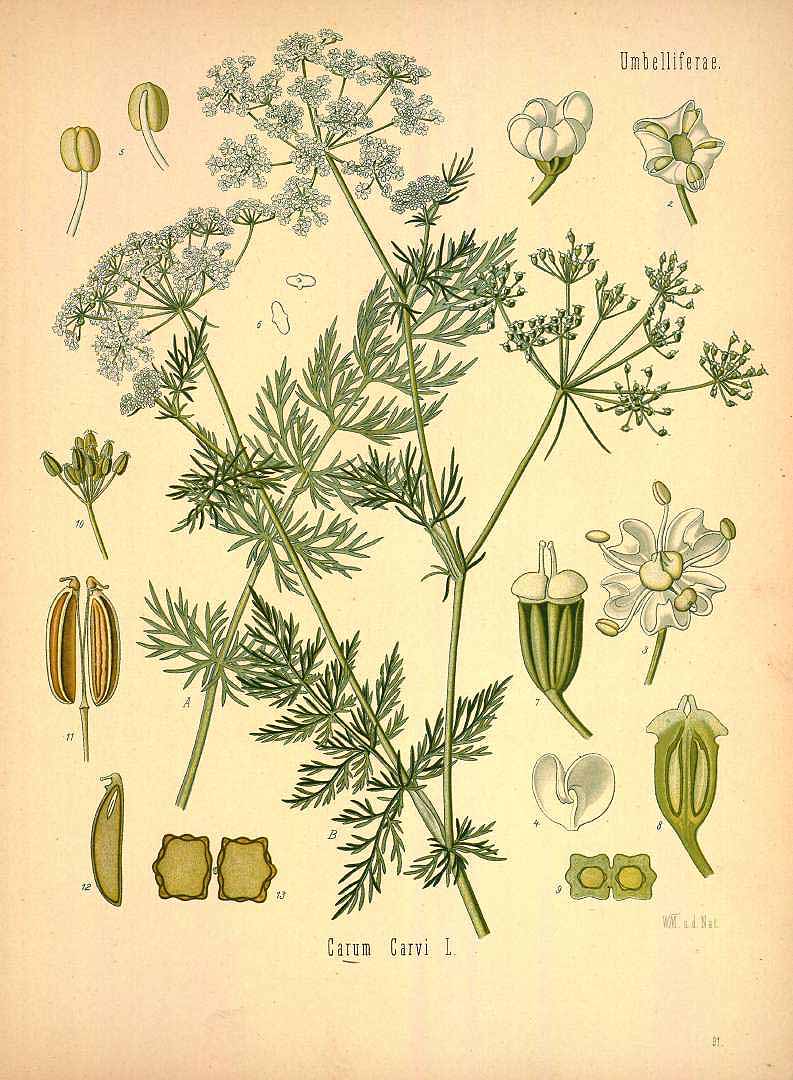
Illustration Carum carvi, Par Köhler F.E. (Medizinal Pflanzen, vol. 2: t. 91, 1890), via plantillustrations
précédente Flèche gaucheIllustration Carum carvi, Par Köhler F.E. (Medizinal Pflanzen, vol. 2: t. 91, 1890), via plantillustrations  - Fermersuivante Flèche droite

Par Köhler F.E. (Medizinal Pflanzen, vol. 2: t. 91, 1890), via plantillustrations


Illustration Carum carvi, Par Losch F. (Kra?uterbuch, unsere Heilpflanzen in Wort und Bild, Zweite Auflage, t. 49, fig. 1, 1905), via plantillustrations
précédente Flèche gaucheIllustration Carum carvi, Par Losch F. (Kra?uterbuch, unsere Heilpflanzen in Wort und Bild, Zweite Auflage, t. 49, fig. 1, 1905), via plantillustrations  - Fermersuivante Flèche droite

Par Losch F. (Kra?uterbuch, unsere Heilpflanzen in Wort und Bild, Zweite Auflage, t. 49, fig. 1, 1905), via plantillustrations


Illustration Carum carvi, Par Slick (Travail personnel), via wikimedia
précédente Flèche gaucheIllustration Carum carvi, Par Slick (Travail personnel), via wikimedia  - Fermer      

Par Slick (Travail personnel), via wikimedia


  • Détails

    :


      CARVI

      Carum Carvi L.

      Famille des Ombellifères.


      Synonymes : Anis des Vosges, Cumin des prés.

      Noms étrangers : Caraway (en), Kümmel (de), Karvij (nl), Kommen (da), Carvi (it), Carvi, Alcaravea (es), Alcaravia (pt).


      Indigène. — Bisannuel. — Racine de la grosseur du doigt, longue, jaunâtre, k chair blanche, serrée, ayant une légère saveur de carotte ; feuilles radicales, nombreuses, à folioles opposées, verticillées, à pétiole replié en gouttière, creux, ondulé ; tige droite, haute de 0m,30 à 0m,60, rameuse, anguleuse, lisse, glabre ; fleurs blanches, petites, en ombelles. Graine oblongue, un peu courbée, marquée de cinq sillons, aromatique, de couleur brun clair ; un gramme en contient 350 et le litre pèse 420 grammes ; durée germinative, trois ans.

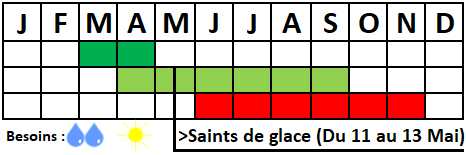
      Culture. — Les graines du carvi se récoltent fréquemment dans les prairies, où la plante vient spontanément. Quand on veut la cultiver, on sème les graines en rayons, au mois de mai ou de juin ; quand le plant a pris un peu de force, on éclaircit, et l’on n’a plus qu’à tenir la terre propre jusqu’à la récolte, qui a lieu au mois de juillet de la seconde année. En semant les graines aussitôt qu’elles sont mûres, on peut encore obtenir des plantes qui montent l’été suivant:on gagne ainsi un mois ou deux sur la culture ordinaire.

      Usage. — On peut employer la racine comme celle du panais, mais elle est peu usitée ; on mange aussi quelquefois les feuilles et les jeunes pousses. Les graines sont employées comme condiment; en Allemagne, on les met dans le pain, et en Hollande dans certains fromagesµ{{{75(+x)µ.


  • Dénominations

    :


    • Nom botanique :

      Carum carvi L. (1753)

    • Synonymes français

      :

      cumin des prés, anis des Vosges, carvi officinal, anis des prés, faux anis, carvi noir, céleri d'Italie

    • Synonymes

      :

      Apium carvi Crantz, Seseli carvi Lam, Carum carvi forma gracile L, (Lindl.) Wolff, Carum velenovskyi Rohlena

    • Noms anglais et locaux

      :

      caraway, carum, fang feng (cn transcrit), ge lu zi (cn transcrit), echter Kümmel (de), Kümmel (de), siyah-jira (in), zira-seeah (in), carvi (it), alcarávia (pt), comino de prado (es), kummin (sv) ;


  • Description et culture

    :


    • Description

      :

      Annuelle cultivée pour ses graines très aromatiques.

    • Description détaillée

      :

      CARVI

      Carum Carvi L.

      Famille des Ombellifères.


      Synonymes : Anis des Vosges, Cumin des prés.

      Noms étrangers : Caraway (en), Kümmel (de), Karvij (nl), Kommen (da), Carvi (it), Carvi, Alcaravea (es), Alcaravia (pt).


      Indigène. — Bisannuel. — Racine de la grosseur du doigt, longue, jaunâtre, k chair blanche, serrée, ayant une légère saveur de carotte ; feuilles radicales, nombreuses, à folioles opposées, verticillées, à pétiole replié en gouttière, creux, ondulé ; tige droite, haute de 0m,30 à 0m,60, rameuse, anguleuse, lisse, glabre ; fleurs blanches, petites, en ombelles. Graine oblongue, un peu courbée, marquée de cinq sillons, aromatique, de couleur brun clair ; un gramme en contient 350 et le litre pèse 420 grammes ; durée germinative, trois ans.

      Culture. — Les graines du carvi se récoltent fréquemment dans les prairies, où la plante vient spontanément. Quand on veut la cultiver, on sème les graines en rayons, au mois de mai ou de juin ; quand le plant a pris un peu de force, on éclaircit, et l’on n’a plus qu’à tenir la terre propre jusqu’à la récolte, qui a lieu au mois de juillet de la seconde année. En semant les graines aussitôt qu’elles sont mûres, on peut encore obtenir des plantes qui montent l’été suivant:on gagne ainsi un mois ou deux sur la culture ordinaire.

      Usage. — On peut employer la racine comme celle du panais, mais elle est peu usitée ; on mange aussi quelquefois les feuilles et les jeunes pousses. Les graines sont employées comme condiment; en Allemagne, on les met dans le pain, et en Hollande dans certains fromagesµ{{{75(+x)µ.

    • Exposition

      :

      ensoleillée

    • Nombre de graines au gramme

      : 350


    • dont infos de "FOOD PLANTS INTERNATIONAL" :


      • Description

        :

        Une herbe. La plante met deux ans à pousser puis à fleurir. C'est une herbe dressée. Il pousse environ 40 cm de haut. La racine est épaisse, longue et effilée comme une carotte. Il a une couleur pâle. Les feuilles sont divisées deux fois. Les feuilles supérieures sont plus petites et moins divisées. Les feuilles sont vert pâle. Les fleurs sont blanches. Les fruits sont oblongs et étroits. Ils ont généralement des côtes distinctes. Ces fruits brun foncé mesurent 5 à 6 mm de long. Le carvi est plus courbé et de couleur plus foncée que le cumin{{{0(+x) (traduction automatique).

        Original : A herb. The plant takes two years to grow then flower. It is an erect herb. It grows about 40 cm high. The root is thick, long and tapering like a carrot. It has a pale colour. The leaves are twice divided. The upper leaves are smaller and less divided. The leaves are pale green. The flowers are white. The fruit are oblong and narrow. They usually have distinct ribs. These dark brown fruit are 5-6 mm long. Caraway is more curved and darker in colour than cumin{{{0(+x).

      • Production

        :

        Il est récolté très tôt le matin avant que les graines ne se brisent. Les têtes de semences complètes sont stockées pendant 10 jours pour sécher avant le battage{{{0(+x) (traduction automatique).

        Original : It is harvested in the very early morning before seed heads shatter. Complete seed heads are stored for 10 days to dry out before threshing{{{0(+x).

      • Culture

        :

        Il est cultivé à partir de graines. Il ne transplante pas bien{{{0(+x) (traduction automatique).

        Original : It is grown from seed. It does not transplant well{{{0(+x).

Tableau semis-récolte
Code couleur


  • Miam

    Consommation

    (rapports de comestibilité, parties utilisables et usages alimentaires correspondants) :


    Feuille (jeunes et/ou tendres, cruesµ1µ et/ou aromatisantes [adoucissantes]µ1µ), fleurµ1µ (décorativesµ1µ et/ou aromatisantesµ1, dont boutons et tiges : cuitesµ1µ ou confites [vinaigre]µ1µ), racine (avant floraison : cuitesµ1µ et/ou aromatisantesµ1µ) et fruit (graines : aromatisantesµ1µ) comestibles.

    Partie testée

    : racines{{{0(+x) (traduction automatique).

    Original : Roots{{{0(+x)

    Taux d'humidité Énergie (kj) Énergie (kcal) Protéines (g)
    / 451 108 /

    Pro-
    vitamines A (µg)
    Vitamines C (mg) Fer (mg) Zinc (mg)
    / / / /


  • Précautions

    Risques et précautions à prendre

    :


    néant, inconnus ou indéterminés.


  • Autres infos

    :


    dont infos de "FOOD PLANTS INTERNATIONAL" :

    • Statut

      :

      Une herbe culinaire commune. Il est cultivé comme plante alimentaire{{{0(+x) (traduction automatique).

      Original : A common culinary herb. It is grown as a food plant{{{0(+x).

    • Distribution

      :

      Une plante tempérée. Une plante robuste. Il a besoin d'une position ensoleillée et abritée. Dans les jardins botaniques de Hobart. Il pousse au Népal de 2500 à 4500 m d'altitude. Il convient aux zones de rusticité 3-10. Au Sichuan et au Yunnan{{{0(+x) (traduction automatique).

      Original : A temperate plant. A hardy plant. It needs a sunny, sheltered position. In Hobart Botanical gardens. It grows in Nepal from 2500-4500 m altitude. It suits hardiness zones 3-10. In Sichuan and Yunnan{{{0(+x).

    • Localisation

      :

      Afghanistan, Afrique, Albanie, Australie, Asie, Autriche, Balkans, Biélorussie, Belgique, Bhoutan, Bosnie, Grande-Bretagne, Bulgarie, Canada, Chine, Cuba, République tchèque, Danemark, Afrique de l'Est, Égypte, Estonie, Éthiopie, Europe, Finlande, France, Allemagne, Grèce, Himalaya, Hollande, Hongrie, Islande, Inde, Indochine, Italie, Kirghizistan, Lituanie, Méditerranée, Moyen-Orient, Maroc, Myanmar, Népal, Pays-Bas, Afrique du Nord, Amérique du Nord, Norvège, Pakistan, Pologne, Prusse , Roumanie, Russie, Scandinavie, Asie du Sud-Est, Serbie, Slovaquie, Slovénie, Espagne, Suède, Suisse, Syrie, Tasmanie, Thaïlande, Tibet, Turquie, Ukraine, USA, Yougoslavie{{{0(+x) (traduction automatique).

      Original : Afghanistan, Africa, Albania, Australia, Asia, Austria, Balkans, Belarus, Belgium, Bhutan, Bosnia, Britain, Bulgaria, Canada, China, Cuba, Czech Republic, Denmark, East Africa, Egypt, Estonia, Ethiopia, Europe, Finland, France, Germany, Greece, Himalayas, Holland, Hungary, Iceland, India, Indochina, Italy, Kyrgyzstan, Lithuania, Mediterranean, Middle East, Morocco, Myanmar, Nepal, Netherlands, North Africa, North America, Norway, Pakistan, Poland, Prussia, Romania, Russia, Scandinavia, SE Asia, Serbia, Slovakia, Slovenia, Spain, Sweden, Switzerland, Syria, Tasmania, Thailand, Tibet, Turkey, Ukraine, USA, Yugoslavia{{{0(+x).

    • Notes

      :

      Il existe 30 espèces de Carum{{{0(+x) (traduction automatique).

      Original : There are 30 Carum species{{{0(+x).


  • Liens, sources et/ou références


    • Sources et/ou références :

      Tela Botanica ; Wikipedia ; Wikipedia (en anglais) ; Wikipedia (en allemand) ; 5"Plants For A Future" (en anglais) ;

      dont classification :
      "The Plant List" (en anglais) ; Kew (POWO - "Plant Of the World Online", "Royal Botanical Garden", en anglais) ;

      dont livres et bases de données : 1Plantes sauvages comestibles (livre pages 190, 191 et 205 à 210, par S.G. Fleischhauer, J. Guthmann et R. Spiegelberger) ;

      32Herbier gourmand (de Marc Veyrat et François Couplan, éditions Hachette, 1997) / détails du livre ; 1Plantes sauvages comestibles (de S.G. Fleischhauer, J. Guthmann et R. Spiegelberger, éditions Ulmer, 2012) / détails du livre ; 88Sauvages & comestibles - herbes, fleurs et petites salades (de Marie-Claude Paume, éditions EDISUB, 2011) / détails du livre ; CDV ; 86Tous les légumes (de Victor Renaud, éditions Ulmer, 2003) / détails du livre ; 87Le Truffaut du Potager (collectif, éditions Larousse, 2010) / détails du livre ; Le traité Rustica du potager (de Victor Renaud, Rustica, 2ème édition, 2007) / détails du livre ; Plantes médicinales - mode d'emploi (de Olivier Escuder, éditions Ulmer, 2007) / détails du livre

      dont biographie/références de "FOOD PLANTS INTERNATIONAL" :

      Abbet, C., et al, 2014, Ethnobotanical survey on wild alpine food plants in Lower and Central Valais (Switzerland). Journal of Ethnopharmacology 151 (2014) 624–634 ; Ambasta S.P. (Ed.), 2000, The Useful Plants of India. CSIR India. p 107 ; Battacharyya, A., 1991, Ethnobotanical Observations in the Ladakh Region of Northern Jammu and Kashmir State, India. Economic Botany, Vol. 45, No. 3, pp. 305-308 (As Carum carvi forma gracile) ; Bianchini, F., Corbetta, F., and Pistoia, M., 1975, Fruits of the Earth. Cassell. p 100 ; Bircher, A. G. & Bircher, W. H., 2000, Encyclopedia of Fruit Trees and Edible Flowering Plants in Egypt and the Subtropics. AUC Press. p 86 ; Bodkin, F., 1991, Encyclopedia Botanica. Cornstalk publishing, p 218 ; Boesi, A., 2014, Traditional knowledge of wild food plants in a few Tibetan communities. Journal of Ethnobiology and Ethnomedicine 10:75 ; Bremness, L., 1994, Herbs. Collins Eyewitness Handbooks. Harper Collins. p 239 ; Brickell, C. (Ed.), 1999, The Royal Horticultural Society A-Z Encyclopedia of Garden Plants. Convent Garden Books. p 232 ; Brouk, B., 1975, Plants Consumed by Man. Academic Press, London. p 287 ; Brown, D., 2002, The Royal Horticultural Society encyclopedia of Herbs and their uses. DK Books. p 155 ; Burnie, G & Fenton-Smith, J., 1999, A Grower's Guide to Herbs. Murdoch Books. p 18 ; Cerne, M., 1992, Wild Plants from Slovenia used as Vegetables. Acta Horticulturae 318 ; Cheifetz, A., (ed), 1999, 500 popular vegetables, herbs, fruits and nuts for Australian Gardeners. Random House p 121 ; "Chinese Nutrition Journal", 2002, Vol 23(8) p 298 ; Christanell, A., et al, 2010, The Cultural Significance of Wild Gathered Plant Species in Kartitsch (Eastern Tyrol, Austria) and the Influence of Socioeconomic Changes on Local Gathering Practices. Chapter 3 in Ethnobotany in the New Europe. Berghahn Books. Cobley, L.S. (rev. Steele, W.M.) 2nd Ed., 1976, An Introduction to the Botany of Tropical Crops. Longmans. p 249 ; Cundall, P., (ed.), 2004, Gardening Australia: flora: the gardener's bible. ABC Books. p 334 ; Denes, A., et al, 2012, Wild plants used for food by Hungarian ethnic groups living in the Carpathian Basin. Acta Societatis Botanicorum Poloniae 81 (4): 381-396 ; Dogan, A., et al, 2014, A review of edible plants on the Turkish Apiaceae species. J. Fac. Pharm. Istanbul, 44(2) pp 251-262 ; Dorjey, K., et al, 2012, Ethnobotanical observations in Trans-Himalayan Region of Ladakh. Journal of Plant Development Sciences Vol. 4 (4): 459-464. ; Dorjey, K., 2015, Exploration of Plant based Traditional Knowledge from Sham region of Ladakh (J. & K.), India. Journal of Plant Development Sciences Vol. 7 (5) : 429-433. ; Ertug, F, Yenen Bitkiler. Resimli Türkiye Florası -I- Flora of Turkey - Ethnobotany supplement ; Esperanca, M. J., 1988. Surviving in the wild. A glance at the wild plants and their uses. Vol. 1. p 186 ; Facciola, S., 1998, Cornucopia 2: a Source Book of Edible Plants. Kampong Publications, p 16 ; Gouldstone, S., 1983, Growing your own Food-bearing Plants in Australia. Macmillan p 187 ; Hedrick, U.P., 1919, (Ed.), Sturtevant's edible plants of the world. p 165 ; Hemphill, I, 2002, Spice Notes. Macmillan. p 101 ; http://nordicfood lab/org/blog/2102/9/wild-edible-plants-an-overview ; Hu, Shiu-ying, 2005, Food Plants of China. The Chinese University Press. p 593 ; Kalle, R. & Soukand, R., 2012, Historical ethnobotanical review of wild edible plants of Estonia (1770s-1960s) Acta Societatis Botanicorum Poloniae 81(4):271-281 ; Kang, Y., et al, 2014, Wild food plants used by the Tibetans of Gongba Valley (Zouqu country, Gansu, China) Journal of Ethnobiology and Ethnomedicine 10:20 ; Kaul, M.K. et al, 1985, Ethno-botanic studies in North-West and Trans-Himalaya - contribution to the wild food plants of Ladakh. J.Econo. Tax. Bot. Vol. 6 No. 3 pp 523-527 (As Carum carvi forma gracile) ; Kiple, K.F. & Ornelas, K.C., (eds), 2000, The Cambridge World History of Food. CUP p 432, 1745 ; Kybal, J., 1980, Herbs and Spices, A Hamlyn Colour Guide, Hamlyn Sydney p 68 ; Lazarides, M. & Hince, B., 1993, Handbook of Economic Plants of Australia, CSIRO. p 49 ; Lim, T. K., 2015, Edible Medicinal and Non Medicinal Plants. Volume 9, Modified Stems, Roots, Bulbs. Springer p 23 ; Łukasz Łuczaj and Wojciech M SzymaÅ„ski, 2007, Wild vascular plants gathered for consumption in the Polish countryside: a review. J Ethnobiol Ethnomedicine. 3: 17 ; Luczaj, L., 2012, Ethnobotanical review of wild edible plants of Slovakia. Acta Societatis Botanicorum Poloniae 81(4):245-255 ; Łuczaj, L., et al, 2013, Wild edible plants of Belarus: from Rostafińskiâ's questionnaire of 1883 to the present. Journal of Ethnobiology and Ethnomedicine 2013, 9:21 ; Luczaj, L., et al, 2015, Wild food plants and fungi used by Ukrainians in the western part of the Maramureş region in Romania. Acta Soc Bot Pol 84(3):339–346 ; Mabey, R., 1973, Food for Free. A Guide to the edible wild plants of Britain, Collins. p 148 ; Manandhar, N.P., 2002, Plants and People of Nepal. Timber Press. Portland, Oregon. p 138 ; Martin, F.W. & Ruberte, R.M., 1979, Edible Leaves of the Tropics. Antillian College Press, Mayaguez, Puerto Rico. p 222 ; Menninger, E.A., 1977, Edible Nuts of the World. Horticultural Books. Florida p 147 ; Miguel, E., et al, 1989, A checklist of the cultivated plants of Cuba. Kulturpflanze 37. 1989, 211-357 ; Molla, A., Ethiopian Plant Names. http://www.ethiopic.com/aplants.htm ; Mulherin, J., 1994, Spices and natural flavourings. Tiger Books, London. p 30 ; Murugan, Pal M., et al, 2010, Phytofoods of Nubra valley, Ladakh - The cold desert. Indian Journal of Traditional Knowledge. Vol. 9(2): 303-308 ; Negi, P. S. & Subramani, S. P., 2015, Wild Edible Plant Genetic Resources for Sustainable Food Security and Livelihood of Kinnaur District, Himachal Pradesh, India, International Journal of Conservation Science. 6 (4): 657-668 ; Paoletti, M.G., Dreon, A.L., and Lorenzoni, G.G., 1995, Pistic, Traditional Food from Western Friuli, NE Italy. Economic Botany 49(1) pp 26-30 ; Pieroni, A.,& Giusti, M. E., 2009, Alpine Ethnobotany in Italy: Journal of Ethnobiology and Ethnomedicine. 5:32 ; Pieroni, A. & Soukand, R., 2018, Forest as Stronghold of Local Ecological Practice: Currently Used Wild Food Plants in Polesia, Northern Ukraine. Economic Botany, XX(X) pp. 1-21 ; Plants for a Future database, The Field, Penpol, Lostwithiel, Cornwall, PL22 0NG, UK. http://www.scs.leeds.ac.uk/pfaf/ ; Purseglove, J.W., 1968, Tropical Crops Dicotyledons, Longmans. p 650 ; Rana, J.C. et al, 2011, Genetic resources of wild edible plants and their uses among tribal communities of cold arid regions of India. Genetic Resources and Crop Evolution. 59:135-149 ; Rawat, G.S., & Pangtey, Y.P.S., 1987, A Contribution to the Ethnobotany of Alpine Regions of Kumaon. J. Econ. Tax. Bot. Vol. 11 No. 1 pp 139-147 ; Redzic, S. J., 2006, Wild Edible Plants and their Traditional Use in the Human Nutrition in Bosnia-Herzegovina. Ecology of Food and Nutrition, 45:189-232 ; SAYCE ; Seidemann J., 2005, World Spice Plants. Economic Usage, Botany, Taxonomy. Springer. p 87 ; Sharma, L. et al, 2018, Diversity, distribution pattern, endemism and indigenous uses of wild edible plants in Cold Desert Biosphere Reserve of Indian Trans Himalaya. Indian Journal of Traditional Knowledge. Vol 17(1) January 2018 pp 122-131 ; Sher, H. et al, 2011, Ethnobotanical and Economic Observations of Some Plant Resources from the Northern Parts of Pakistan. Ethnobotany research & Applications 9:027-041 ; Shikov, A. N. et al, 2017, Traditional and Current Food Use of Wild Plants Listed in the Russian Pharmacopoeia. Frontiers in Pharmacology. Vol. 8 Article 841 ; Simkova, K. et al, 2014, Ethnobotanical review of wild edible plants used in the Czech Republic. Journal of Applied Botany and Food Quality 88, 49-67 ; Solomon, C., 2001, Encyclopedia of Asian Food. New Holland. p 64 ; Sp. pl. 1:263. 1753 ; Svanberg, I., et al, 2012, Edible wild plant use in the Faroe Islands and Iceland. Acta Societatis Botanicorum Poloniae 81(4): 233-238 ; Tardio, J., et al, 2006, Ethnobotanical review of wild edible plants in Spain. Botanical J. Linnean Soc. 152, 27-71 ; Tyagi, R. K., et al, 2004, Conservation of Spices Germplasm in India. Indian J. Plant Genet. Resour. 17(3): 163-174 ; Uprety, Y., et al, 2016, Traditional use and management of NTFPs in Kangchenjunga Landscape: implications for conservation and livelihoods. Journal of Ethnobiology and Ethnomedicine (2016) 12:19 ; van Wyk, B., 2005, Food Plants of the World. An illustrated guide. Timber press. p 121 ; Yeshi, K. et al, 2017, Taxonomical Identification of Himalayan Edible Medicinal Plants in Bhutan and the Phenolic Contents and Antioxidant Activity of Selected Plants. TBAP 7 (2) 2017 pp 89 - 106

    • Recherche de/pour :


Dernière modification le :
mercredi 21 mai 2025, à 10h44


Wikipedia
Flèche gauche||Flèche droite

Wikimedia
Flèche gauche||Flèche droite

Wikispecies
Flèche gauche||Flèche droite


Semeurs.fr
Flèche gauche||Flèche droite

marmiton
Flèche gauche||Flèche droite


Enregistrer et/ou imprimer cette fiche : Aperçu (format pdf) Enregistrer cette fiche : format pdf

Recherche simple :


Recherche multicritères :


Partie comestible :
Fruit Feuille Fleur
Racine Tronc
Note comestibilité :
* ** *** **** ***** |
Note médicinale :
* ** *** **** *****


Page de recherche


Responsabilité : Le Potager de mes Rêves (ainsi que tout membre de cette association) ne peut être tenu responsable pour toute allergie, maladie ou effet nuisible que toute personne ou animal pourrait subir suite à l'utilisation de toute plante mentionnée sur ce site :
(https://lepotager-demesreves.fr) ;
Cf. "Notes et mises en garde", pour plus d'informations sur les précautions à prendre.


Licence Creative Commons


Partager sur Facebook


Valid XHTML 1.0 Strict CSS Valide !