Schinus terebinthifolius
Pas d'illustration
pour le moment 😕

Un arbuste ou un petit arbre. Il atteint 7 m de haut. Les branches ne pendent pas. Les feuilles sont divisées en 5 à 9 folioles. La tige centrale de la feuille a de lég ...
→suite


Schinus terebinthifolius

Un arbuste ou un petit arbre. Il atteint 7 m de haut. Les branches ne pendent pas. Les feuilles sont divisées en 5 à 9 folioles. La tige centrale de la feuille a de légères ailes. Il a des folioles plus larges que celles du po... →suite
Pas d'illustration
pour le moment 😕
Pas d'illustration
pour le moment 😕
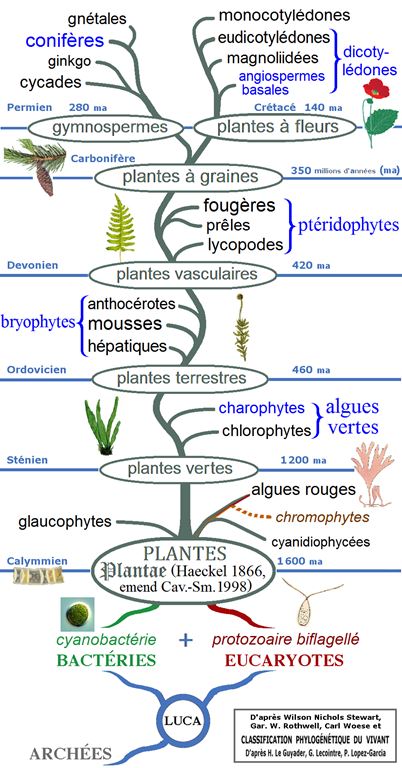
Classification
- Classique : en haut de l'écran, sous le coeur.
- Phylogénétique :
- Clade 4 : Angiospermes ;
- Clade 3 : Dicotylédones_vraies ;
- Clade 2 : Rosidées ;
- Clade 1 : Malvidées ;
- Ordre APN : Sapindales ;
- Famille APN : Anacardiaceae ;
À droite, cet arbre phylogénétique des plantes montre les principaux clades et groupes traditionnels (monophylétiques en noir et paraphylétiques en bleu).
Dénominations
- Nom botanique : Schinus terebinthifolius Raddi
- Synonymes : Lithrea chichita Speg.; Sarcotheca bahiensis Turcz.; Schinus antiarthriticus Mart. ex Marchand; Schinus aroeira Vell.; Schinus chichita Speg.; Schinus mellisii Engl.; Schinus mucronulatus Mart.; Schinus rhoifolius Mart.; Schinus terebinthifolius var. glaziovianus Engl.; Schinus terebinthifolius var. pohlianus Engl.; Schinus terebinthifolius var. rhoifolius (Mart.) Engl.; Schinus terebinthifolius var. selloanus Engl.; ;
- Noms anglais et locaux : Aroeira, Aroeira-periquita, Aroeira-pimenteira, Aroeura-vermelha, Brazilian pepper tree, Brazilski poprovec, Christmas berry, Filfil areed, Hawai-ian Holly, Mexican pepper, Nani-o-hilo, Pimenta-do-reino-de-arvore, Pink peppercorns, Pohon merica brasil, Red peppercorns, Wilelaiki,
Description et culture
Tableau récapitulatif
Parties comes-tibles Note comest. (1-5) Note medic. (1-5) (Zones de) Rusticité Besoins en 
Besoins en  (1-3)
(1-3)Périodes de semis et récoltes Graines au gramme Durée de viabilité Profon-deur semis Espace-ment plants Espace-ment lignes Durée germi-native Durée avant récolte J F M A M J
J A S O N D
J F M A M J
J A S O N D
Description :
Un arbuste ou un petit arbre. Il atteint 7 m de haut. Les branches ne pendent pas. Les feuilles sont divisées en 5 à 9 folioles. La tige centrale de la feuille a de légères ailes. Il a des folioles plus larges que celles du poivrier. Les folioles sont opposées et sans tiges. Ils sont ovales et mesurent 3 à 8 cm de long sur 1 à 2,5 cm de large. Le dépliant à la fin est légèrement plus grand que les autres. La tige fleurie se trouve à l'extrémité ou à l'aisselle des feuilles supérieures. Il mesure 5 à 11 cm de long. Il y a 5 sépales en forme de triangle et mesurant 1 mm de long. Les pétales sont blancs et mesurent 2 mm de long. Le fruit est rond et mesure 4 à 5 mm de diamètre. Il est rouge et brillant.
- dont infos de 0FPI ("FOOD PLANTS INTERNATIONAL", en anglais) :
Production :
Les fruits sont marinés en saumure ou séchés.{{{0(+x) (traduction automatique).
Original : The fruit are pickled in brine or dried{{{0(+x).
Culture :
Les plantes peuvent être cultivées par graines. Ils peuvent également être greffés.{{{0(+x) (traduction automatique).
Original : Plants can be grown by seed. They can also be grafted{{{0(+x).
 Consommation (rapports de comestibilité, parties utilisables et usages alimentaires correspondants)
Consommation (rapports de comestibilité, parties utilisables et usages alimentaires correspondants)Parties comestibles :
Fruits - épices, Attention,{{{0(+x) (traduction automatique). Original : Fruit - spice, Caution{{{0(+x).Détails :
Les baies sont utilisées pour l'aromatisation. ATTENTION : Ils ne doivent pas être consommés en grande quantité.{{{0(+x) (traduction automatique).
Original : The berries are used for flavouring. CAUTION: They should not be eaten in large amounts{{{0(+x).
Partie testée :
Fruit{{{0(+x) (traduction automatique). Original : Fruit{{{0(+x)| Taux d'humidité (%) | Énergie (kj) | Énergie (kcal) | Protéines (g) |
|---|---|---|---|
| 56. | 693 | 164 | 02/09/2026 |
| Pro- vitamines A (µg) |
Vitamines C (mg) | Fer (mg) | Zinc (mg) |
| / | 0.5 | 0.9 | / |
 Risques et précautions à prendre
Risques et précautions à prendrenéant, inconnus ou indéterminés.
Autres infos
dont infos de 0FPI ("FOOD PLANTS INTERNATIONAL", en anglais) :
Statut :
Ils sont cultivés commercialement à La Réunion.{{{0(+x) (traduction automatique).
Original : They are cultivated commercially in Reunion{{{0(+x).
Distribution :
Il est originaire du Brésil. Une plante tropicale et subtropicale. It grows in the Andean deserts in Peru. Il peut pousser dans des endroits arides. Il convient aux zones de rusticité 9 à 12.{{{0(+x) (traduction automatique).
Original : It is native to Brazil. A tropical and subtropical plant. It grows in the Andean deserts in Peru. It can grow in arid places. It suits hardiness zones 9-12{{{0(+x).
Localisation :
Afrique, Algérie, Angola, Argentine, Asie, Australie, Bahamas, Bermudes, Bolivie, Botswana, Brésil*, Caraïbes, Afrique centrale, Chili, Chine, Colombie, Cuba, République dominicaine, Afrique de l'Est, Équateur, Égypte, Eswatini, Europe, Guam, Hawaï, Inde, Indonésie, Israël, Jamaïque, Kenya, Marquises, Maurice, Méditerranée, Mexique, Moyen-Orient, Mozambique, Nouvelle-Zélande, Afrique du Nord, Pacifique, Pakistan, Papouasie-Nouvelle-Guinée, PNG, Paraguay, Pérou, Portugal, Porto Rico, Nouvelle-Calédonie, Norfolk Île, Afrique du Nord, Amérique du Nord, Paraguay, Réunion, Asie du Sud-Est, Seychelles, Sierra Leone, Slovénie, Amérique du Sud, Afrique du Sud, Afrique australe, Amérique du Sud, Espagne, Sainte-Hélène, Swaziland, Tanzanie, Ouganda, Émirats arabes unis, Émirats arabes unis, Uruguay, États-Unis, Venezuela, Îles Vierges, Afrique de l'Ouest, Antilles, Zimbabwe,{{{0(+x) (traduction automatique).
Original : Africa, Algeria, Angola, Argentina, Asia, Australia, Bahamas, Bermuda, Bolivia, Botswana, Brazil*, Caribbean, Central Africa, Chile, China, Colombia, Cuba, Dominican Republic, East Africa, Ecuador, Egypt, Eswatini, Europe, Guam, Hawaii, India, Indonesia, Israel, Jamaica, Kenya, Marquesas, Mauritius, Mediterranean, Mexico, Middle East, Mozambique, New Zealand, North Africa, Pacific, Pakistan, Papua New Guinea, PNG, Paraguay, Peru, Portugal, Puerto Rico, New Caledonia, Norfolk Island, North Africa, North America, Paraguay, Reunion, SE Asia, Seychelles, Sierra Leone, Slovenia, South America, South Africa, Southern Africa, South America, Spain, St Helena, Swaziland, Tanzania, Uganda, United Arab Emirates, UAE, Uruguay, USA, Venezuela, Virgin Islands, West Africa, West Indies, Zimbabwe{{{0(+x).
Notes :
Il existe environ 30 espèces de Schinus. C'est devenu une mauvaise herbe dans certaines régions. Cela peut être invasif.{{{0(+x) (traduction automatique).
Original : There are about 30 Schinus species. It has become a weed in some locations. It can be invasive{{{0(+x).
Liens, sources et/ou références
Liens :
/ ;Sources et/ou références :
bibliographie (liste des sources et/ou références de l'encyclopédie)
dont livres et bases de données :
dont bibliographie/références de 0FPI ("FOOD PLANTS INTERNATIONAL", en anglais) :
Ambasta S.P. (Ed.), 2000, The Useful Plants of India. CSIR India. p 556Barwick, M., 2004, Tropical and Subtropical Trees. A Worldwide Encyclopedic Guide. Thames and Hudson p 368Bioversity New World Fruits DatabaseBlamey, M and Grey-Wilson, C., 2005, Wild flowers of the Mediterranean. A & C Black London. p 128Bodkin, F., 1991, Encyclopedia Botanica. Cornstalk publishing, p 914Bortolotto, I. M., et al, 2018, Lista preliminar das plantas alimenticias nativas de Mato Grosso do Sul, Brasil. Iheringia, Serie Botanica, Porto Alegre, 73 (supl.):101-116Brack, P., et al, 2020, Frutas nativas do Rio Grande do Sul, Brasil: riqueza e potencial alimentício. Native fruits of Rio Grande do Sul, Brazil: richness and potential as food. Rodriguésia 71: e03102018.Brazil: Biodiversity for Food and Nutrition. http://www.b4fn.org/countries/brazil/Brickell, C. (Ed.), 1999, The Royal Horticultural Society A-Z Encyclopedia of Garden Plants. Convent Garden Books. p 942Burkill, H. M., 1985, The useful plants of west tropical Africa, Vol. 1. Kew.Coradin, L. et al (Eds), 2011, Especies Nativas da Flora Brasileira de Valor Economico Atual ou Potencial. Brasilia MMA. p 226Cundall, P., (ed.), 2004, Gardening Australia: flora: the gardener's bible. ABC Books. p 1322Dharani, N., 2002, Field Guide to common Trees & Shrubs of East Africa. Struik. p 156Facciola, S., 1998, Cornucopia 2: a Source Book of Edible Plants. Kampong Publications, p 10Flora of Australia Volume 49, Oceanic Islands 1, Australian Government Publishing Service, Canberra. (1994) p 245Flora of Pakistan. www.eFloras.orgGrandtner, M. M. & Chevrette, J., 2013, Dictionary of Trees, Volume 2: South America: Nomenclature, Taxonomy and Ecology. Academic Press p 593Hall, N. et al, 1972, The Use of Trees and Shrubs in the Dry Country of Australia, AGPS, Canberra. p 208Hibbert, M., 2002, The Aussie Plant Finder 2002, Florilegium. p 288http://www.botanic-gardens-ljubljana.com/en/plantsHunter, D., et al, 2019, The potential of neglected and underutilized species for improving diets and nutrition. Planta (2019) 250:709-729Hussey, B.M.J., Keighery, G.J., Cousens, R.D., Dodd, J., Lloyd, S.G., 1997, Western Weeds. A guide to the weeds of Western Australia. Plant Protection Society of Western Australia. p 80INFOODSUpdatedFGU-list.xlsKermath, B. M., et al, 2014, Food Plants in the Americas: A survey of the domesticated, cultivated and wild plants used for Human food in North, Central and South America and the Caribbean. On line draft. p 789Kinupp, V. F., 2007, Plantas alimenticias nao-convencionais da regiao metropolitana de Porto Alegre, RS, Brazil p 59Kinupp, V. F. & Bergman, I., 2008, Protein and minerals of native species, potential vegetables and fruits. Cienc.Tecnol. Aliment. Vol. 28 No. 4 Campinas Oct/Dec.Lamoureux, C.H., 1976, Trailside Plants of Hawaii's National Parks. Hawaii Natural History Association. p 40Lazarides, M. & Hince, B., 1993, Handbook of Economic Plants of Australia, CSIRO. p 212Llamas, K.A., 2003, Tropical Flowering Plants. Timber Press. p 60Long, C., 2005, Swaziland's Flora - siSwati names and Uses http://www.sntc.org.sz/flora/Lord, E.E., & Willis, J.H., 1999, Shrubs and Trees for Australian gardens. Lothian. p 72Low, T., 1992, Bush Tucker. Australia?s Wild Food Harvest. Angus & Robertson. p 185Marinelli, J. (Ed), 2004, Plant. DK. p 468Melzer, R. & Plumb, J., 2011, Plants of Capricornia. Belgamba, Rockhampton. p 534Mem. Mat. Fis. Soc. Ital. Sci. Modena, Pt. Mem. Fis. 18:399. 1820Paczkowska, G. & Chapman, A.R., 2000, The Western Australian Flora. A Descriptive Catalogue. Western Australian Herbarium. p 145Palgrave, K.C., 1996, Trees of Southern Africa. Struik Publishers. p 464Royal Botanic Gardens, Kew (1999). Survey of Economic Plants for Arid and Semi-Arid Lands (SEPASAL) database. Published on the Internet; http://www.rbgkew.org.uk/ceb/sepasal/internet [Accessed 28th March 2011]Schuler, S., (Ed.), 1977, Simon & Schuster's Guide to Trees. Simon & Schuster. No. 169Smith, N., Mori, S.A., et al, 2004, Flowering Plants of the Neotropics. Princeton. p 16Smith, N., Mori, S.A., et al, 2004, Flowering Plants of the Neotropics. Princeton. Plate 2 (Photo)Solomon, C., 2001, Encyclopedia of Asian Food. New Holland. p 278Staples, G.W. and Herbst, D.R., 2005, A tropical Garden Flora. Bishop Museum Press, Honolulu, Hawaii. p 106 (Drawing)Sukarya, D. G., (Ed.) 2013, 3,500 Plant Species of the Botanic Gardens of Indonesia. LIPI p 500Swaziland's Flora Database http://www.sntc.org.sz/floraWiersema, J. H. & Leon, B., 2013, World Economic Plants. A Standard Reference CRC Press. 2nd Ed. p 618World Checklist of Useful Plant Species 2020. Royal Botanic Gardens, Kewwww.colecionandofrutas.orgwww.worldagroforestrycentre.org/treedb/
Recherche de/pour :
- "Schinus terebinthifolius" sur Google (pages et
images) ;
IPNI ("International Plant Names Index", en anglais) ;
TPL ("The Plant List", en anglais) ;
GRIN ("Germplasm Resources Information Network", en anglais) ;
TROPICOS (en anglais) ;
Tela Botanica ;
Pl@ntNet ;
Pl@ntUse ;
"Plants For A Future" (en anglais) ;
"Useful Tropical Plants" (en anglais) ou
"Useful Temperate Plants" (en anglais) ;
- "Schinus terebinthifolius" sur Google (pages et
images) ;
IPNI ("International Plant Names Index", en anglais) ;
TPL ("The Plant List", en anglais) ;
GRIN ("Germplasm Resources Information Network", en anglais) ;
TROPICOS (en anglais) ;
Tela Botanica ;
Pl@ntNet ;
Pl@ntUse ;
"Plants For A Future" (en anglais) ;
"Useful Tropical Plants" (en anglais) ou
"Useful Temperate Plants" (en anglais) ;
Espèces du même genre (Schinus)
15 taxons
- Schinus areira L.
- Schinus fasciculata (Griseb.) I. M. Johnst.
- Schinus johnstonii F.A.Barkley
- Schinus latifolius
- Schinus marchandii F. A. Barkley
- Schinus microphyllus
- Schinus molle L. (Faux-poivrier odorant)
- Schinus odonelli
- Schinus patagonicus (Phil.) I.M. Johnst. ex Cabrera
- Schinus polygama (Cav.) Cabrera (Huigen)
- Schinus polygamus
- Schinus roigii Ruiz Leal & Babrera
- Schinus terebinthifolia Raddi (Faux-poivrier)
- Schinus weinmannifolius
Espèces de la même famille (Anacardiaceae)
372 taxons
- Anacardier
- Anacardier de l'Inde
- Anacardier géant
- Anacardier sauvage
- Baies à limonade (tp* de "lemonade berry")
- Binjai
- Faux-poivrier
- Faux-poivrier odorant
- Huigen
- Kemang
- Khinjuk
- Laitue d'eau
- Lapsi
- Manguier
- Manguier kalimantan
- Manguier parfumé
- Manguier pari
- Maprang
- Marula
- Noix de singes (tp* de "Monkey nut")
- Pistachier
- Pistachier de lAtlas
- Pistachier lentisque
- Pistachier térébinthe
- Pomme cythère
- Prune cafre
- Prunier espagnol
- Prunier mombin
- Raisin d'afrique
- Sambal
- Sumac
- Sumac à long pied
- Sumac à sucre (tp* de "sugar sumac")
- Sumac de virginie
- Sumac Fustet
- Sumac glabre
- Sumac hybride
- Umbu
- Allospondias sp.
- Amphipterygium adstringens (Schltdl.) Schiede ex Standl.
- Anacardium amapaense J.D.Mitch.
- Anacardium corymbosum Barb.Rodr.
- Anacardium excelsum (Bertero ex Kunth) Skeels (Anacardier sauvage)
- Anacardium fruticosum J.Mitch. & S.A.Mori
- Anacardium giganteum Hancock ex Engl. (Anacardier géant)
- Anacardium humile A.St.-Hil. (Noix de singes (tp* de "Monkey nut"))
- Anacardium macrocarpa Engler
- Anacardium microcarpum Ducke
- Anacardium microsepalum Loes.
- Anacardium nanum A.St.-Hil.
- Anacardium negrense Pires et Froes.
- Anacardium occidentale L. (Anacardier)
- Anacardium othonianum Rizzini
- Anacardium parvifolium Ducke
- Anacardium pumilum Walp.
- Anacardium spruceanum Benth. ex Engl.
- Antrocaryon amazonicum (Ducke) B.L.Burtt & A.W.Hill
- Antrocaryon klaineanum Pierre
- Antrocaryon micraster A.Chev. & Guillaumin
- Antrocaryon nannanii De Wild.
- Bouea macrophylla Griff. (Maprang)
- Bouea oppositifolia (Roxb.) Meisn.
- Buchanania amboinensis Miq.
- Buchanania arborescens F.Muell.
- Buchanania axillaris (Desr.) Ramamoorthy
- Buchanania cochinchinensis (Lour.) M.R.Almeida
- Buchanania lanceolata Wight
- Buchanania lancifolia Roxb.
- Buchanania macrocarpa Lauterb.
- Buchanania nitida Engl.
- Buchanania obovata Engl.
- Buchanania reticulata Elmer
- Buchanania sessilifolia
- Buchanania siamensis Miq.
- Buchanania splendens Miq.
- Campnosperma auriculatum (Blume) Hook.f.
- Campnosperma brevipetiolatum Volkens
- Campnosperma oxyrachis
- Campnosperma panamense Standl.
- Choerospondias axillaris (Roxb.) B. L. Burtt & A. W. Hill (Lapsi)
- Comocladia macrophylla (Hook. & Arn.) L. Riley
- Comocladia mollissima Kunth
- Comocladia pinnatifolia L.
- Cotinus coggygria Scop. (Sumac Fustet)
- Cyrtocarpa edulis (Brandegee) Standl.
- Cyrtocarpa procera Kunth
- Dracontomelon costatum Blume
- Dracontomelon dao (Blanco) Merr. & Rolfe
- ...







 donne accès au menu
  - encyclopédies des plantes alimentaires ;
 - page de recherche - reconnaissance (identification) de plantes ;
 - page du calendrier lunaire et son générateur (au format PDF et JPG) ;
 - tableau récapitulatif ;
 - générateur de potées (soupes), avec estimation des apports nutrionnels et du coût;
 - générateur de codes QR ;
 - page des archives avec de nombreux documents sur différents thèmes complémentaires comme la botanique, les légumes,
les champignons, la cuisine, le bien-être ainsi que différents MOOC mais également des liens vers les archives de l'association ;
- page des archives avec de nombreux documents sur différents thèmes complémentaires comme la botanique, les légumes,
les champignons, la cuisine, le bien-être ainsi que différents MOOC mais également des liens vers les archives de l'association ;

 pour le fruit (et/ou les graines, la pulpe, etc...),
 pour les fleurs (et/ou pétales, calice...),
 pour les feuilles (et/ou la tige, les pousses...),
 pour les racines,
 pour le tronc (et/ou l'écorce, la sève...), et enfin
 pour les champignons,
puis les notes alimentaires et médicinales (de 1 à 5 étoiles), la rusticité (résistance au froid/gel)
et pour finir un résumé.
pour les champignons,
puis les notes alimentaires et médicinales (de 1 à 5 étoiles), la rusticité (résistance au froid/gel)
et pour finir un résumé. menant ici 🙂
 ,
,  et
et





 ,
,


 Encyclopédie(s)
 Recherche-Reconnaissance
 Tableau récapitulatif
 Codes QR
 Archives
 Calendrier(s) lunaire(s)
  Potées
 Re-naturation/naturalisation
 Affichettes, herbiers &
co.
Affichettes, herbiers &
co. menu
menu galerie


 (en bas à droite).
 (en bas à gauche).
