Eriandra fragrans
Pas d'illustration
pour le moment 😕

Un arbre. Il atteint 20 m de haut. Il a des contreforts minces et raides atteignant 1 m de haut. L'écorce est grise et lisse. Les fleurs sont blanches et dégagent une odeur. ... (traduction automatique)
→suite


Eriandra fragrans

Un arbre. Il atteint 20 m de haut. Il a des contreforts minces et raides atteignant 1 m de haut. L'écorce est grise et lisse. Les fleurs sont blanches et dégagent une odeur. Les fruits sont verts (traduction automatique)
Pas d'illustration
pour le moment 😕
Pas d'illustration
pour le moment 😕
Classification
- Classique : en haut de l'écran, sous le coeur.
- Phylogénétique :
- Clade 4 : Angiospermes ;
- Clade 3 : Dicotylédones_vraies ;
- Clade 2 : Rosidées ;
- Clade 1 : Fabidées ;
- Ordre APN : Fabales ;
- Famille APN : Polygalaceae ;
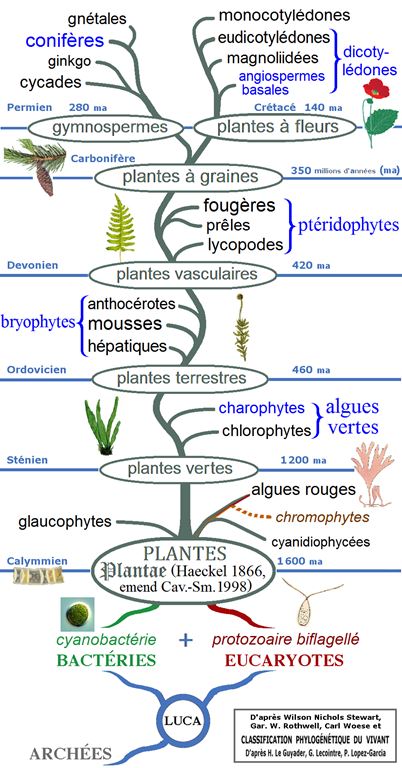
À droite, cet arbre phylogénétique des plantes montre les principaux clades et groupes traditionnels (monophylétiques en noir et paraphylétiques en bleu).
Description et culture
Tableau récapitulatif
Parties comes-tibles Note comest. (1-5) Note medic. (1-5) (Zones de) Rusticité Besoins en 
Besoins en  (1-3)
(1-3)Périodes de semis et récoltes Graines au gramme Durée de viabilité Profon-deur semis Espace-ment plants Espace-ment lignes Durée germi-native Durée avant récolte J F M A M J
J A S O N D
J F M A M J
J A S O N D
- dont infos de 0FPI ("FOOD PLANTS INTERNATIONAL", en anglais) :
Description :
Un arbre. Il atteint 20 m de haut. Il a des contreforts minces et raides atteignant 1 m de haut. L'écorce est grise et lisse. Les fleurs sont blanches et dégagent une odeur. Les fruits sont verts{{{0(+x) (traduction automatique).
Original : A tree. It grows 20 m high. It has thin, steep buttresses up to 1 m high. The bark is grey and smooth. The flowers are white and have a smell. The fruit are green{{{0(+x).
 Consommation (rapports de comestibilité, parties utilisables et usages alimentaires correspondants)
Consommation (rapports de comestibilité, parties utilisables et usages alimentaires correspondants)Parties comestibles :
fruit{{{0(+x) (traduction automatique). Original : Fruit{{{0(+x).Partie testée :
/ Risques et précautions à prendre
Risques et précautions à prendrenéant, inconnus ou indéterminés.
Autres infos
dont infos de 0FPI ("FOOD PLANTS INTERNATIONAL", en anglais) :
Distribution :
Une plante tropicale. Il pousse dans une forêt primaire bien drainée{{{0(+x) (traduction automatique).
Original : A tropical plant. It grows in well-drained primary forest{{{0(+x).
Localisation :
Asie, Indonésie, Pacifique, Papouasie-Nouvelle-Guinée, PNG, Asie du Sud-Est, Îles Salomon{{{0(+x) (traduction automatique).
Original : Asia, Indonesia, Pacific, Papua New Guinea, PNG, SE Asia, Solomon Islands{{{0(+x).
Liens, sources et/ou références
Liens :
/ ;Sources et/ou références :
bibliographie (liste des sources et/ou références de l'encyclopédie)
dont classification : IPNI ("International Plant Names Index", en anglais) ; Kew (POWO - "Plant Of the World Online", "Royal Botanical Garden", en anglais) ;
dont livres et bases de données : 0FPI ("FOOD PLANTS INTERNATIONAL", en anglais) ;
dont bibliographie/références de 0FPI ("FOOD PLANTS INTERNATIONAL", en anglais) :
French, B.R., 2010, Food Plants of Solomon Islands. A Compendium. Food Plants International Inc. p 329 ; Royen, P. & Steenis, 1952, J. Arnold Arbor. 33: 94 ; Walter, A. & Sam C., 2002, Fruits of Oceania. ACIAR Monograph No. 85. Canberra. p 279
Recherche de/pour :
- "Eriandra fragrans" sur Google (pages et
images) ;
TPL ("The Plant List", en anglais) ;
GRIN ("Germplasm Resources Information Network", en anglais) ;
TROPICOS (en anglais) ;
Tela Botanica ;
Pl@ntNet ;
Pl@ntUse ;
"Plants For A Future" (en anglais) ;
"Useful Tropical Plants" (en anglais) ou
"Useful Temperate Plants" (en anglais) ;
- "Eriandra fragrans" sur Google (pages et
images) ;
TPL ("The Plant List", en anglais) ;
GRIN ("Germplasm Resources Information Network", en anglais) ;
TROPICOS (en anglais) ;
Tela Botanica ;
Pl@ntNet ;
Pl@ntUse ;
"Plants For A Future" (en anglais) ;
"Useful Tropical Plants" (en anglais) ou
"Useful Temperate Plants" (en anglais) ;
Espèces de la même famille (Polygalaceae)
48 taxons
- Atroxima afzeliana (Oliv. ex Chodat) Stapf
- Atroxima liberica Stapf
- Bredemeyera floribunda Willd.
- Carpolobia alba G.Don
- Carpolobia goetzei Grke
- Carpolobia lutea G.Don
- Diclidanthera laurifolia Mart.
- Diclidanthera penduliflora Mart.
- Moutabea aculeata (Ruiz & Pav.) Poepp. & Endl.
- Moutabea angustifolia Huber
- Moutabea chodatiana Huber
- Moutabea guianensis Aubl.
- Nylandtia spinosa
- Oxygonum delagoense Kuntze
- Polygala amara L. (Polygala amer)
- Polygala arillata Buch.-Ham. ex D.Don
- Polygala arvensis Roxb.
- Polygala butyracea Heckel
- Polygala chamaebuxus L. (Polygale faux-buis)
- Polygala chinensis L.
- Polygala erioptera DC. (Polygale)
- Polygala exelliana Troupin
- Polygala japonica Houtt.
- Polygala nana DC.
- Polygala persicariifolia DC.
- Polygala senega L.
- Polygala sibirica L.
- Polygala tenuifolia Poir.
- Polygala theezans L. (Thé des Carolines)
- Polygala vulgaris L. (Polygala commun)
- Securidaca longipedunculata Fresen. (Arbre à violettes)
- Securidaca welwitschii Oliv.
- Xanthophyllum affine Korth. ex Miq.
- Xanthophyllum amoenum Chodat
- Xanthophyllum colubrinum Gagnep.
- Xanthophyllum ecarinatum Chodat
- Xanthophyllum flavescens Roxb.
- Xanthophyllum glaucum Wall. ex Hassk.
- Xanthophyllum hainanense Hu
- Xanthophyllum lanceatum (Miq.) J.J.Sm.
- Xanthophyllum obscurum A.W.Benn.
- Xanthophyllum piperitum
- Xanthophyllum rufum A.W.Benn.
- Xanthophyllum sp
- Xanthophyllum stipitatum A.W.Benn.
- Xanthophyllum vitellinum (Blume) D.Dietr.
- Xanthoxylum lanceatum







 donne accès au menu
  - encyclopédies des plantes alimentaires ;
 - page de recherche - reconnaissance (identification) de plantes ;
 - page du calendrier lunaire et son générateur (au format PDF et JPG) ;
 - tableau récapitulatif ;
 - générateur de potées (soupes), avec estimation des apports nutrionnels et du coût;
 - générateur de codes QR ;
 - page des archives avec de nombreux documents sur différents thèmes complémentaires comme la botanique, les légumes,
les champignons, la cuisine, le bien-être ainsi que différents MOOC mais également des liens vers les archives de l'association ;
- page des archives avec de nombreux documents sur différents thèmes complémentaires comme la botanique, les légumes,
les champignons, la cuisine, le bien-être ainsi que différents MOOC mais également des liens vers les archives de l'association ;

 pour le fruit (et/ou les graines, la pulpe, etc...),
 pour les fleurs (et/ou pétales, calice...),
 pour les feuilles (et/ou la tige, les pousses...),
 pour les racines,
 pour le tronc (et/ou l'écorce, la sève...), et enfin
 pour les champignons,
puis les notes alimentaires et médicinales (de 1 à 5 étoiles), la rusticité (résistance au froid/gel)
et pour finir un résumé.
pour les champignons,
puis les notes alimentaires et médicinales (de 1 à 5 étoiles), la rusticité (résistance au froid/gel)
et pour finir un résumé. menant ici 🙂
 ,
,  et
et





 ,
,


 Encyclopédie(s)
 Recherche-Reconnaissance
 Tableau récapitulatif
 Codes QR
 Archives
 Calendrier(s) lunaire(s)
  Potées
 Re-naturation/naturalisation
 Affichettes, herbiers &
co.
Affichettes, herbiers &
co. menu
menu galerie


 (en bas à droite).
 (en bas à gauche).
