Aporosa villosa
Pas d'illustration
pour le moment 😕

Un arbuste ou un arbre. Il atteint 15 m de haut. Les jeunes branches sont velues. La tige des feuilles mesure 10 à 25 mm de long. Le limbe des feuilles est étroitement ovale ... (traduction automatique)
→suite


Aporosa villosa

Un arbuste ou un arbre. Il atteint 15 m de haut. Les jeunes branches sont velues. La tige des feuilles mesure 10 à 25 mm de long. Le limbe des feuilles est étroitement ovale et mesure 9-30 cm de long sur... (traduction automatique) →suite
Pas d'illustration
pour le moment 😕
Pas d'illustration
pour le moment 😕
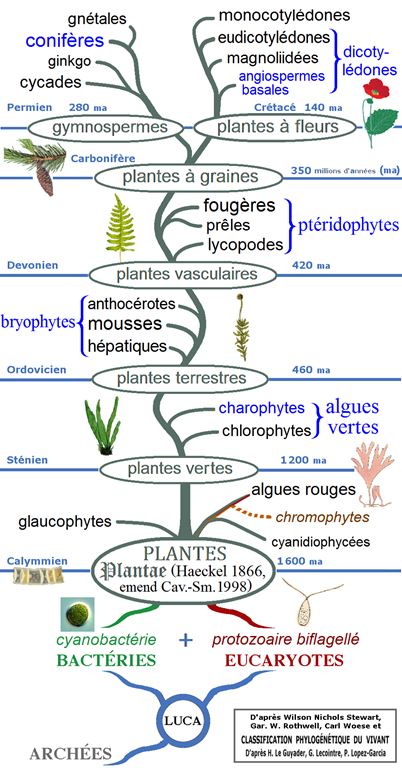
Classification
- Classique : en haut de l'écran, sous le coeur.
- Phylogénétique :
- Clade 4 : Angiospermes ;
- Clade 3 : Dicotylédones_vraies ;
- Clade 2 : Rosidées ;
- Clade 1 : Fabidées ;
- Ordre APN : Malpighiales ;
- Famille APN : Phyllanthaceae ;
À droite, cet arbre phylogénétique des plantes montre les principaux clades et groupes traditionnels (monophylétiques en noir et paraphylétiques en bleu).
Dénominations
- Nom botanique : Aporosa villosa (Lindl.) Baill.
- Synonymes : Aporosa glabrifolia Kurz.Aporosa sphaerosperma Gagnep, Aporosa sphaerosperma var. cordata Gagnep, Lepidostachya villosa Wall, Scepa villosa Wall. ex Lindl
- Noms anglais et locaux : Nanmuer
Description et culture
Tableau récapitulatif
Parties comes-tibles Note comest. (1-5) Note medic. (1-5) (Zones de) Rusticité Besoins en 
Besoins en  (1-3)
Périodes de semis et récoltes Graines au gramme Durée de viabilité Profon-deur semis Espace-ment plants Espace-ment lignes Durée germi-native Durée avant récolte J F M A M J
J A S O N D
J F M A M J
J A S O N D
- dont infos de 0FPI ("FOOD PLANTS INTERNATIONAL", en anglais) :
Description :
Un arbuste ou un arbre. Il atteint 15 m de haut. Les jeunes branches sont velues. La tige des feuilles mesure 10 à 25 mm de long. Le limbe des feuilles est étroitement ovale et mesure 9-30 cm de long sur 6-12 cm de large. Les fleurs mâles et femelles sont séparées. Le fruit est ovale et mesure 10 mm de long sur 7 à 9 mm de large{{{0(+x) (traduction automatique).
Original : A shrub or tree. It grows up to 15 m tall. The young branches are hairy. The leaf stalk us 10-25 mm long. The leaf blade is narrowly oval and 9-30 cm long by 6-12 cm wide. The male and female flowers are separate. The fruit is oval and 10 mm long by 7-9 mm wide{{{0(+x).
 Consommation (rapports de comestibilité, parties utilisables et usages alimentaires correspondants)
Parties comestibles :
fruit{{{0(+x) (traduction automatique). Original : Fruit{{{0(+x).Détails :
Les fruits sont consommés crus{{{0(+x) (traduction automatique).
Original : The fruit are eaten raw{{{0(+x).
Partie testée :
/ Risques et précautions à prendre
néant, inconnus ou indéterminés.
Autres infos
dont infos de 0FPI ("FOOD PLANTS INTERNATIONAL", en anglais) :
Statut :
Les fruits ne sont pas particulièrement attrayants{{{0(+x) (traduction automatique).
Original : The fruit are not particularly attractive{{{0(+x).
Distribution :
Une plante tropicale. Il pousse en dessous de 1500 m d'altitude dans le Yunnan en Chine. Il pousse en forêt secondaire. Il peut être dans un sol sec ou partiellement marécageux. Il pousse entre 300 et 1500 m d'altitude{{{0(+x) (traduction automatique).
Original : A tropical plant. It grows below 1500 m altitude in Yunnan in China. It grows in secondary forest. It can be in dry or partly swampy ground. It grows between 300-1,500 m altitude{{{0(+x).
Localisation :
Asie, Cambodge, Chine, Inde, Indochine, Laos, Myanmar, Asie du Sud-Est, Thaïlande, Vietnam{{{0(+x) (traduction automatique).
Original : Asia, Cambodia, China, India, Indochina, Laos, Myanmar, SE Asia, Thailand, Vietnam{{{0(+x).
Liens, sources et/ou références
Liens :
/ ;Sources et/ou références :
bibliographie (liste des sources et/ou références de l'encyclopédie)
dont classification : IPNI ("International Plant Names Index", en anglais) ; Kew (POWO - "Plant Of the World Online", "Royal Botanical Garden", en anglais) ;
dont livres et bases de données : 0FPI ("FOOD PLANTS INTERNATIONAL", en anglais) ;
dont bibliographie/références de 0FPI ("FOOD PLANTS INTERNATIONAL", en anglais) :
Altschul, S.V.R., 1973, Drugs and Foods from Little-known Plants. Notes in Harvard University Herbaria. Harvard Univ. Press. Massachusetts. no. 2149 (As Aporosa sphaerosperma) ; Ambasta S.P. (Ed.), 2000, The Useful Plants of India. CSIR India. p 48 ; Schmidt-Vogt, D., 2001, Secondary Forests in Swidden Agriculture in the Highland of Thailand. Journal of tropical Forest Science 13(4): 748-767 ; Schot, A. M., 2004, Systematics of Aporosa (Euphorbiaceae). Blumea Supplement 17. p 219 ; www.nationalherbarium.nl/thaueuph/ Flora of Thailand. ; www.mekonginfo.org/assets/midocs/0001714-environment-forests-and-trees-of-the-central-highlands-of-xieng-khouang-lao
Recherche de/pour :
- "Aporosa villosa" sur Google (pages et
images) ;
TPL ("The Plant List", en anglais) ;
GRIN ("Germplasm Resources Information Network", en anglais) ;
TROPICOS (en anglais) ;
Tela Botanica ;
Pl@ntNet ;
Pl@ntUse ;
"Plants For A Future" (en anglais) ;
"Useful Tropical Plants" (en anglais) ou
"Useful Temperate Plants" (en anglais) ;
Espèces du même genre (Aporosa)
18 taxons
- Aporosa acuminata Thwaites
- Aporosa banahaensis
- Aporosa cardiosperma (Gaertn.) Merr.
- Aporosa confusa Gage
- Aporosa ficifolia Baill.
- Aporosa frutescens Benth.
- Aporosa grandistipula Merr.
- Aporosa lanceolata Mll.Arg.
- Aporosa leytensis Merr.
- Aporosa maingayi Hook.f.
- Aporosa nitida Merr.
- Aporosa octandra (Buch.-Ham. ex D.Don) Vickery
- Aporosa planchoniana Baill. ex Mll.Arg.
- Aporosa prainiana King ex Gage
- Aporosa selangorica Pax & K.Hoffm.
- Aporosa wallichii Hook.f.
- Aporosa yunnanensis (Pax & K.Hoffm.) F.P.Metcalf
Espèces de la même famille (Euphorbiaceae)
598 taxons
- Acalyphe d'Inde
- Acalyphe géante
- Acalyphe hérissée
- Acalyphe lancéolée
- Andrachne faux-téléphium
- Antidesme de Madagascar
- Bancoulier
- Bignay
- Buah
- Buisson de Noël
- Cerise de la rivière herbert (dp*)
- Chaya
- Chrozophore
- Dentelaire du Cap
- Engkumi
- Épurge
- Euphorbe
- Euphorbe à feuilles de thym
- Euphorbe âcre
- Euphorbe couchée
- Euphorbe de Heyne
- Euphorbe de Nice
- Euphorbe de Robb
- Euphorbe dentée
- Euphorbe des garrigues
- Euphorbe des jardiniers
- Euphorbe des moissons
- Euphorbe des sables
- Euphorbe faux Cyprès
- Euphorbe fluette de Merino
- Euphorbe prostrée
- Euphorbe réveille-matin
- Girembellier
- Hévéa du Brésil
- Inchi
- Katuk
- Lampaong
- Lang khae{{{69
- Malaka
- Manioc
- Médecinier béni
- Médicinier à feuilles de cotonnier
- Médicinier multifide
- Mercuriale des montagnes
- Mercuriale tomenteuse
- Noyer africain (tp* de "african nut tree")
- Pédilanthe tithymaloïde
- Phyllanthe amer
- Phyllanthe de Madras
- Phyllanthe niruri
- Acalypha amentacea Roxb.
- Acalypha australis L.
- Acalypha bipartita Muell. Arg.
- Acalypha boehmeroides
- Acalypha cardiophylla Merr.
- Acalypha caturus Blume
- Acalypha ciliata Forssk.
- Acalypha fruticosa Forssk.
- Acalypha glabrata Thunb.
- Acalypha glandulifolia Buchinger & Meisn. ex C.Krauss
- Acalypha grandis Benth. (Acalyphe géante)
- Acalypha hispida Burm.f. (Acalyphe hérissée)
- Acalypha indica (L.) Vell. (Acalyphe d'Inde)
- Acalypha lanceolata Willd. (Acalyphe lancéolée)
- Acalypha malabarica Mll.Arg.
- Acalypha matsudai Hayata
- Acalypha nemora
- Acalypha nemorosa
- Acalypha nemorum F.Muell. ex Müll.Arg.
- Acalypha ornata Hochst. ex A Rich.
- Acalypha paniculata Miq.
- Acalypha peduncularis Pax
- Acalypha plicata Griseb.
- Acalypha racemosa Wall. ex F.W.Andrews
- Acalypha rivularis Seem.
- Acalypha segetalis Mull. Arg.
- Acalypha siamensis Oliver ex Gage
- Acalypha spiciflorum
- Acalypha stricta Poepp.
- Acalypha suirenbiensis Yamam.
- Acalypha volkensii Pax
- Acalypha wilkesiana Mull. Arg.
- Actephila excelsa (Dalzell) Mll.Arg.
- Adelia barbinervis Cham. & Schltdl.
- Alchornea cordifolia (Schumach. & Thonn.) Müll.Arg. (Buisson de Noël)
- Alchornea floribunda Mll.Arg.
- Alchornea scandens
- Alchornea triplinervia
- Aleurites cordatus
- Aleurites fordii Hemsl.
- Aleurites moluccanus (L.) Willd. (Bancoulier)
- Aleurites rockinghamensis
- Andrachne telephioides L. (Andrachne faux-téléphium)
- Antidesma acidum Retz.
- Antidesma alexiteria Gaertn.
- Antidesma Bunius (L.) Spreng. (Bignay)
- Antidesma celebicum Miq.
- Antidesma coriaceum Tul.
- Antidesma dallachyanum Baill. (Cerise de la rivière herbert (dp*))
- Antidesma edule Merr.
- ...







 donne accès au menu
 - encyclopédies des plantes alimentaires ;
 - page de recherche - reconnaissance (identification) de plantes ;
 - page du calendrier lunaire et son générateur (au format PDF et JPG) ;
 - tableau récapitulatif ;
 - générateur de potées (soupes), avec estimation des apports nutrionnels et du coût;
 - générateur de codes QR ;
 - page des archives avec de nombreux documents sur différents thèmes complémentaires comme la botanique, les légumes,
les champignons, la cuisine, le bien-être ainsi que différents MOOC mais également des liens vers les archives de l'association ;


 pour le fruit (et/ou les graines, la pulpe, etc...),
 pour les fleurs (et/ou pétales, calice...),
 pour les feuilles (et/ou la tige, les pousses...),
 pour les racines,
 pour le tronc (et/ou l'écorce, la sève...), et enfin
 pour les champignons,
puis les notes alimentaires et médicinales (de 1 à 5 étoiles), la rusticité (résistance au froid/gel)
et pour finir un résumé.
 menant ici 🙂
 ,
 et





 ,


 Encyclopédie(s)
 Recherche-Reconnaissance
 Tableau récapitulatif
 Codes QR
 Archives
 Calendrier(s) lunaire(s)
 Potées
 Re-naturation/naturalisation
 Affichettes, herbiers &
co.
 menu
 galerie


 (en bas à droite).
 (en bas à gauche).
