Aporosa prainiana
Pas d'illustration
pour le moment 😕

Un petit arbre. Les feuilles sont de papier. Les fleurs mâles sont regroupées en fil comme des épis. Le fruit est ovale et mesure 10 cm de long (traduction automatique)
→suite


Aporosa prainiana

Un petit arbre. Les feuilles sont de papier. Les fleurs mâles sont regroupées en fil comme des épis. Le fruit est ovale et mesure 10 cm de long (traduction automatique)
Pas d'illustration
pour le moment 😕
Pas d'illustration
pour le moment 😕
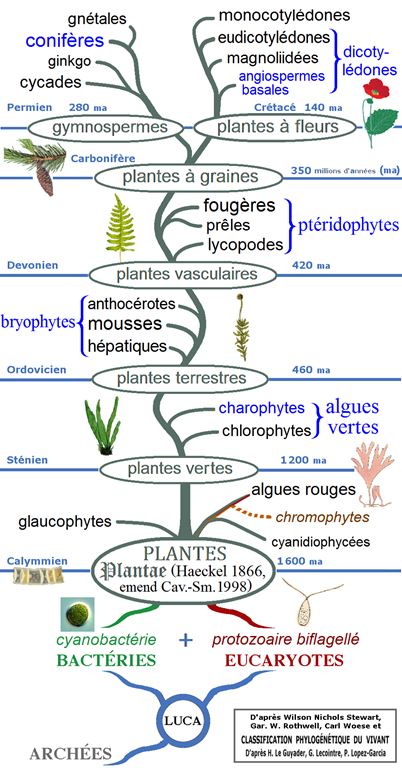
Classification
- Classique : en haut de l'écran, sous le coeur.
- Phylogénétique :
- Clade 4 : Angiospermes ;
- Clade 3 : Dicotylédones_vraies ;
- Clade 2 : Rosidées ;
- Clade 1 : Fabidées ;
- Ordre APN : Malpighiales ;
- Famille APN : Phyllanthaceae ;
À droite, cet arbre phylogénétique des plantes montre les principaux clades et groupes traditionnels (monophylétiques en noir et paraphylétiques en bleu).
Dénominations
- Nom botanique : Aporosa prainiana King ex Gage
- Noms anglais et locaux : Beras-beras hutan
Description et culture
Tableau récapitulatif
Parties comes-tibles Note comest. (1-5) Note medic. (1-5) (Zones de) Rusticité Besoins en 
Besoins en  (1-3)
Périodes de semis et récoltes Graines au gramme Durée de viabilité Profon-deur semis Espace-ment plants Espace-ment lignes Durée germi-native Durée avant récolte J F M A M J
J A S O N D
J F M A M J
J A S O N D
- dont infos de 0FPI ("FOOD PLANTS INTERNATIONAL", en anglais) :
Description :
Un petit arbre. Les feuilles sont de papier. Les fleurs mâles sont regroupées en fil comme des épis. Le fruit est ovale et mesure 10 cm de long{{{0(+x) (traduction automatique).
Original : A small tree. The leaves are papery. The male flowers are clustered into thread like spikes. The fruit is oval and 10 cm long{{{0(+x).
 Consommation (rapports de comestibilité, parties utilisables et usages alimentaires correspondants)
Parties comestibles :
fruit{{{0(+x) (traduction automatique). Original : Fruit{{{0(+x).Détails :
Les fruits sont aigres mais sont consommés{{{0(+x) (traduction automatique).
Original : The fruit are sour but are eaten{{{0(+x).
Partie testée :
fruit{{{0(+x) (traduction automatique). Original : Fruit{{{0(+x) Risques et précautions à prendre
néant, inconnus ou indéterminés.
Autres infos
dont infos de 0FPI ("FOOD PLANTS INTERNATIONAL", en anglais) :
Distribution :
Une plante tropicale{{{0(+x) (traduction automatique).
Original : A tropical plant{{{0(+x).
Localisation :
Asie, Malaisie, Asie du Sud-Est{{{0(+x) (traduction automatique).
Original : Asia, Malaysia, SE Asia{{{0(+x).
Notes :
Également mis dans la famille Euphorbiaceae{{{0(+x) (traduction automatique).
Original : Also put in the family Euphorbiaceae{{{0(+x).
Liens, sources et/ou références
Liens :
/ ;Sources et/ou références :
bibliographie (liste des sources et/ou références de l'encyclopédie)
dont classification : IPNI ("International Plant Names Index", en anglais) ; Kew (POWO - "Plant Of the World Online", "Royal Botanical Garden", en anglais) ;
dont livres et bases de données : 0FPI ("FOOD PLANTS INTERNATIONAL", en anglais) ;
dont bibliographie/références de 0FPI ("FOOD PLANTS INTERNATIONAL", en anglais) :
Bircher, A. G. & Bircher, W. H., 2000, Encyclopedia of Fruit Trees and Edible Flowering Plants in Egypt and the Subtropics. AUC Press. p 36 ; Burkill, I.H., 1966, A Dictionary of the Economic Products of the Malay Peninsula. Ministry of Agriculture and Cooperatives, Kuala Lumpur, Malaysia. Vol 1 (A-H) p 197 ; Milow, P., et al, 2013, Malaysian species of plants with edible fruits or seeds and their evaluation. International Journal of Fruit Science. 14:1, 1-27
Recherche de/pour :
- "Aporosa prainiana" sur Google (pages et
images) ;
TPL ("The Plant List", en anglais) ;
GRIN ("Germplasm Resources Information Network", en anglais) ;
TROPICOS (en anglais) ;
Tela Botanica ;
Pl@ntNet ;
Pl@ntUse ;
"Plants For A Future" (en anglais) ;
"Useful Tropical Plants" (en anglais) ou
"Useful Temperate Plants" (en anglais) ;
Espèces du même genre (Aporosa)
18 taxons
- Aporosa acuminata Thwaites
- Aporosa banahaensis
- Aporosa cardiosperma (Gaertn.) Merr.
- Aporosa confusa Gage
- Aporosa ficifolia Baill.
- Aporosa frutescens Benth.
- Aporosa grandistipula Merr.
- Aporosa lanceolata Mll.Arg.
- Aporosa leytensis Merr.
- Aporosa maingayi Hook.f.
- Aporosa nitida Merr.
- Aporosa octandra (Buch.-Ham. ex D.Don) Vickery
- Aporosa planchoniana Baill. ex Mll.Arg.
- Aporosa selangorica Pax & K.Hoffm.
- Aporosa villosa (Lindl.) Baill.
- Aporosa wallichii Hook.f.
- Aporosa yunnanensis (Pax & K.Hoffm.) F.P.Metcalf
Espèces de la même famille (Euphorbiaceae)
598 taxons
- Acalyphe d'Inde
- Acalyphe géante
- Acalyphe hérissée
- Acalyphe lancéolée
- Andrachne faux-téléphium
- Antidesme de Madagascar
- Bancoulier
- Bignay
- Buah
- Buisson de Noël
- Cerise de la rivière herbert (dp*)
- Chaya
- Chrozophore
- Dentelaire du Cap
- Engkumi
- Épurge
- Euphorbe
- Euphorbe à feuilles de thym
- Euphorbe âcre
- Euphorbe couchée
- Euphorbe de Heyne
- Euphorbe de Nice
- Euphorbe de Robb
- Euphorbe dentée
- Euphorbe des garrigues
- Euphorbe des jardiniers
- Euphorbe des moissons
- Euphorbe des sables
- Euphorbe faux Cyprès
- Euphorbe fluette de Merino
- Euphorbe prostrée
- Euphorbe réveille-matin
- Girembellier
- Hévéa du Brésil
- Inchi
- Katuk
- Lampaong
- Lang khae{{{69
- Malaka
- Manioc
- Médecinier béni
- Médicinier à feuilles de cotonnier
- Médicinier multifide
- Mercuriale des montagnes
- Mercuriale tomenteuse
- Noyer africain (tp* de "african nut tree")
- Pédilanthe tithymaloïde
- Phyllanthe amer
- Phyllanthe de Madras
- Phyllanthe niruri
- Acalypha amentacea Roxb.
- Acalypha australis L.
- Acalypha bipartita Muell. Arg.
- Acalypha boehmeroides
- Acalypha cardiophylla Merr.
- Acalypha caturus Blume
- Acalypha ciliata Forssk.
- Acalypha fruticosa Forssk.
- Acalypha glabrata Thunb.
- Acalypha glandulifolia Buchinger & Meisn. ex C.Krauss
- Acalypha grandis Benth. (Acalyphe géante)
- Acalypha hispida Burm.f. (Acalyphe hérissée)
- Acalypha indica (L.) Vell. (Acalyphe d'Inde)
- Acalypha lanceolata Willd. (Acalyphe lancéolée)
- Acalypha malabarica Mll.Arg.
- Acalypha matsudai Hayata
- Acalypha nemora
- Acalypha nemorosa
- Acalypha nemorum F.Muell. ex Müll.Arg.
- Acalypha ornata Hochst. ex A Rich.
- Acalypha paniculata Miq.
- Acalypha peduncularis Pax
- Acalypha plicata Griseb.
- Acalypha racemosa Wall. ex F.W.Andrews
- Acalypha rivularis Seem.
- Acalypha segetalis Mull. Arg.
- Acalypha siamensis Oliver ex Gage
- Acalypha spiciflorum
- Acalypha stricta Poepp.
- Acalypha suirenbiensis Yamam.
- Acalypha volkensii Pax
- Acalypha wilkesiana Mull. Arg.
- Actephila excelsa (Dalzell) Mll.Arg.
- Adelia barbinervis Cham. & Schltdl.
- Alchornea cordifolia (Schumach. & Thonn.) Müll.Arg. (Buisson de Noël)
- Alchornea floribunda Mll.Arg.
- Alchornea scandens
- Alchornea triplinervia
- Aleurites cordatus
- Aleurites fordii Hemsl.
- Aleurites moluccanus (L.) Willd. (Bancoulier)
- Aleurites rockinghamensis
- Andrachne telephioides L. (Andrachne faux-téléphium)
- Antidesma acidum Retz.
- Antidesma alexiteria Gaertn.
- Antidesma Bunius (L.) Spreng. (Bignay)
- Antidesma celebicum Miq.
- Antidesma coriaceum Tul.
- Antidesma dallachyanum Baill. (Cerise de la rivière herbert (dp*))
- Antidesma edule Merr.
- ...







 donne accès au menu
 - encyclopédies des plantes alimentaires ;
 - page de recherche - reconnaissance (identification) de plantes ;
 - page du calendrier lunaire et son générateur (au format PDF et JPG) ;
 - tableau récapitulatif ;
 - générateur de potées (soupes), avec estimation des apports nutrionnels et du coût;
 - générateur de codes QR ;
 - page des archives avec de nombreux documents sur différents thèmes complémentaires comme la botanique, les légumes,
les champignons, la cuisine, le bien-être ainsi que différents MOOC mais également des liens vers les archives de l'association ;


 pour le fruit (et/ou les graines, la pulpe, etc...),
 pour les fleurs (et/ou pétales, calice...),
 pour les feuilles (et/ou la tige, les pousses...),
 pour les racines,
 pour le tronc (et/ou l'écorce, la sève...), et enfin
 pour les champignons,
puis les notes alimentaires et médicinales (de 1 à 5 étoiles), la rusticité (résistance au froid/gel)
et pour finir un résumé.
 menant ici 🙂
 ,
 et





 ,


 Encyclopédie(s)
 Recherche-Reconnaissance
 Tableau récapitulatif
 Codes QR
 Archives
 Calendrier(s) lunaire(s)
 Potées
 Re-naturation/naturalisation
 Affichettes, herbiers &
co.
 menu
 galerie


 (en bas à droite).
 (en bas à gauche).
