Heliconia latispatha
Pas d'illustration
pour le moment 😕


Une grande herbe. Il atteint 4 m de haut. Les pousses fleuries sont dressées et mesurent 45 cm de long. Les fleurs sont vertes, jaunes ou oranges. Ils ont des bractées rouge ... (traduction automatique)
→suite


Heliconia latispatha

Une grande herbe. Il atteint 4 m de haut. Les pousses fleuries sont dressées et mesurent 45 cm de long. Les fleurs sont vertes, jaunes ou oranges. Ils ont des bractées rouges ou oranges autour d'eux (traduction automatique)
Pas d'illustration
pour le moment 😕
Pas d'illustration
pour le moment 😕
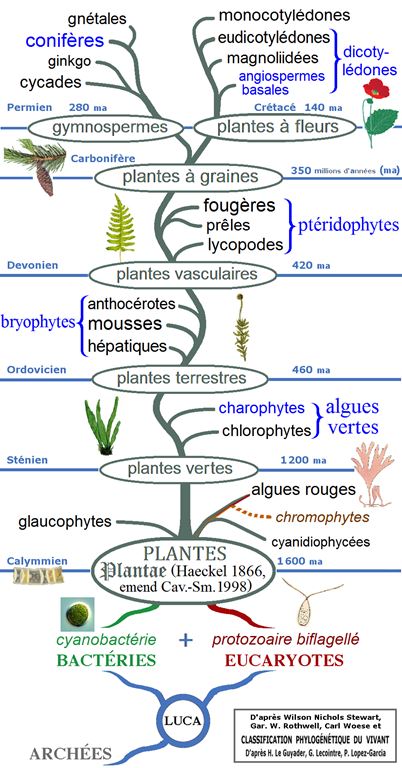
Classification
- Classique : en haut de l'écran, sous le coeur.
- Phylogénétique :
- Clade 4 : Angiospermes ;
- Clade 3 : Monocotylédones ;
- Clade 2 : Commelinidées ;
- Ordre APN : Zingiberales ;
- Famille APN : Heliconiaceae ;
À droite, cet arbre phylogénétique des plantes montre les principaux clades et groupes traditionnels (monophylétiques en noir et paraphylétiques en bleu).
Dénominations
- Nom botanique : Heliconia latispatha Benth.
- Synonymes : Bihai latispatha (Benth.) Griggs, Heliconia aequatoriensis Loes
- Noms anglais et locaux : Expanded lobster-claw
Description et culture
Tableau récapitulatif
Parties comes-tibles Note comest. (1-5) Note medic. (1-5) (Zones de) Rusticité Besoins en 
Besoins en  (1-3)
(1-3)Périodes de semis et récoltes Graines au gramme Durée de viabilité Profon-deur semis Espace-ment plants Espace-ment lignes Durée germi-native Durée avant récolte J F M A M J
J A S O N D
J F M A M J
J A S O N D
- dont infos de 0FPI ("FOOD PLANTS INTERNATIONAL", en anglais) :
Description :
Une grande herbe. Il atteint 4 m de haut. Les pousses fleuries sont dressées et mesurent 45 cm de long. Les fleurs sont vertes, jaunes ou oranges. Ils ont des bractées rouges ou oranges autour d'eux{{{0(+x) (traduction automatique).
Original : A large herb. It grows 4 m tall. The flowering shoots are erect and 45 cm long. The flowers are green, yellow or orange. They have red or orange bracts around them{{{0(+x).
 Consommation (rapports de comestibilité, parties utilisables et usages alimentaires correspondants)
Consommation (rapports de comestibilité, parties utilisables et usages alimentaires correspondants)Parties comestibles :
pousses, feuilles, fruits{{{0(+x) (traduction automatique). Original : Shoots, Leaves, Fruit{{{0(+x).Partie testée :
/ Risques et précautions à prendre
Risques et précautions à prendrenéant, inconnus ou indéterminés.
Autres infos
dont infos de 0FPI ("FOOD PLANTS INTERNATIONAL", en anglais) :
Distribution :
C'est une plante tropicale. Il pousse dans les basses terres humides. Jardins botaniques de Cairns{{{0(+x) (traduction automatique).
Original : It is a tropical plant. It grows in the moist lowlands. Cairns Botanical Gardens{{{0(+x).
Localisation :
Asia, Australia, Central America, Colombia, Costa Rica, Ecuador, Jamaica, Mexico, Myanmar, North America, Peru, South America, USA, Venezuela{{{0(+x) (traduction automatique).
Original : Asia, Australia, Central America, Colombia, Costa Rica, Ecuador, Jamaica, Mexico, Myanmar, North America, Peru, South America, USA, Venezuela{{{0(+x).
Liens, sources et/ou références
Liens :
/ ;Sources et/ou références :
bibliographie (liste des sources et/ou références de l'encyclopédie)
dont classification : IPNI ("International Plant Names Index", en anglais) ; Kew (POWO - "Plant Of the World Online", "Royal Botanical Garden", en anglais) ;
dont livres et bases de données : 0FPI ("FOOD PLANTS INTERNATIONAL", en anglais) ;
dont bibliographie/références de 0FPI ("FOOD PLANTS INTERNATIONAL", en anglais) :
Castaneda, H., & Stepp, J. R., 2007, Ecosystems as Sources of Useful Plants for the Guaymi People of Costa Rica. Ethnobotany Journal. 5:249-257 ; Kermath, B. M., et al, 2014, Food Plants in the Americas: A survey of the domesticated, cultivated and wild plants used for Human food in North, Central and South America and the Caribbean. On line draft. p 410 ; Langlois, H. C., 2004, Ethnobotanical analysis of different successional stages as sources of wild edible plants for the Guaymi people in Costa Rica. M. Sc. thesis University of Florida.
Recherche de/pour :
- "Heliconia latispatha" sur Google (pages et
images) ;
TPL ("The Plant List", en anglais) ;
GRIN ("Germplasm Resources Information Network", en anglais) ;
TROPICOS (en anglais) ;
Tela Botanica ;
Pl@ntNet ;
Pl@ntUse ;
"Plants For A Future" (en anglais) ;
"Useful Tropical Plants" (en anglais) ou
"Useful Temperate Plants" (en anglais) ;
- "Heliconia latispatha" sur Google (pages et
images) ;
TPL ("The Plant List", en anglais) ;
GRIN ("Germplasm Resources Information Network", en anglais) ;
TROPICOS (en anglais) ;
Tela Botanica ;
Pl@ntNet ;
Pl@ntUse ;
"Plants For A Future" (en anglais) ;
"Useful Tropical Plants" (en anglais) ou
"Useful Temperate Plants" (en anglais) ;
Espèces du même genre (Heliconia)
12 taxons
- Heliconia bihai J.F.Mill.
- Heliconia brevispatha Hook.
- Heliconia caribaea Lam.
- Heliconia danielsiana W.J.Kress
- Heliconia farinosa Raddi
- Heliconia hirsuta Schltdl. & Cham.
- Heliconia indica Lam.
- Heliconia mariae Hook.f.
- Heliconia pogonantha Cufod.
- Heliconia psittacorum L.f.
- Heliconia rostrata Ruiz & Pav. (Héliconie rostrée)
Espèces de la même famille (Heliconiaceae)
12 taxons
- Heliconia bihai J.F.Mill.
- Heliconia brevispatha Hook.
- Heliconia caribaea Lam.
- Heliconia danielsiana W.J.Kress
- Heliconia farinosa Raddi
- Heliconia hirsuta Schltdl. & Cham.
- Heliconia indica Lam.
- Heliconia mariae Hook.f.
- Heliconia pogonantha Cufod.
- Heliconia psittacorum L.f.
- Heliconia rostrata Ruiz & Pav. (Héliconie rostrée)







 donne accès au menu
  - encyclopédies des plantes alimentaires ;
 - page de recherche - reconnaissance (identification) de plantes ;
 - page du calendrier lunaire et son générateur (au format PDF et JPG) ;
 - tableau récapitulatif ;
 - générateur de potées (soupes), avec estimation des apports nutrionnels et du coût;
 - générateur de codes QR ;
 - page des archives avec de nombreux documents sur différents thèmes complémentaires comme la botanique, les légumes,
les champignons, la cuisine, le bien-être ainsi que différents MOOC mais également des liens vers les archives de l'association ;
- page des archives avec de nombreux documents sur différents thèmes complémentaires comme la botanique, les légumes,
les champignons, la cuisine, le bien-être ainsi que différents MOOC mais également des liens vers les archives de l'association ;

 pour le fruit (et/ou les graines, la pulpe, etc...),
 pour les fleurs (et/ou pétales, calice...),
 pour les feuilles (et/ou la tige, les pousses...),
 pour les racines,
 pour le tronc (et/ou l'écorce, la sève...), et enfin
 pour les champignons,
puis les notes alimentaires et médicinales (de 1 à 5 étoiles), la rusticité (résistance au froid/gel)
et pour finir un résumé.
pour les champignons,
puis les notes alimentaires et médicinales (de 1 à 5 étoiles), la rusticité (résistance au froid/gel)
et pour finir un résumé. menant ici 🙂
 ,
,  et
et





 ,
,


 Encyclopédie(s)
 Recherche-Reconnaissance
 Tableau récapitulatif
 Codes QR
 Archives
 Calendrier(s) lunaire(s)
  Potées
 Re-naturation/naturalisation
 Affichettes, herbiers &
co.
Affichettes, herbiers &
co. menu
menu galerie


 (en bas à droite).
 (en bas à gauche).
