Commiphora guidottii
Pas d'illustration
pour le moment 😕
Un arbuste ou un petit arbre. Il atteint 5 m de haut. L'écorce est verte ou brune et s'écaille. Les feuilles ont 5-7 folioles le long de la tige et elles mesurent 10 cm de l ... (traduction automatique)
→suite


Commiphora guidottii

Un arbuste ou un petit arbre. Il atteint 5 m de haut. L'écorce est verte ou brune et s'écaille. Les feuilles ont 5-7 folioles le long de la tige et elles mesurent 10 cm de long sur 2,5 cm de large et lar... (traduction automatique) →suite
Pas d'illustration
pour le moment 😕
Pas d'illustration
pour le moment 😕
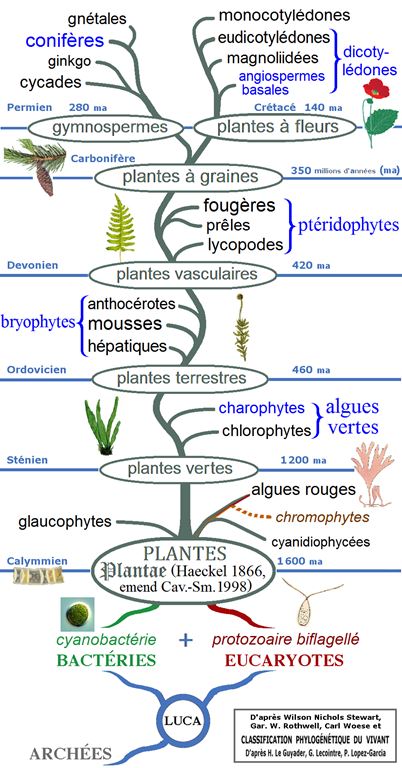
Classification
- Classique : en haut de l'écran, sous le coeur.
- Phylogénétique :
- Clade 4 : Angiospermes ;
- Clade 3 : Dicotylédones_vraies ;
- Clade 2 : Rosidées ;
- Clade 1 : Malvidées ;
- Ordre APN : Sapindales ;
- Famille APN : Burseraceae ;
À droite, cet arbre phylogénétique des plantes montre les principaux clades et groupes traditionnels (monophylétiques en noir et paraphylétiques en bleu).
Dénominations
- Nom botanique : Commiphora guidottii Chiov. ex Guid.
- Noms anglais et locaux : Sweet myrrh, Scented myrrh
Description et culture
Tableau récapitulatif
Parties comes-tibles Note comest. (1-5) Note medic. (1-5) (Zones de) Rusticité Besoins en 
Besoins en  (1-3)
(1-3)Périodes de semis et récoltes Graines au gramme Durée de viabilité Profon-deur semis Espace-ment plants Espace-ment lignes Durée germi-native Durée avant récolte J F M A M J
J A S O N D
J F M A M J
J A S O N D
- dont infos de 0FPI ("FOOD PLANTS INTERNATIONAL", en anglais) :
Description :
Un arbuste ou un petit arbre. Il atteint 5 m de haut. L'écorce est verte ou brune et s'écaille. Les feuilles ont 5-7 folioles le long de la tige et elles mesurent 10 cm de long sur 2,5 cm de large et largement ovales. Les fleurs sont très petites. Le fruit est rond et 1 cm de diamètre{{{0(+x) (traduction automatique).
Original : A shrub or small tree. It grows 5 m tall. The bark is green or brown and peeling. The leaves have 5-7 leaflets along the stalk and these are 10 cm long by 2.5 cm wide and broadly oval. The flowers are very small. The fruit is round and 1 cm across{{{0(+x).
 Consommation (rapports de comestibilité, parties utilisables et usages alimentaires correspondants)
Consommation (rapports de comestibilité, parties utilisables et usages alimentaires correspondants)Données absentes/manquantes et/ou insuffisantes{{{(rp*)
Partie testée :
/ Risques et précautions à prendre
Risques et précautions à prendrenéant, inconnus ou indéterminés.
Autres infos
dont infos de 0FPI ("FOOD PLANTS INTERNATIONAL", en anglais) :
Distribution :
C'est une plante tropicale. Il pousse dans les zones arides{{{0(+x) (traduction automatique).
Original : It is a tropical plant. It grows in arid areas{{{0(+x).
Localisation :
Afrique, Afrique de l'Est, Éthiopie, Somalie{{{0(+x) (traduction automatique).
Original : Africa, East Africa, Ethiopia, Somalia{{{0(+x).
Notes :
Probablement comestible. L'écorce est coupée pour recueillir la myrrhe parfumée. C'est probablement la myrrhe mentionnée dans la Bible{{{0(+x) (traduction automatique).
Original : Probably edible. The bark is cut to collect scented myrrh. This is probably the myrrh mentioned in the Bible{{{0(+x).
Liens, sources et/ou références
Liens :
/ ;Sources et/ou références :
bibliographie (liste des sources et/ou références de l'encyclopédie)
dont classification : IPNI ("International Plant Names Index", en anglais) ; Kew (POWO - "Plant Of the World Online", "Royal Botanical Garden", en anglais) ;
dont livres et bases de données : 0FPI ("FOOD PLANTS INTERNATIONAL", en anglais) ;
dont bibliographie/références de 0FPI ("FOOD PLANTS INTERNATIONAL", en anglais) :
Molla, A., Ethiopian Plant Names. http://www.ethiopic.com/aplants.htm (As Camiphora guidotti)
Recherche de/pour :
- "Commiphora guidottii" sur Google (pages et
images) ;
TPL ("The Plant List", en anglais) ;
GRIN ("Germplasm Resources Information Network", en anglais) ;
TROPICOS (en anglais) ;
Tela Botanica ;
Pl@ntNet ;
Pl@ntUse ;
"Plants For A Future" (en anglais) ;
"Useful Tropical Plants" (en anglais) ou
"Useful Temperate Plants" (en anglais) ;
- "Commiphora guidottii" sur Google (pages et
images) ;
TPL ("The Plant List", en anglais) ;
GRIN ("Germplasm Resources Information Network", en anglais) ;
TROPICOS (en anglais) ;
Tela Botanica ;
Pl@ntNet ;
Pl@ntUse ;
"Plants For A Future" (en anglais) ;
"Useful Tropical Plants" (en anglais) ou
"Useful Temperate Plants" (en anglais) ;
Espèces du même genre (Commiphora)
47 taxons
- Commiphora africana (A.Rich.) Engl.
- Commiphora ancistrophora Chiov.
- Commiphora angolensis Engl.
- Commiphora baluensis Engl.
- Commiphora bruceae Chiov.
- Commiphora caerulea Burtt
- Commiphora campestris Engl.
- Commiphora caudata (Wight & Arn.) Engl.
- Commiphora confusa Vollesen
- Commiphora crenato-serrata
- Commiphora edulis (Klotzsch) Engl.
- Commiphora erlangeriana Engl.
- Commiphora giessii Van der Walt
- Commiphora glandulosa Schinz
- Commiphora glaucescens Engl.
- Commiphora gracilifrondosa Dinter ex Van der Walt
- Commiphora habessinica
- Commiphora harveyi (Engl.) Engl.
- Commiphora hodai Sprague
- Commiphora kataf (Forssk.) Engl.
- Commiphora kraeuseliana Heine
- Commiphora leptophloeos (Mart.) J.B.Gillett
- Commiphora madagascariensis Jacq.
- Commiphora marlothii Engl.
- Commiphora mollis F.Hoffm.
- Commiphora mossambicensis (Oliv.) Engl.
- Commiphora mukul
- Commiphora multijuga (Hiern) K.Schum.
- Commiphora myrrha (Nees) Engl. (Arbre à myrrhe)
- Commiphora neglecta I.Verd.
- Commiphora opobalsamum
- Commiphora paolii Chiov.
- Commiphora pedunculata (Kotschy & Peyr.) Engl.
- Commiphora pyracanthoides Engl.
- Commiphora rostrata Engl.
- Commiphora samharensis Schweinf.
- Commiphora saxicola Engl.
- Commiphora schimperi (O.Berg) Engl.
- Commiphora sulcata Chiov.
- Commiphora tenuipetiolata Engl.
- Commiphora terebinthina Vollesen
- Commiphora viminea Burtt Davy
- Commiphora virgata Engl.
- Commiphora wightii (Arn.) Bhandari
- Commiphora wildii Merxm.
- Commiphora zanzibarica (Baill.) Engl.
Espèces de la même famille (Burseraceae)
185 taxons
- Boswellia frereana Birdw.
- Boswellia neglecta S.Moore
- Boswellia ogadensis Vollesen
- Boswellia papyrifera (Caill.) Hochst.
- Boswellia rivae Engl.
- Boswellia sacra Flck.
- Boswellia serrata Roxb.
- Bursera fagaroides (Kunth) Engl.
- Bursera glabrifolia (Kunth) Engl.
- Bursera grandifolia (Schltdl.) Engl.
- Bursera hindsiana Brandegee
- Bursera icicariba
- Bursera linanoe (La Llave) Rzed., Caldern & Medina
- Bursera penicillata (Sess & Moc. ex DC.) Engl.
- Bursera serrata Wall. ex Colebr.
- Bursera simaruba (L.) Sarg.
- Bursera sp. indet.
- Burseracea sp. indet.
- Canarium album (Lour.) Raeusch. (Olive blanche de chine)
- Canarium apertum H.J.Lam
- Canarium asperum Benth.
- Canarium australasicum (F.M.Bailey) Leenh.
- Canarium australianum F.Muell.
- Canarium bengalense Roxb.
- Canarium caudatum King
- Canarium decumanum Gaertn.
- Canarium denticulatum Blume
- Canarium dichotomum (Blume) Miq.
- Canarium harveyi Seem. (Noix de kanari)
- Canarium hirsutum Willd.
- Canarium indicum L. (Nangaille)
- Canarium kaniense Lauterb.
- Canarium kipella (Blume) Miq.
- Canarium lamii Leenh.
- Canarium littorale Blume
- Canarium luzonicum (Blume) A.Gray
- Canarium madagascariense Engl. (Mbani)
- Canarium megalanthum Merr.
- Canarium muelleri F.M.Bailey
- Canarium odontophyllum Miq. (Dabai)
- Canarium oleiferum Baill.
- Canarium oleosum (Lam.) Engl.
- Canarium ovatum Engl. (Pili)
- Canarium parvum Leenh.
- Canarium patentinervium Miq.
- Canarium pilosum A.W.Benn.
- Canarium pimela Blanco
- Canarium polyphyllum K.Schum.
- Canarium pseudodecumanum Hochr.
- Canarium resiniferum Bruce ex King
- ...







 donne accès au menu
  - encyclopédies des plantes alimentaires ;
 - page de recherche - reconnaissance (identification) de plantes ;
 - page du calendrier lunaire et son générateur (au format PDF et JPG) ;
 - tableau récapitulatif ;
 - générateur de potées (soupes), avec estimation des apports nutrionnels et du coût;
 - générateur de codes QR ;
 - page des archives avec de nombreux documents sur différents thèmes complémentaires comme la botanique, les légumes,
les champignons, la cuisine, le bien-être ainsi que différents MOOC mais également des liens vers les archives de l'association ;
- page des archives avec de nombreux documents sur différents thèmes complémentaires comme la botanique, les légumes,
les champignons, la cuisine, le bien-être ainsi que différents MOOC mais également des liens vers les archives de l'association ;

 pour le fruit (et/ou les graines, la pulpe, etc...),
 pour les fleurs (et/ou pétales, calice...),
 pour les feuilles (et/ou la tige, les pousses...),
 pour les racines,
 pour le tronc (et/ou l'écorce, la sève...), et enfin
 pour les champignons,
puis les notes alimentaires et médicinales (de 1 à 5 étoiles), la rusticité (résistance au froid/gel)
et pour finir un résumé.
pour les champignons,
puis les notes alimentaires et médicinales (de 1 à 5 étoiles), la rusticité (résistance au froid/gel)
et pour finir un résumé. menant ici 🙂
 ,
,  et
et





 ,
,


 Encyclopédie(s)
 Recherche-Reconnaissance
 Tableau récapitulatif
 Codes QR
 Archives
 Calendrier(s) lunaire(s)
  Potées
 Re-naturation/naturalisation
 Affichettes, herbiers &
co.
Affichettes, herbiers &
co. menu
menu galerie


 (en bas à droite).
 (en bas à gauche).
