Passovia pyrifolia
Pas d'illustration
pour le moment 😕

Un arbuste. Il pousse attaché à d’autres plantes. Il atteint 1 m de haut.
→suite


Passovia pyrifolia

Un arbuste. Il pousse attaché à d’autres plantes. Il atteint 1 m de haut.
Pas d'illustration
pour le moment 😕
Pas d'illustration
pour le moment 😕
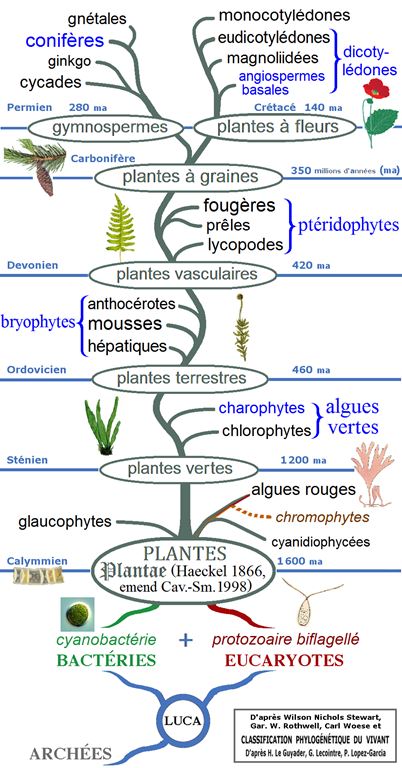
Classification
- Classique : en haut de l'écran, sous le coeur.
- Phylogénétique :
- Clade 4 : Angiospermes ;
- Clade 3 : Dicotylédones_vraies ;
- Ordre APN : Santalales ;
- Famille APN : Loranthaceae ;
À droite, cet arbre phylogénétique des plantes montre les principaux clades et groupes traditionnels (monophylétiques en noir et paraphylétiques en bleu).
Dénominations
- Nom botanique : Passovia pyrifolia (Kunth) Tiegh
- Synonymes : Loranthus affinis Mart. ex Schult.f.; Loranthus hoffmannseggianus Schult.f.; Loranthus pyrifolius Kunth; Loranthus subcampestris Mart. ex Schult.f.; Passovia pyrifolia (Kunth) Tiegh.; Phoradendron gentlei Trel.; Phthirusa heterophylla Rusby; Phthirusa pyrifolia (Kunth) Eichler; Struthanthus minutiflorus Lundell; Struthanthus pyrifolius (Kunth) G. Don; and others ;
- Noms anglais et locaux : Nishi moishi, Suelda con suelda,
Description et culture
Tableau récapitulatif
Parties comes-tibles Note comest. (1-5) Note medic. (1-5) (Zones de) Rusticité Besoins en 
Besoins en  (1-3)
(1-3)Périodes de semis et récoltes Graines au gramme Durée de viabilité Profon-deur semis Espace-ment plants Espace-ment lignes Durée germi-native Durée avant récolte J F M A M J
J A S O N D
J F M A M J
J A S O N D
Description :
Un arbuste. Il pousse attaché à d’autres plantes. Il atteint 1 m de haut.
 Consommation (rapports de comestibilité, parties utilisables et usages alimentaires correspondants)
Consommation (rapports de comestibilité, parties utilisables et usages alimentaires correspondants)Parties comestibles :
Fruit,{{{0(+x) (traduction automatique). Original : Fruit{{{0(+x).Partie testée :
/ Risques et précautions à prendre
Risques et précautions à prendrenéant, inconnus ou indéterminés.
Autres infos
dont infos de 0FPI ("FOOD PLANTS INTERNATIONAL", en anglais) :
Distribution :
C'est une plante tropicale.{{{0(+x) (traduction automatique).
Original : It is a tropical plant{{{0(+x).
Localisation :
Amazon, Belize, Bolivie, Brésil, Amérique centrale, Colombie, Costa Rica, El Salvador, Guyane française, Guatemala, Guyane, Honduras, Jamaïque, Mexique, Panama, Pérou, Amérique du Sud, Trinité-Tobago, Venezuela, Windward Is.,{{{0(+x) (traduction automatique).
Original : Amazon, Belize, Bolivia, Brazil, Central America, Colombia, Costa Rica, El Salvador, French Guiana, Guatemala, Guyana, Honduras, Jamaica, Mexico, Panama, Peru, South America, Trinidad-Tobago, Venezuela, Windward Is.{{{0(+x).
Liens, sources et/ou références
Liens :
/ ;Sources et/ou références :
bibliographie (liste des sources et/ou références de l'encyclopédie)
dont livres et bases de données :
dont bibliographie/références de 0FPI ("FOOD PLANTS INTERNATIONAL", en anglais) :
Ferns, Useful Tropical plants. (As Phthirusa pyrifolia)Roa, J. A. G. & Boada, D. S. G., 2018, Fundación para el Fortalecimiento de la Fruticultura y Plantas Alimenticias no Convencionales en Colombia. (As Phthirusa pyrifolia)Zambrana, P, et al, 2017, Traditional knowledge hiding in plain sight ? twenty-first century ethnobotany of theChácobo in Beni, Bolivia. Journal of Ethnobiology and Ethnomedicine (2017) 13:57 (As Phthirusa pyrifolia)
Recherche de/pour :
- "Passovia pyrifolia" sur Google (pages et
images) ;
IPNI ("International Plant Names Index", en anglais) ;
TPL ("The Plant List", en anglais) ;
GRIN ("Germplasm Resources Information Network", en anglais) ;
TROPICOS (en anglais) ;
Tela Botanica ;
Pl@ntNet ;
Pl@ntUse ;
"Plants For A Future" (en anglais) ;
"Useful Tropical Plants" (en anglais) ou
"Useful Temperate Plants" (en anglais) ;
- "Passovia pyrifolia" sur Google (pages et
images) ;
IPNI ("International Plant Names Index", en anglais) ;
TPL ("The Plant List", en anglais) ;
GRIN ("Germplasm Resources Information Network", en anglais) ;
TROPICOS (en anglais) ;
Tela Botanica ;
Pl@ntNet ;
Pl@ntUse ;
"Plants For A Future" (en anglais) ;
"Useful Tropical Plants" (en anglais) ou
"Useful Temperate Plants" (en anglais) ;
Espèces de la même famille (Loranthaceae)
81 taxons
- Actinanthella menyharthii
- Agelanthus discolor (Schinz) Balle
- Amyema bifurcata
- Amyema cambagei
- Amyema congener
- Amyema fitzgeraldii
- Amyema gaudichaudii
- Amyema gibberula
- Amyema linophylla
- Amyema lucasii
- Amyema maidenii
- Amyema miquelii
- Amyema miraculosa
- Amyema pendula
- Amyema pendulum
- Amyema preissii
- Amyema quandang
- Amyema sanguinea
- Amyema thalassia Barlow
- Bakerella sp.
- Decaisnina signata
- Dendrophthoe acacioides
- Dendrophthoe falcata
- Dendrophthoe glabrescens
- Dendrophthoe pentandra
- Dendrophthoe vitellina (F. Muell.) Tiegh.
- Diplatia grandibracteata (F. Muell.) Tiegh.
- Erianthemum dregei
- Globimetula braunii
- Helixanthera ligustrina
- Helixanthera parasitica Lour.
- Ileostylis micranthus
- Korthalsella salicornioides (A.Cunn.) Tiegh.
- Ligaria cuneifolia
- Loranthus discolor Schinz
- Loranthus exocarpi Behr
- Loranthus odoratus Wall.
- Loranthus philippensis Cham. & Schltdl.
- Loranthus sp.
- Lysiana casuarinae
- Lysiana exocarpi Tiegh.
- Lysiana murrayi
- Lysiana spathulata
- Lysiana subfalcata
- Moquiniella rubra (A. Spreng.) Balle
- Muellerina celastroides (Sieber ex Schult. & Schult.f.) Tiegh
- Muellerina eucalyptoides
- Nuytsia floribunda
- Oncocalyx fischeri (Engl.)
- Oncocalyx ugogensis (Engl.) Wiens & Polhill
- ...







 donne accès au menu
  - encyclopédies des plantes alimentaires ;
 - page de recherche - reconnaissance (identification) de plantes ;
 - page du calendrier lunaire et son générateur (au format PDF et JPG) ;
 - tableau récapitulatif ;
 - générateur de potées (soupes), avec estimation des apports nutrionnels et du coût;
 - générateur de codes QR ;
 - page des archives avec de nombreux documents sur différents thèmes complémentaires comme la botanique, les légumes,
les champignons, la cuisine, le bien-être ainsi que différents MOOC mais également des liens vers les archives de l'association ;
- page des archives avec de nombreux documents sur différents thèmes complémentaires comme la botanique, les légumes,
les champignons, la cuisine, le bien-être ainsi que différents MOOC mais également des liens vers les archives de l'association ;

 pour le fruit (et/ou les graines, la pulpe, etc...),
 pour les fleurs (et/ou pétales, calice...),
 pour les feuilles (et/ou la tige, les pousses...),
 pour les racines,
 pour le tronc (et/ou l'écorce, la sève...), et enfin
 pour les champignons,
puis les notes alimentaires et médicinales (de 1 à 5 étoiles), la rusticité (résistance au froid/gel)
et pour finir un résumé.
pour les champignons,
puis les notes alimentaires et médicinales (de 1 à 5 étoiles), la rusticité (résistance au froid/gel)
et pour finir un résumé. menant ici 🙂
 ,
,  et
et





 ,
,


 Encyclopédie(s)
 Recherche-Reconnaissance
 Tableau récapitulatif
 Codes QR
 Archives
 Calendrier(s) lunaire(s)
  Potées
 Re-naturation/naturalisation
 Affichettes, herbiers &
co.
Affichettes, herbiers &
co. menu
menu galerie


 (en bas à droite).
 (en bas à gauche).
