
Castanospermum australe
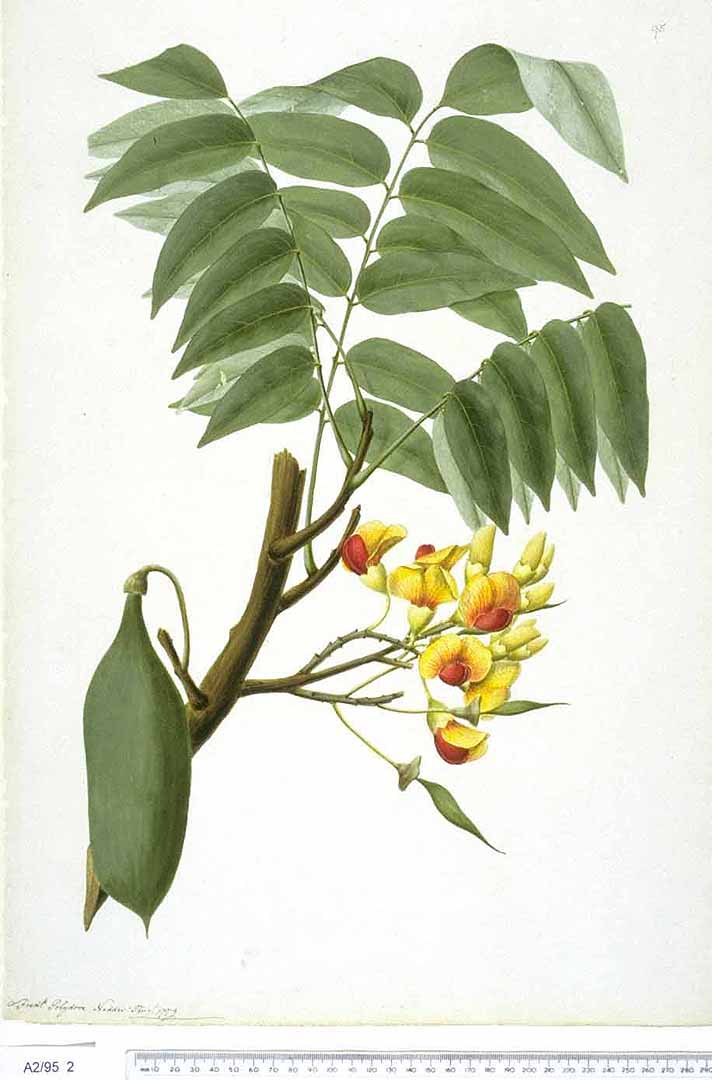
 |
****
|
****
Un arbre à feuilles persistantes atteignant 18-35 m de haut. Il s'étend sur 5 à 12 m de diamètre. La tige est dressée et robuste. L'écorce est grise à brune et lisse. L ... (traduction automatique)
→suite


Castanospermum australe
Note alimentaire 

Un arbre à feuilles persistantes atteignant 18-35 m de haut. Il s'étend sur 5 à 12 m de diamètre. La tige est dressée et robuste. L'écorce est grise à brune et lisse. Les feuilles sont d'un vert foncé brillant. Les feuilles mesurent entre 30 et 45 cm de long. Les feuilles ont 11 à 15 folioles. Ceux-ci sont lé... (traduction automatique) →suite
Pas d'autre illustration
pour le moment 😕
Classification
- Classique : en haut de l\'écran, sous le coeur.
- Phylogénétique :
- Clade 4 : Angiospermes ;
- Clade 3 : Dicotylédones_vraies ;
- Clade 2 : Rosidées ;
- Clade 1 : Fabidées ;
- Ordre APN : Fabales ;
- Famille APN : Fabaceae ;
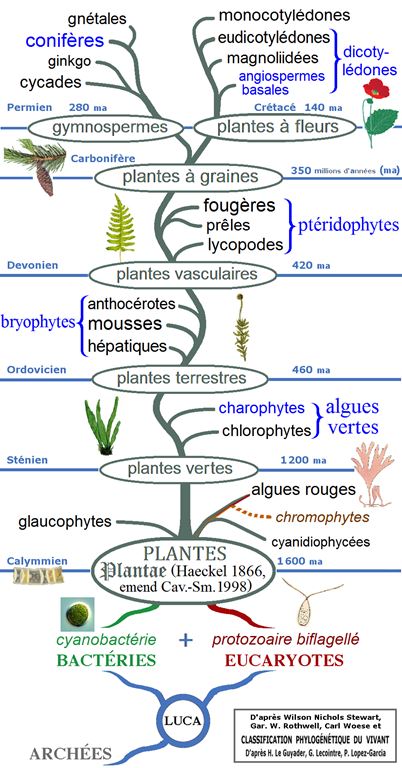
Illustration : cet arbre phylogénétique des plantes montre les principaux clades et groupes traditionnels (monophylétiques en noir et paraphylétiques en bleu).
Dénominations
✖- Nom botanique : Castanospermum australe A Cunn. & Fraser ex Hook.
- Noms anglais et locaux : Moreton Bay Chestnut
Description et culture
✖- dont infos de "FOOD PLANTS INTERNATIONAL" :
Description :
Un arbre à feuilles persistantes atteignant 18-35 m de haut. Il s'étend sur 5 à 12 m de diamètre. La tige est dressée et robuste. L'écorce est grise à brune et lisse. Les feuilles sont d'un vert foncé brillant. Les feuilles mesurent entre 30 et 45 cm de long. Les feuilles ont 11 à 15 folioles. Ceux-ci sont légèrement incurvés. Les folioles mesurent 7 à 12 cm de long sur 2 à 5 cm de large. Les feuilles ou l'écorce coupée ont une odeur de concombre. Les fleurs sont en grappes de 5 à 15 cm de long sur du vieux bois. Ils sont de couleur jaune à orange. Les fleurs sont en forme de pois et poussent l'une après l'autre le long d'une tige en grappes denses. Les fruits sont de larges gousses semblables à des haricots. Les gousses mesurent jusqu'à 20 cm de long et d'épaisseur. Ils peuvent mesurer 4 à 6 cm de large et être ligneux. À l'intérieur des gousses, les graines sont dans une moelle blanche. Il y a 1 à 5 graines dans une gousse. Les graines sont grosses et féculentes avec un pelage brun brillant. Ils mesurent 3 à 5 cm de long{{{0(+x) (traduction automatique).
Original : An evergreen tree up to 18-35 m tall. It spreads to 5-12 m across. The stem is erect and stout. The bark is grey to brown and smooth. The leaves are glossy dark green. The leaves are 30-45 cm long. Leaves have 11-15 leaflets. These are slightly curved. The leaflets are 7-12 cm long by 2-5 cm wide. The leaves or cut bark have a cucumber like smell. Flowers are in clusters 5-15 cm long on old wood. They are yellow to orange. The flowers are pea shaped and grow one after another along a stalk in dense clusters. The fruit are broad, bean-like pods. The pods are up to 20 cm long and thick. They can be 4-6 cm wide and woody. Inside the pods, the seeds are in a white pith. There are 1-5 seeds in a pod. The seeds are large and starchy with a shiny brown coat. They are 3-5 cm long{{{0(+x).
Production :
En Australie, les fruits sont produits de mars à novembre{{{0(+x) (traduction automatique).
Original : In Australia fruit are produced from March to November{{{0(+x).
Culture :
Il pousse à partir de graines qui commencent souvent à germer alors qu'elles sont encore dans la gousse au sol. Les graines germent très facilement. Ils germent en 2 à 4 semaines. Les graines doivent être semées lorsque la température est d'au moins 13-18 ° C{{{0(+x) (traduction automatique).
Original : It grows from seeds which often commence germinating while still in the pod on the ground. Seeds germinate very easily. They germinate in 2-4 weeks. Seed need to be sown when the temperature is at least 13-18°C{{{0(+x).
 Consommation (rapports de comestibilité, parties utilisables et usages alimentaires correspondants)
✖
Parties comestibles :
noyau de graines, noix, attention{{{0(+x) (traduction automatique).Original : Seeds kernel, Nuts, Caution{{{0(+x).
Détails :
Les graines sont consommées après un traitement intensif (elles sont trempées pendant 10 jours, pilées et cuites au four.) Elles peuvent encore contenir du poison. ATTENTION En Australie, plusieurs décès et maux d'estomac ont été signalés chez des bovins qui ont mangé les graines{{{0(+x) (traduction automatique).Original : The seeds are eaten after extensive processing (They are soaked for 10 days, pounded and baked.) They may still contain some poison. CAUTION In Australia several deaths and stomach upsets have been reported in cattle which have eaten the seeds{{{0(+x).
Partie testée :
graine{{{0(+x) (traduction automatique). Original : Seed{{{0(+x)| Taux d'humidité | Énergie (kj) | Énergie (kcal) | Protéines (g) |
|---|---|---|---|
| 51.4 | 824 | 197 | 4.0 |
| Pro- vitamines A (µg) |
Vitamines C (mg) | Fer (mg) | Zinc (mg) |
| / | / | 6.1 | 0.3 |
 Risques et précautions à prendre
✖
cf. consommation
Galerie(s)
✖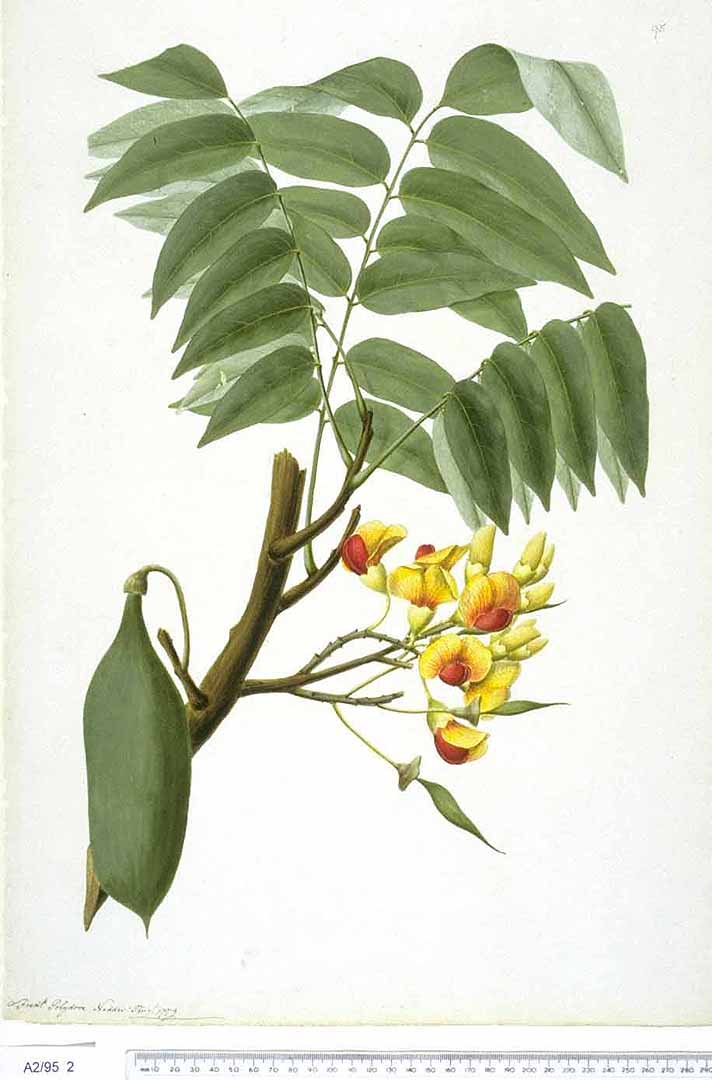
Par Natural History Museum, London Nat. Hist. Mus., London, via plantillustrations
✖
Autres infos
✖dont infos de "FOOD PLANTS INTERNATIONAL" :
Statut :
L'arbre est introduit en Papouasie-Nouvelle-Guinée et peut ne pas être beaucoup utilisé pour la nourriture{{{0(+x) (traduction automatique).
Original : The tree is introduced to Papua New Guinea and may not be much used for food{{{0(+x).
Distribution :
Une plante tropicale. Introduit et cultivé le long de la côte de Papouasie-Nouvelle-Guinée dans certaines régions. Il convient aux sites de la forêt tropicale et des berges du ruisseau. Il convient aux endroits humides. Il a besoin d'un sol léger et bien drainé dans une position ensoleillée protégée. Il est sensible à la sécheresse et au gel et est endommagé par le vent. Les arbres ont besoin d'une température supérieure à 7 ° C mais peuvent supporter de très courtes périodes jusqu'à 0 ° C. Ils sont les meilleurs avec une température moyenne annuelle de 28 ° C. Il convient aux régions tempérées chaudes aux régions tropicales. Dans les jardins botaniques de Melbourne. Il convient aux zones de rusticité 10-12{{{0(+x) (traduction automatique).
Original : A tropical plant. Introduced and grown along the coast in Papua New Guinea in some areas. It suits rainforest and creek bank sites. It suits humid locations. It needs light, well drained soil in a protected sunny position. It is drought and frost tender and is damaged by wind. Trees need a temperature above 7°C but can stand very short periods down to 0°C. They are best with a mean annual temperature of 28°C. It suits warm temperate to tropical regions. In Melbourne Botanical Gardens. It suits hardiness zones 10-12{{{0(+x).
Localisation :
Afrique, Asie, Australie, Amérique centrale, Afrique de l'Est, Fidji, Hawaï, Inde, Indonésie, Kenya, Nouvelle-Calédonie, Malaisie, Mozambique, Myanmar, Île Norfolk, Pacifique, Pakistan, Papouasie-Nouvelle-Guinée, PNG, Asie du Sud-Est, Slovénie, Salomon Îles, Afrique australe, Sri Lanka, USA, Vanuatu, Antilles, Zimbabwe{{{0(+x) (traduction automatique).
Original : Africa, Asia, Australia, Central America, East Africa, Fiji, Hawaii, India, Indonesia, Kenya, New Caledonia, Malaysia, Mozambique, Myanmar, Norfolk Island, Pacific, Pakistan, Papua New Guinea, PNG, SE Asia, Slovenia, Solomon Islands, Southern Africa, Sri Lanka, USA, Vanuatu, West Indies, Zimbabwe{{{0(+x).
Notes :
Le bois est un bois d'armoire très utile. Il n'y a qu'une seule espèce de Castanospermum{{{0(+x) (traduction automatique).
Original : The timber is a very useful cabinet wood. There is only one Castanospermum species{{{0(+x).
Liens, sources et/ou références
✖Sources et/ou références :
5"Plants For A Future" (en anglais) ;
dont livres et bases de données : 0"Food Plants International" (en anglais) ;
Recherche de/pour :
- "Castanospermum australe" sur Google (pages et
images) ;
INPI (en anglais) ;
TROPICOS (en anglais) ;
Tela Botanica ;
Pl@ntNet ;
Pl@ntUse ;
- "Castanospermum australe" sur Google (pages et
images) ;
INPI (en anglais) ;
TROPICOS (en anglais) ;
Tela Botanica ;
Pl@ntNet ;
Pl@ntUse ;
Espèces de la même famille (Fabaceae)
✖50 taxons (sur 2017)
- Abrus cantoniensis
- Abrus fruticulosus
- Abrus precatorius L.
- Abrus pulchellus Wall. ex Thwaites
- Acacia abyssinica Hochst. ex Benth.
- Acacia acatlensis Benth.
- Acacia acradenia F.Muell.
- Acacia acuminata Benth.
- Acacia adoxa Pedley
- Acacia adsurgens Maiden & Blakeley
- Acacia aff. Cuthbertsonii Maiden et Blakely
- Acacia albida
- Acacia ammobia Maconochie
- Acacia ampliceps Maslin
- Acacia amythethophylla Steud. ex A. Rich.
- Acacia anaticeps Tindale
- Acacia ancistrocarpa Maiden & Blakely
- Acacia aneura F.Muell. ex Benth. (Mulga)
- Acacia angustissima (Mill.) Kuntze
- Acacia ankokib (Mill.) Kuntze
- Acacia aromo Hook. & Arn.
- Acacia asak (Forssk.) Willd.
- Acacia ataxacantha DC.
- Acacia aulococarpa
- Acacia auriculiformis A. Cunn. ex Benth.
- Acacia baileyana
- Acacia beauverdiana Ewart & Sharman
- Acacia bidwillii Benth.
- Acacia bilimekii
- Acacia bilimekii
- Acacia bivenosa DC.
- Acacia blakelyi
- Acacia blakelyi
- Acacia brachystachya Benth.
- Acacia burkei Benth.
- Acacia bussei Harms ex B. Y. Sjostedt
- Acacia caffra (Thunb.) Willd.
- Acacia calamifolia (Thunb.) Willd.
- Acacia calcicola Forde & Ising
- Acacia cambagei R.T. Baker
- Acacia catechu (L. f.) Willd.
- Acacia caven
- Acacia choriophylla Benth.
- Acacia chundra (Rottler) Willd.
- Acacia citrinoviridis Tindale & Maslin
- Acacia cochliacantha Humb. & Bonpl. ex Willd.
- Acacia colei Maslin & M.A.J. Thomson
- Acacia complanata A. Cunn. ex Benth.
- Acacia concinna (Willd.) DC
- Acacia concurrens Pedley
- ...







 pour les fleurs (et/ou pétales, calice...),
 pour les feuilles (et/ou la tige, les pousses...),
 pour les racines,
 pour le tronc (et/ou l'écorce, la sève...), et enfin
 pour les champignons,
puis les notes alimentaires et médicinales (de 1 à 5 étoiles), la rusticité (résistance au froid/gel)
et pour finir un résumé.
pour les champignons,
puis les notes alimentaires et médicinales (de 1 à 5 étoiles), la rusticité (résistance au froid/gel)
et pour finir un résumé. menant ici 🙂
 ,
,  et
et

 ,
,
 ,
,
 ,
,





 ,
,