
Calytrix tetragona
Pas d\'illustration
pour le moment 😕

Un arbuste. Il atteint environ 1 à 2 m de haut. Il peut s'étendre de 0,8 à 2 m de large. Il a une odeur. Il a de nombreuses tiges de la base. Les branches sont minces et se ... (traduction automatique)
→suite



Calytrix tetragona

Un arbuste. Il atteint environ 1 à 2 m de haut. Il peut s'étendre de 0,8 à 2 m de large. Il a une odeur. Il a de nombreuses tiges de la base. Les branches sont minces et se cambrent souvent. Les feuilles sont étroites et mesurent environ 1 cm de long sur 1 mm de large. Ils ont souvent des bords finement frangés. L... (traduction automatique) →suite
Pas d'illustration
pour le moment 😕
Pas d'illustration
pour le moment 😕
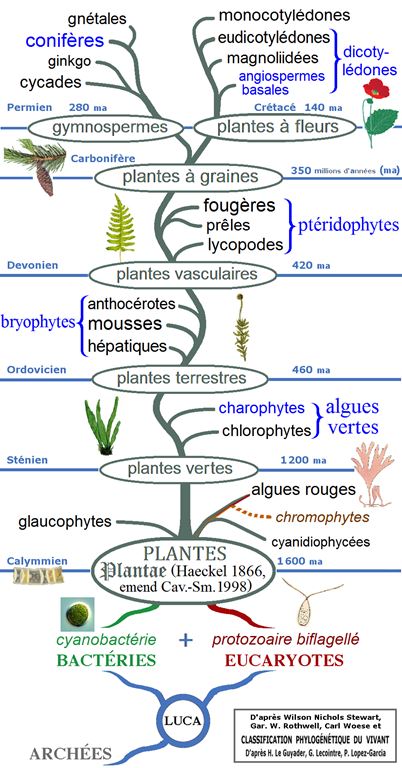
Classification
- Classique : en haut de l\'écran, sous le coeur.
- Phylogénétique :
- Clade 4 : Angiospermes ;
- Clade 3 : Dicotylédones_vraies ;
- Clade 2 : Rosidées ;
- Clade 1 : Malvidées ;
- Ordre APN : Myrtales ;
- Famille APN : Myrtaceae ;
Illustration : cet arbre phylogénétique des plantes montre les principaux clades et groupes traditionnels (monophylétiques en noir et paraphylétiques en bleu).
Dénominations
✖- Nom botanique : Calytrix tetragona Labill.
- Noms anglais et locaux : Common Fringe myrtle
Description et culture
✖- dont infos de "FOOD PLANTS INTERNATIONAL" :
Description :
Un arbuste. Il atteint environ 1 à 2 m de haut. Il peut s'étendre de 0,8 à 2 m de large. Il a une odeur. Il a de nombreuses tiges de la base. Les branches sont minces et se cambrent souvent. Les feuilles sont étroites et mesurent environ 1 cm de long sur 1 mm de large. Ils ont souvent des bords finement frangés. Les fleurs sont blanches ou roses et ressemblent à des étoiles. Ils mesurent 1,5 cm de diamètre. Ils se produisent en grappes denses. Ce sont à l'aisselle des feuilles supérieures. Le fruit est hérissé et brun pourpre foncé. La plante vire au rouge violacé après la chute des pétales{{{0(+x) (traduction automatique).
Original : A shrub. It grows about 1-2 m tall. It can spread 0.8-2 m wide. It has a smell. It has many stems from the base. The branches are slender and often arch over. The leaves are narrow and about 1 cm long by 1 mm wide. They often have finely fringed edges. The flowers are white or pink and star-like. They are 1.5 cm across. They occur in dense clusters. These are in the axils of upper leaves. The fruit is bristly and deep purple-brown. The plant turns purplish-red after petals drop{{{0(+x).
Culture :
Les plantes peuvent être cultivées à partir de graines ou de boutures. Les graines sont difficiles à germer. Les boutures s'enracinent facilement{{{0(+x) (traduction automatique).
Original : Plants can be grown from seeds or cuttings. Seeds are difficult to germinate. Cuttings root easily{{{0(+x).
 Consommation (rapports de comestibilité, parties utilisables et usages alimentaires correspondants)
✖
Parties comestibles :
fruit{{{0(+x) (traduction automatique).Original : Fruit{{{0(+x).
Partie testée :
fruit{{{0(+x) (traduction automatique). Original : Fruit{{{0(+x)| Taux d'humidité | Énergie (kj) | Énergie (kcal) | Protéines (g) |
|---|---|---|---|
| / | / | / | / |
| Pro- vitamines A (µg) |
Vitamines C (mg) | Fer (mg) | Zinc (mg) |
| / | / | / | / |
 Risques et précautions à prendre
✖
néant, inconnus ou indéterminés.
Autres infos
✖dont infos de "FOOD PLANTS INTERNATIONAL" :
Distribution :
Il pousse dans les landes près de la côte. C'est une plante tempérée. Ils nécessitent un sol bien drainé et légèrement texturé. Les sols à faible teneur en éléments nutritifs sont les meilleurs. Il peut pousser dans des endroits semi-arides. Il convient aux zones de rusticité 8-10. Arboretum Tasmania{{{0(+x) (traduction automatique).
Original : It grows in heathlands near the coast. It is a temperate plant. They require well drained, light textured soil. Soils of low nutrient content are best. It can grow in semiarid places. It suits hardiness zones 8-10. Arboretum Tasmania{{{0(+x).
Localisation :
Australie *, Tasmanie *{{{0(+x) (traduction automatique).
Original : Australia*, Tasmania*{{{0(+x).
Notes :
Il existe environ 70 à 75 espèces de Calytrix{{{0(+x) (traduction automatique).
Original : There are about 70-75 Calytrix species{{{0(+x).
Liens, sources et/ou références
✖Sources et/ou références :
dont livres et bases de données : 0"Food Plants International" (en anglais) ;
Recherche de/pour :
- "Calytrix tetragona" sur Google (pages et
images) ;
INPI (en anglais) ;
TROPICOS (en anglais) ;
Tela Botanica ;
Pl@ntNet ;
Pl@ntUse ;
- "Calytrix tetragona" sur Google (pages et
images) ;
INPI (en anglais) ;
TROPICOS (en anglais) ;
Tela Botanica ;
Pl@ntNet ;
Pl@ntUse ;
Espèces de la même famille (Myrtaceae)
✖50 taxons (sur 772)
- Acca sellowiana (O. Berg) Burret (Feijoa)
- Aluta maisonneivei
- Amomyrtus luma (Luma)
- Amomyrtus meli
- Angophora floribunda
- Archirhodomyrtus beckleri
- Astartea fascicularis
- Aulomyrcia vaccinifolia
- Austromyrtus dulcis (C.T.White) L.S.Sm.
- Austromyrtus dulcis x tenuifolia
- Austromyrtus tenuifolia
- Backhousia anisata
- Backhousia citriodora F.Muell. (Myrte citronnée)
- Backhousia myrtifolia Hook. & Harv. (Myrte cannelle)
- Baeckea frutescens
- Baeckea gunniana
- Blepharocalyx cruckshanksii
- Blepharocalyx salicifolius
- Callistemon citrinus (Curtis) Skeels (Rince-bouteilles)
- Callistemon polandii
- Callistemon viminalis
- Calothamnus quadrifidus
- Calothamnus sanguineus
- Calycolpus calophyllus
- Calycolpus goetheanus
- Calycolpus legrandii
- Calycolpus moritzianus
- Calycorectes acutatus
- Calycorectes grandifolius
- Calycorectes sp.
- Calyptranthes aromatica
- Calyptranthes clusiifolia
- Calyptranthes concinna
- Calyptranthes grandifolia
- Calyptranthes hintonii
- Calyptranthes longifolia
- Calyptranthes lucida
- Calyptranthes macrophylla
- Calyptranthes nigrescens
- Calyptranthes pallens
- Calyptranthes paniculata
- Calyptranthes plicata
- Calyptranthes schiediana
- Calyptranthes speciosa
- Calyptranthes syzygium
- Calyptranthes variabilis
- Calyptranthes widgreniana
- Calyptranthes zuzygium
- Calytrix tetragona
- Campomanesia adamantium (Cambess.) O.Berg (Guabiroba blanche)
- ...







 pour les fleurs (et/ou pétales, calice...),
 pour les feuilles (et/ou la tige, les pousses...),
 pour les racines,
 pour le tronc (et/ou l'écorce, la sève...), et enfin
 pour les champignons,
puis les notes alimentaires et médicinales (de 1 à 5 étoiles), la rusticité (résistance au froid/gel)
et pour finir un résumé.
pour les champignons,
puis les notes alimentaires et médicinales (de 1 à 5 étoiles), la rusticité (résistance au froid/gel)
et pour finir un résumé. menant ici 🙂
 ,
,  et
et

 ,
,
 ,
,
 ,
,





 ,
,