Berberis asiatica
 |
****
-
***
|
****
-
***
Un arbuste épineux. Il pousse environ 3 m de haut. Les feuilles ont des tiges courtes et se présentent en grappes. Les feuilles mesurent 1,5 à 9 cm de long sur 0,5 à 2 cm ... (traduction automatique)
→suite


Berberis asiatica
Note alimentaire 
Note médicinale 
Note autre usage 

Un arbuste épineux. Il pousse environ 3 m de haut. Les feuilles ont des tiges courtes et se présentent en grappes. Les feuilles mesurent 1,5 à 9 cm de long sur 0,5 à 2 cm de large. Ils sont ovales et c... (traduction automatique) →suite
Pas d'autre illustration
pour le moment 😕
Classification
- Classique : en haut de l'écran, sous le coeur.
- Phylogénétique :
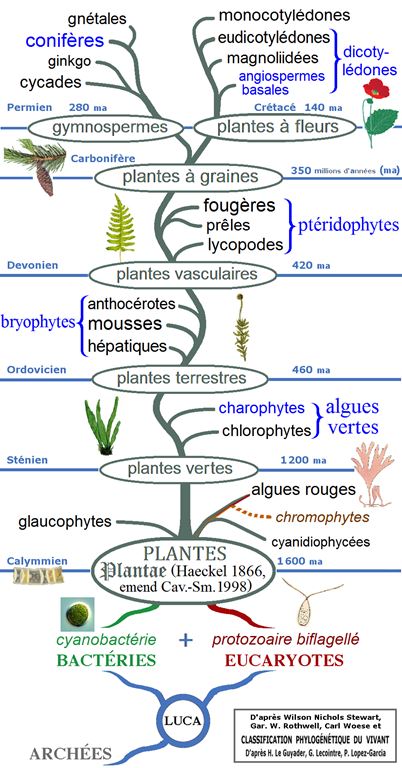
- Clade 4 : Angiospermes ;
- Clade 3 : Dicotylédones_vraies ;
- Ordre APN : Ranunculales ;
- Famille APN : Berberidaceae ;
À droite, cet arbre phylogénétique des plantes montre les principaux clades et groupes traditionnels (monophylétiques en noir et paraphylétiques en bleu).
Dénominations
- Nom botanique : Berberis asiatica Griff.
- Synonymes : Berberis glaucocarpa
- Noms anglais et locaux : Himalayan barberry, Raisin barberry
Description et culture
Tableau récapitulatif
Parties comes-tibles Note comest. (1-5) Note medic. (1-5) (Zones de) Rusticité Besoins en 
Besoins en  (1-3)
(1-3)Périodes de semis et récoltes Graines au gramme Durée de viabilité Profon-deur semis Espace-ment plants Espace-ment lignes Durée germi-native Durée avant récolte Zones de rusticité : 7, 8, 9, 10 J F M A M J
J A S O N D
J F M A M J
J A S O N D
Types de feuillage :
Persistant
- dont infos de 0FPI ("FOOD PLANTS INTERNATIONAL", en anglais) :
Description :
Un arbuste épineux. Il pousse environ 3 m de haut. Les feuilles ont des tiges courtes et se présentent en grappes. Les feuilles mesurent 1,5 à 9 cm de long sur 0,5 à 2 cm de large. Ils sont ovales et coriaces. Il y a des épines autour du bord. Les fleurs sont jaunes. Le fruit est charnu ou pulpeux et bleu-noir à maturité. Les fruits mesurent 8 mm de diamètre{{{0(+x) (traduction automatique).
Original : A spiny shrub. It grows about 3 m high. The leaves have short stalks and occur in clusters. The leaves are 1.5-9 cm long by 0.5-2 cm wide. They are oval and leathery. There are spines around the edge. The flowers are yellow. The fruit is fleshy or pulpy and blue-black when ripe. The fruit are 8 mm across{{{0(+x).
Production :
Au Sikkim, les fruits sont disponibles de septembre à octobre{{{0(+x) (traduction automatique).
Original : In Sikkim fruit are available Sep. to Oct{{{0(+x).
Culture :
Les plantes sont cultivées à partir de graines{{{0(+x) (traduction automatique).
Original : Plants are grown from seed{{{0(+x).
 Consommation (rapports de comestibilité, parties utilisables et usages alimentaires correspondants)
Consommation (rapports de comestibilité, parties utilisables et usages alimentaires correspondants)Parties comestibles :
fruits, fleurs{{{0(+x) (traduction automatique). Original : Fruit, Flowers{{{0(+x).Détails :
Les fruits mûrs sont consommés frais ou marinés. Ils sont également séchés et utilisés comme des raisins secs. Alcohol est distillé à partir du fruit mûr. Attention: l'alcool est une cause de cancer. Les fleurs sont consommées crues{{{0(+x) (traduction automatique).
Original : The ripe fruit are eaten fresh or pickled. They are also dried and used like raisins. Alcohol is distilled from the ripe fruit. Caution: Alcohol is a cause of cancer.The flowers are eaten raw{{{0(+x).
Partie testée :
fruit{{{0(+x) (traduction automatique). Original : Fruit{{{0(+x) Risques et précautions à prendre
Risques et précautions à prendrenéant, inconnus ou indéterminés.
Galerie(s)
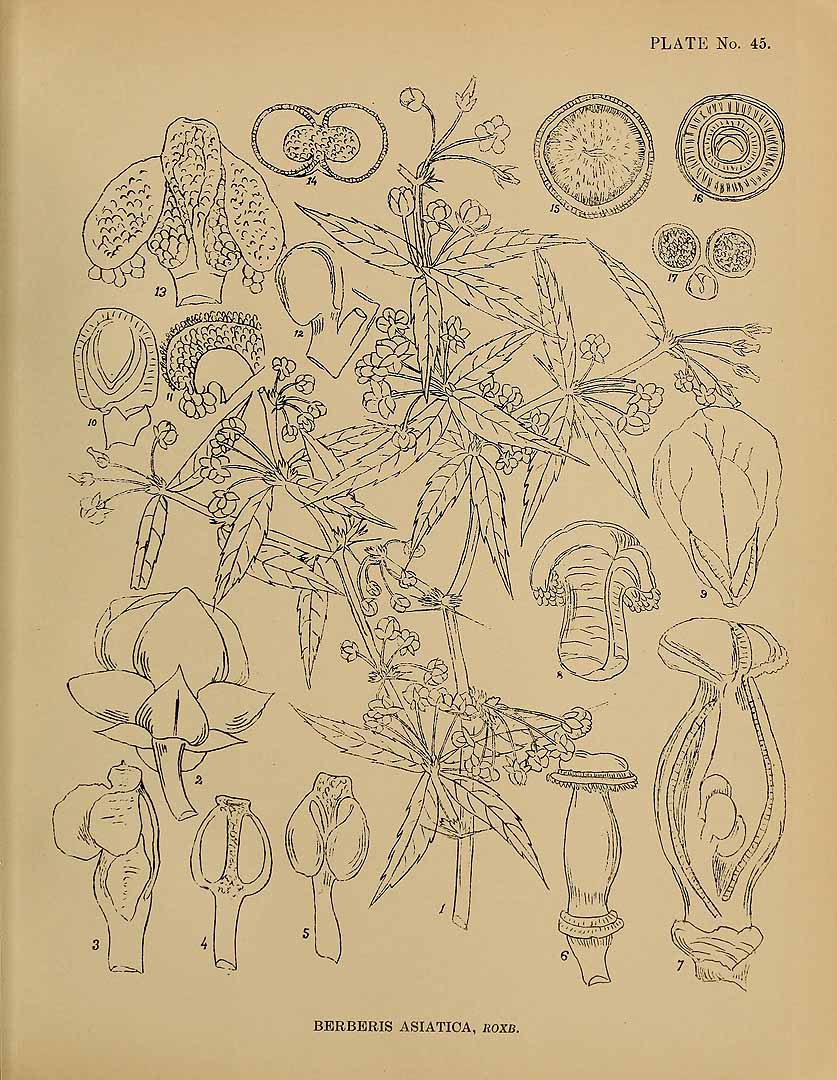
Par Kirtikar, K.R., Basu, B.D., Indian medicinal plants, Plates (1918) Ind. Med. Pl., Plates vol. 1 (1918), via plantillustrations
✖
Autres infos
dont infos de 0FPI ("FOOD PLANTS INTERNATIONAL", en anglais) :
Statut :
Les fruits sont populaires{{{0(+x) (traduction automatique).
Original : The fruit are popular{{{0(+x).
Distribution :
C'est une plante tempérée. Les plantes poussent au Népal entre 600 et 2500 m d'altitude. Ils se produisent sur les pentes rocheuses exposées. Il peut pousser au soleil ou à l'ombre. Ils sont robustes{{{0(+x) (traduction automatique).
Original : It is a temperate plant. Plants grow in Nepal from 600-2500 m altitude. They occur on exposed, rocky hillsides. It can grow in sun or shade. They are hardy{{{0(+x).
Localisation :
Afghanistan, Asie, Bhoutan, Chine, Himalaya, Inde, Myanmar, Népal, Inde du nord-est, Sikkim{{{0(+x) (traduction automatique).
Original : Afghanistan, Asia, Bhutan, China, Himalayas, India, Myanmar, Nepal, Northeastern India, Sikkim{{{0(+x).
Notes :
Il existe environ 450 à 500 espèces de Berberis{{{0(+x) (traduction automatique).
Original : There are about 450-500 Berberis species{{{0(+x).
Rusticité (résistance face au froid/gel, climat)
Zones de rusticité : 7, 8, 9, 10
Liens, sources et/ou références
Liens :
/ ;Sources et/ou références :
bibliographie (liste des sources et/ou références de l'encyclopédie)
dont classification : IPNI ("International Plant Names Index", en anglais) ; Kew (POWO - "Plant Of the World Online", "Royal Botanical Garden", en anglais) ;
dont livres et bases de données : 5PFAF ("Plants For A Future", en anglais) ; 0FPI ("FOOD PLANTS INTERNATIONAL", en anglais) ;
dont bibliographie/références de 0FPI ("FOOD PLANTS INTERNATIONAL", en anglais) :
Ambasta S.P. (Ed.), 2000, The Useful Plants of India. CSIR India. p 71 ; Aryal, K. P., et al, 2018, Diversity and use of wild and non-cultivated edible plants in the Western Himalaya. Journal of Ethnobiology and Ethnomedicine (2018) 14:10 ; Bahuguna, A. et al, 2010, Floristic Diversity and Indigenous uses of Forest Vegetation of Dabka Watershed in Indian Central Himalayas. Ethnobotanical Leaflets 14:491-510 ; Bajracharya, D., 1980, Nutritive Values of Nepalese Edible Wild Fruits. Z. Lebensm. Unters. Forsch. 171: 363-366 ; Bircher, A. G. & Bircher, W. H., 2000, Encyclopedia of Fruit Trees and Edible Flowering Plants in Egypt and the Subtropics. AUC Press. p 57 ; Dobriyal, M. J. R. & Dobriyal, R., 2014, Non Wood Forest Produce an Option for Ethnic Food and Nutritional Security in India. Int. J. of Usuf. Mngt. 15(1):17-37 ; Facciola, S., 1998, Cornucopia 2: a Source Book of Edible Plants. Kampong Publications, p 48 ; Ghimire, S. K., et al, 2008, Non-Timber Forest Products of Nepal Himalaya. WWF Nepal p 29 ; Glowinski, L., 1999, The Complete Book of Fruit Growing in Australia. Lothian. p 179 ; Hedrick, U.P., 1919, (Ed.), Sturtevant's edible plants of the world. p 97 ; John, L., & Stevenson, V., 1979, The Complete Book of Fruit. Angus & Robertson p 74 ; Kala, C. P., 2007, Prioritization of cultivated and wild edibles by local people in the Uttaranchal hills of Indian Himalaya. Indian Journal of Traditional Knowledge. 6(1) pp 239-244 ; Karki, S., et al, 2017, Minor Fruits in Nepal: Utilization and Conservation Efforts. Proceedings of 2nd National Workshop on CUAPGR, 2017. ; Lyle, S., 2006, Discovering fruit and nuts. Land Links. p 91 ; Manandhar, N.P., 2002, Plants and People of Nepal. Timber Press. Portland, Oregon. p 108 ; Mehta, P. S. et al, 2010, Native plant genetic resources and traditional foods of Uttarakhand Himalaya for sustainable food security and livelihood. Indian Journal or Natural products and Resources. Vol 1(1), March 2010 pp 89-96 ; Mukhia, P.K., et al, 2013, Wild plants as Non Wood Forest Products used by the rural community of Dagana, a southern foothill district of Bhutan, SAARC Journal, 27 pages ; Murtem, G. & Chaudhrey, P., 2016, An ethnobotanical note on wild edible plants of Upper Eastern Himalaya, India. Brazilian Journal of Biological Sciences, 2016, v. 3, no. 5, p. 63-81. ; Plants for a Future database, The Field, Penpol, Lostwithiel, Cornwall, PL22 0NG, UK. http://www.scs.leeds.ac.uk/pfaf/ ; Polunin, O., & Stainton, A., 2006, Flowers of the Himalaya, Oxford India Paperbacks. p 20 ; Radha, B., et al, 2013, Wild Edible Plant Resources of the Lohba Range of Kedarnath Forest Division (KFD), Garhwal Himalaya, India. Int. Res J. Biological Sci. Vol. 2 (11), 65-73 ; Singh, H.B., Arora R.K.,1978, Wild edible Plants of India. Indian Council of Agricultural Research, New Delhi. p 50 ; Singh, V. B., et al, (Ed.) Horticulture for Sustainable Income and Environmental Protection. Vol. 1 p 214 ; Sundriyal, M., et al, 1998, Wild edibles and other useful plants from the Sikkim Himalaya, India. Oecologia Montana 7:43-54 ; Sundriyal, M., et al, 2004, Dietary Use of Wild Plant Resources in the Sikkim Himalaya, India. Economic Botany 58(4) pp 626-638 ; Tiwari, J. K., et al, 2010, Some Promising Wild Edible Plants of Srinagar and its Adjacent Area in Alaknanda Valley of Garhwal Himalaya, India. Journal of American Science 6(4) p 167ff ; Tsering, J., et al, 2017, Ethnobotanical appraisal on wild edible plants used by the Monpa community of Arunchal Pradesh. Indian Journal of Traditional Knowledge. Vol 16(4), October 2017, pp 626-637 ; Upreti, K., et al, 2010, Diversity and Distribution of Wild Edible Fruit Plants of Uttarakhand. Bioversity Potentials of the Himalaya. p 161 ; Uprety, Y., et al, 2016, Traditional use and management of NTFPs in Kangchenjunga Landscape: implications for conservation and livelihoods. Journal of Ethnobiology and Ethnomedicine (2016) 12:19
Recherche de/pour :
- "Berberis asiatica" sur Google (pages et
images) ;
TPL ("The Plant List", en anglais) ;
GRIN ("Germplasm Resources Information Network", en anglais) ;
TROPICOS (en anglais) ;
Tela Botanica ;
Pl@ntNet ;
Pl@ntUse ;
"Useful Tropical Plants" (en anglais) ou
"Useful Temperate Plants" (en anglais) ;
- "Berberis asiatica" sur Google (pages et
images) ;
TPL ("The Plant List", en anglais) ;
GRIN ("Germplasm Resources Information Network", en anglais) ;
TROPICOS (en anglais) ;
Tela Botanica ;
Pl@ntNet ;
Pl@ntUse ;
"Useful Tropical Plants" (en anglais) ou
"Useful Temperate Plants" (en anglais) ;
Espèces du même genre (Berberis)
111 taxons
- Berbéris
- Berbéris à feuilles de buis
- Berbéris à grappe
- Berbéris d'Irwin
- Berbéris de Crète
- Berbéris de Gagnepin à feuilles larges
- Berbéris de Thunberg
- Berberis pruineux
- Berbéris verruqueux
- Épine-vinette
- Épine-vinette à feuilles de camarine
- Épine-vinette de darwin
- Épine-vinette de nevin
- Épine-vinette mexicaine
- Mahonia à feuilles de houx
- Mahonia du Japon
- Berberis actinacantha Mart. ex Schult. & Schult.f.
- Berberis aggregata C.K.Schneid. (Berbéris à grappe)
- Berberis amoena Dunn
- Berberis amurensis Rupr.
- Berberis angulosa Wall. ex Hook.f. & Thomson
- Berberis aquifolium Pursh (Mahonia à feuilles de houx)
- Berberis aristata DC.
- Berberis atrocarpa C.K.Schneid.
- Berberis barandana S.Vidal
- Berberis bidentata
- Berberis boliviana Lechl.
- Berberis buxifolia Lam. (Berbéris à feuilles de buis)
- Berberis bykovianas
- Berberis calliantha Mulligan
- Berberis calliobotrys Bien. ex Koehne
- Berberis canadensis Guimpel
- Berberis capillaris Cox ex Ahrendt
- Berberis ceratophylla G.Don
- Berberis chengii
- Berberis chilensis Gillies ex Hook. & Arn.
- Berberis chinensis K.Koch
- Berberis chingii C.Y.Cheng
- Berberis chitria Buch.-Ham. ex Ker Gawl.
- Berberis circumserrata (C.K.Schneid.) C.K.Schneid.
- Berberis commutata Eichler
- Berberis concinna Hook.f.
- Berberis cooperi Ahrendt
- Berberis crataegina DC.
- Berberis cretica L. (Berbéris de Crète)
- Berberis darwinii Hook. (Épine-vinette de darwin)
- Berberis empetrifolia Lam. (Épine-vinette à feuilles de camarine)
- Berberis erythroclada Ahrendt
- Berberis everestiana Ahrendt
- Berberis everstiana
- Berberis fendleri A.Gray
- Berberis flexuosa Ruiz & Pav.
- Berberis gagnepainii C.K.Schneid. (Berbéris de Gagnepin à feuilles larges)
- Berberis ganpinensis H.Lv.
- Berberis georgii
- Berberis glauca Benth.
- Berberis glaucocarpa Stapf
- Berberis glomerata Hook. & Arn.
- Berberis gracilis Hartw. ex Benth. (Épine-vinette mexicaine)
- Berberis haematocarpa Wooton
- Berberis heterophylla Juss. ex Poir.
- Berberis heteropoda Schrenk ex Fisch. & C.A.Mey.
- Berberis holstii Engl.
- Berberis horrida Jungh.
- Berberis ilicifolia Roxb.
- Berberis iliensis Popov
- ...
Espèces de la même famille (Berberidaceae)
159 taxons
- Bambou sacré
- Berbéris
- Berbéris à feuilles de buis
- Berbéris à grappe
- Berbéris d'Irwin
- Berbéris de Crète
- Berbéris de Gagnepin à feuilles larges
- Berbéris de Thunberg
- Berberis pruineux
- Berbéris verruqueux
- Épine-vinette
- Épine-vinette à feuilles de camarine
- Épine-vinette de darwin
- Épine-vinette de nevin
- Épine-vinette mexicaine
- Léontice d'Eversmann
- Mahonia à feuilles de houx
- Mahonia du Japon
- Podophylle pelté
- Pomme de mai de l'Himalaya
- Sinopodophyllum
- Achlys triphylla DC.
- Berberis actinacantha Mart. ex Schult. & Schult.f.
- Berberis aggregata C.K.Schneid. (Berbéris à grappe)
- Berberis amoena Dunn
- Berberis amurensis Rupr.
- Berberis angulosa Wall. ex Hook.f. & Thomson
- Berberis aquifolium Pursh (Mahonia à feuilles de houx)
- Berberis aristata DC.
- Berberis atrocarpa C.K.Schneid.
- Berberis barandana S.Vidal
- Berberis bidentata
- Berberis boliviana Lechl.
- Berberis buxifolia Lam. (Berbéris à feuilles de buis)
- Berberis bykovianas
- Berberis calliantha Mulligan
- Berberis calliobotrys Bien. ex Koehne
- Berberis canadensis Guimpel
- Berberis capillaris Cox ex Ahrendt
- Berberis ceratophylla G.Don
- Berberis chengii
- Berberis chilensis Gillies ex Hook. & Arn.
- Berberis chinensis K.Koch
- Berberis chingii C.Y.Cheng
- Berberis chitria Buch.-Ham. ex Ker Gawl.
- Berberis circumserrata (C.K.Schneid.) C.K.Schneid.
- Berberis commutata Eichler
- Berberis concinna Hook.f.
- Berberis cooperi Ahrendt
- Berberis crataegina DC.
- Berberis cretica L. (Berbéris de Crète)
- Berberis darwinii Hook. (Épine-vinette de darwin)
- Berberis empetrifolia Lam. (Épine-vinette à feuilles de camarine)
- Berberis erythroclada Ahrendt
- Berberis everestiana Ahrendt
- Berberis everstiana
- Berberis fendleri A.Gray
- Berberis flexuosa Ruiz & Pav.
- Berberis gagnepainii C.K.Schneid. (Berbéris de Gagnepin à feuilles larges)
- Berberis ganpinensis H.Lv.
- Berberis georgii
- Berberis glauca Benth.
- Berberis glaucocarpa Stapf
- Berberis glomerata Hook. & Arn.
- Berberis gracilis Hartw. ex Benth. (Épine-vinette mexicaine)
- Berberis haematocarpa Wooton
- Berberis heterophylla Juss. ex Poir.
- Berberis heteropoda Schrenk ex Fisch. & C.A.Mey.
- Berberis holstii Engl.
- Berberis horrida Jungh.
- Berberis ilicifolia Roxb.
- ...







 donne accès au menu
  - encyclopédies des plantes alimentaires ;
 - page de recherche - reconnaissance (identification) de plantes ;
 - page du calendrier lunaire et son générateur (au format PDF et JPG) ;
 - tableau récapitulatif ;
 - générateur de potées (soupes), avec estimation des apports nutrionnels et du coût;
 - générateur de codes QR ;
 - page des archives avec de nombreux documents sur différents thèmes complémentaires comme la botanique, les légumes,
les champignons, la cuisine, le bien-être ainsi que différents MOOC mais également des liens vers les archives de l'association ;
- page des archives avec de nombreux documents sur différents thèmes complémentaires comme la botanique, les légumes,
les champignons, la cuisine, le bien-être ainsi que différents MOOC mais également des liens vers les archives de l'association ;

 pour le fruit (et/ou les graines, la pulpe, etc...),
 pour les fleurs (et/ou pétales, calice...),
 pour les feuilles (et/ou la tige, les pousses...),
 pour les racines,
 pour le tronc (et/ou l'écorce, la sève...), et enfin
 pour les champignons,
puis les notes alimentaires et médicinales (de 1 à 5 étoiles), la rusticité (résistance au froid/gel)
et pour finir un résumé.
pour les champignons,
puis les notes alimentaires et médicinales (de 1 à 5 étoiles), la rusticité (résistance au froid/gel)
et pour finir un résumé. menant ici 🙂
 ,
,  et
et





 ,
,


 Encyclopédie(s)
 Recherche-Reconnaissance
 Tableau récapitulatif
 Codes QR
 Archives
 Calendrier(s) lunaire(s)
  Potées
 Re-naturation/naturalisation
 Affichettes, herbiers &
co.
Affichettes, herbiers &
co. menu
menu galerie


 (en bas à droite).
 (en bas à gauche).
